Email Alert | RSS    帮助
中国防痨杂志 ›› 2026, Vol. 48 ›› Issue (6): 795-802.doi: 10.19982/j.issn.1000-6621.20260016

• 论著 • 上一篇    下一篇

基于证素辨证的619例重症肺结核患者中医证型特点分析

夏露1, 穆婷婷2, 蔡秋杰2, 马艳2, 龚蒙萌2, 叶丹1, 张炜3,4,5()   

  1. 1 上海市公共卫生临床中心结核科, 上海 201508
    2 中国中医科学院中医临床基础医学基础所疫病防治研究室, 北京 100700
    3 上海中医药大学附属曙光医院肺病科, 上海 201203
    4 上海中医药研究院疫病研究所, 上海 201203
    5 上海中医药大学附属宝山区中西医结合医院呼吸科, 上海 201999
  • 收稿日期:2026-01-08 出版日期:2026-06-10 发布日期:2026-05-25
  • 通信作者: 张炜 E-mail:zhangw1190@sina.com
  • 基金资助:
    上海市公共卫生临床中心临床研究专项(KY-GW-2024-01);上海市公共卫生临床中心引进人才科研启动经费(RCJJ2025-08)

Analysis of Traditional Chinese Medicine syndrome characteristics in 619 severe pulmonary tuberculosis patients based on syndrome element differentiation

Xia Lu1, Mu Tingting2, Cai Qiujie2, Ma Yan2, Gong Mengmeng2, Ye Dan1, Zhang Wei3,4,5()   

  1. 1 Department of Tuberculosis, Shanghai Public Health Clinical Center, Shanghai 201508, China
    2 Institute of Disease Control and Prevention Research, Institute of Basic Research in Clinical Medicine, China Academy of Chinese Medical Sciences, Beijing 100700, China
    3 Department of Pulmonary Diseases, Shuguang Hospital, Shanghai University of Traditional Chinese Medicine, Shanghai 201203, China
    4 Research Institute of Epidemiology, Shanghai Institute of Traditional Chinese Medicine, Shanghai 201203, China
    5 Department of Respiratory Disease, Baoshan District Combined Hospital of Chinese and Western Medicine, Shanghai University of Traditional Chinese Medicine, Shanghai 201999, China
  • Received:2026-01-08 Online:2026-06-10 Published:2026-05-25
  • Contact: Zhang Wei E-mail:zhangw1190@sina.com
  • Supported by:
    Clinical Research Special Project of Shanghai Public Health Clinical Center(KY-GW-2024-01);Research Startup Fund for Introduced Talents of Shanghai Public Health Clinical Center(RCJJ2025-08)

摘要:

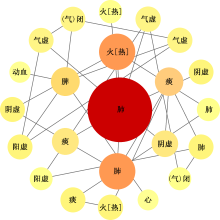
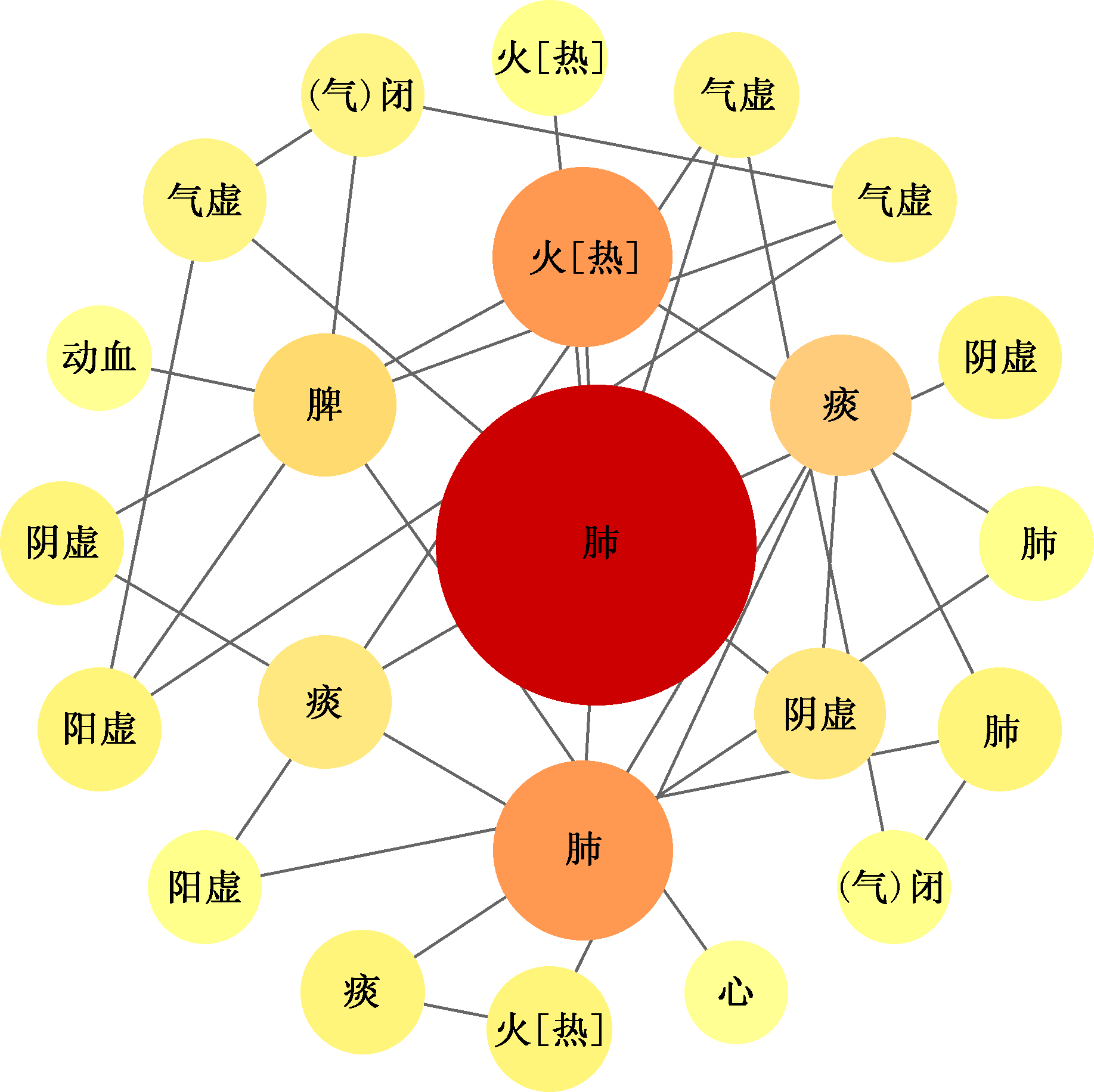
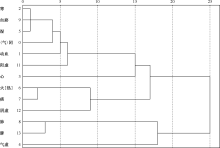
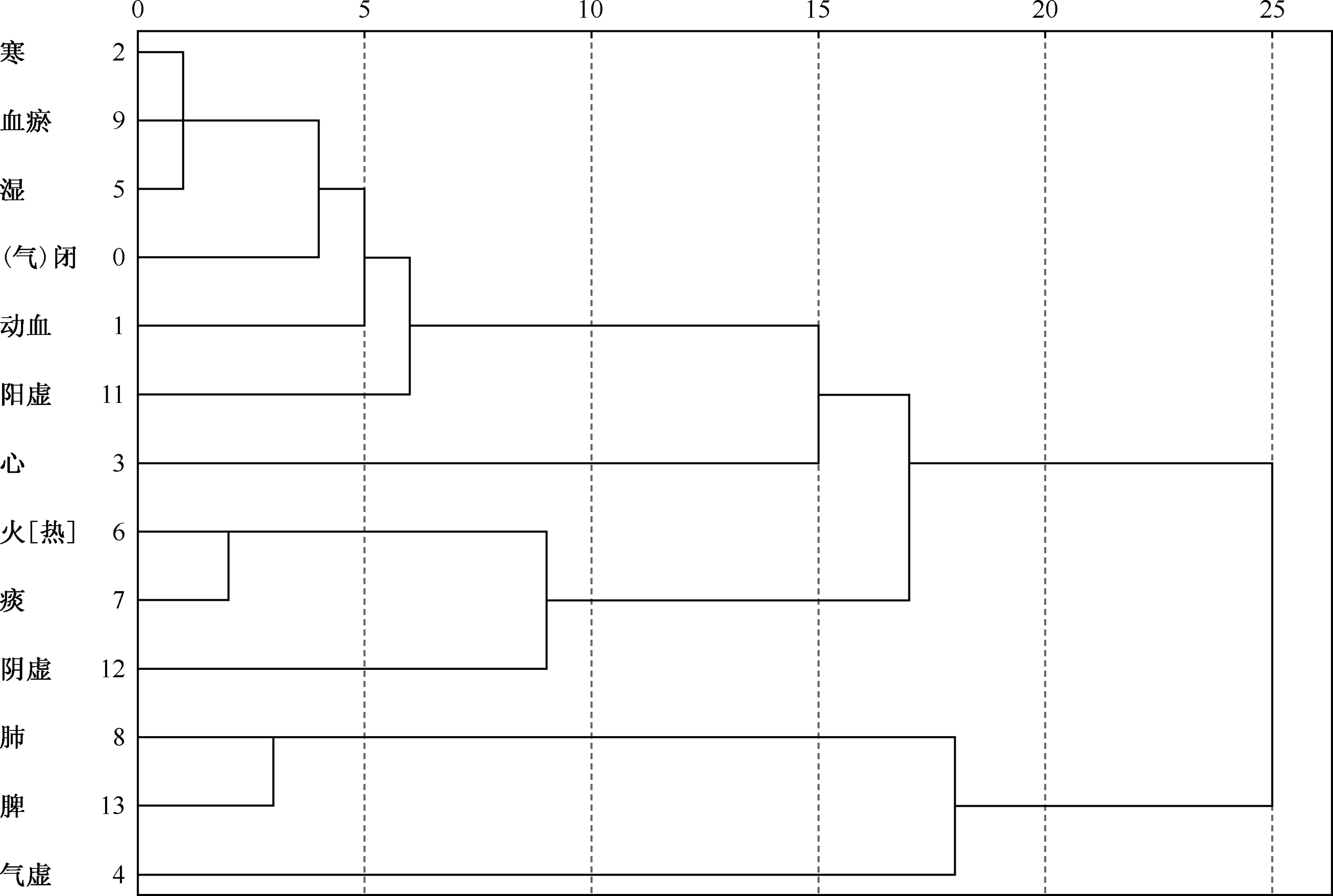
目的: 探讨重症肺结核患者的临床症状、体征、证素分布规律,为制定精准的中医证候分型及诊治方案提供参考。方法: 收集2020年1月至2025年1月上海市公共卫生临床中心结核科住院的重症肺结核患者的临床资料,记录症状、体征、舌苔、脉象及刻下症;运用关联规则分析与聚类分析对证素进行归纳,总结证候特点,提炼主要中医证型,并初步探索相应诊疗方案。结果: 共纳入619例重症肺结核患者,男性488例,女性131例,男女比例为3.73∶1;年龄范围为18~95岁,年龄中位数(四分位数)为76(71,81)岁,60岁以上者占88.69%(549/619)。其中,520例(84.01%)合并基础疾病,主要为2型糖尿病(412例,66.56%)、高血压(368例,59.45%)、冠心病(230例,37.16%)等;主要临床症状依次为咳痰(583例,94.18%)、纳差(567例,91.60%)、消瘦(480例,77.54%)、乏力(423例,68.34%)、咳嗽(376例,60.74%)、气促(354例,57.19%)、神志不清(355例,57.35%)及发热(322例,52.02%)等。证素关联分析显示,肺-气虚的关联性最强(51.53%,置信度为100.00%)。聚类分析结果显示,证素主要聚为2类(肺、脾、气虚,以及痰、火[热]、阴虚),另有7个[寒、血瘀、湿、(气)闭、动血、阳虚、心]证素独立性较强。中医证型以肺脾气虚型(56.70%,351/619)、痰热阴虚型(39.74%,246/619)为主。结论: 重症肺结核患者临床表现复杂,合并症多。临床诊治应突破传统中医分型框架,遵循“多脏同调、标本兼顾”的原则,重视痰、瘀、虚之间的相互作用,为制定精准的中医干预方案提供依据。

关键词: 医学, 中国传统, 结核, 肺, 疾病特征

Abstract:

Objective: To investigate the clinical symptoms, signs, and distribution patterns of syndrome elements in patients with severe pulmonary tuberculosis (PTB), providing references for developing precise Traditional Chinese Medicine (TCM) syndrome differentiation, as well as diagnostic and treatment strategies. Methods: Clinical data were collected from patients with severe PTB admitted to the Department of Tuberculosis at Shanghai Public Health Clinical Center between January 2020 and January 2025. Symptoms, signs, tongue coating, pulse manifestations, and current symptoms were recorded. Association rule analysis and cluster analysis were used to summarize syndrome elements, characterize syndrome patterns, identify major TCM syndrome types, and preliminarily explore corresponding diagnostic and treatment protocols. Results: A total of 619 patients with severe PTB were enrolled, including 488 males and 131 females, with a male-to-female ratio of 3.73∶1. The age ranged from 18 to 95 years, with a median (quartile) age of 76 (71,81) years; 88.69% (549/619) were over 60 years old. Among them, 520 cases (84.01%) had comorbidities, mainly type 2 diabetes mellitus (412 cases, 66.56%), hypertension (368 cases, 59.45%), and coronary heart disease (230 cases, 37.16%). The main clinical symptoms were sputum production (583 cases, 94.18%), poor appetite (567 cases, 91.60%), weight loss (480 cases, 77.54%), fatigue (423 cases, 68.34%), cough (376 cases, 60.74%), shortness of breath (354 cases, 57.19%), altered consciousness (355 cases, 57.35%), and fever (322 cases, 52.02%). Association analysis of syndrome elements revealed that the lung-qi deficiency association was the strongest (51.53%, with a confidence level of 100.00%). Cluster analysis showed that syndrome elements mainly clustered into two categories as lung-spleen qi deficiency, and phlegm-fire (heat) yin deficiency. While seven independent syndrome elements were identified, including cold, blood stasis, dampness, qi blockage, blood stirring, yang deficiency and heart. The dominant TCM syndrome types were lung-spleen qi deficiency syndrome (56.70%, 351/619) and phlegm-heat yin deficiency syndrome (39.74%, 246/619). Conclusion: Patients with severe PTB present with complex clinical manifestations and multiple comorbidities. Clinical diagnosis and treatment should break through TCM classification frameworks, adhere to the principle of “simultaneous regulation of multiple organs and addressing both root and branch”, with emphasis on the interactions among phlegm, stasis, and deficiency, which can provide evidence for developing precise TCM intervention protocols.

Key words: Medicine, Chinese traditional, Tuberculosis, pulmonary, Disease attributes

中图分类号: