Email Alert | RSS    帮助

中国防痨杂志 ›› 2026, Vol. 48 ›› Issue (5): 616-620.doi: 10.19982/j.issn.1000-6621.20250423

• 论著 • 上一篇    下一篇

新型PCR-荧光探针法与三种结核病实验室检测方法临床应用效果的比较

吴刚, 张正斌, 鲁周琴, 王晓君, 周美兰, 李月华()   

  1. 武汉市肺科医院(武汉市结核病防治所)硚口区结核病防治科, 武汉 430030
  • 收稿日期:2025-11-03 出版日期:2026-05-10 发布日期:2026-04-27
  • 通信作者: 李月华 E-mail:664748060@qq.com
  • 基金资助:
    国家重点研发计划项目(2024YFC2311204);湖北省自然科学基金面上项目(2022CFB176);武汉市肺科医院揭榜挂帅项目(WF2025Y11)

Comparison of clinical application effect between a novel fluorescent probe-based PCR method and three laboratory methods for detecting the Mycobacterium tuberculosis

Wu Gang, Zhang Zhengbin, Lu Zhouqin, Wang Xiaojun, Zhou Meilan, Li Yuehua()   

  1. Qiaokou District Tuberculosis Prevention and Control Department, Wuhan Pulmonary Hospital (Wuhan Institute for Tuberculosis Control), Wuhan 430030, China
  • Received:2025-11-03 Online:2026-05-10 Published:2026-04-27
  • Contact: Li Yuehua E-mail:664748060@qq.com
  • Supported by:
    National Key Research and Development Program of China(2024YFC2311204);Hubei Provincial Natural Science Foundation General Program(2022CFB176);Wuhan Pulmonary Hospital “Unveiling and Leading” Project(WF2025Y11)

摘要:

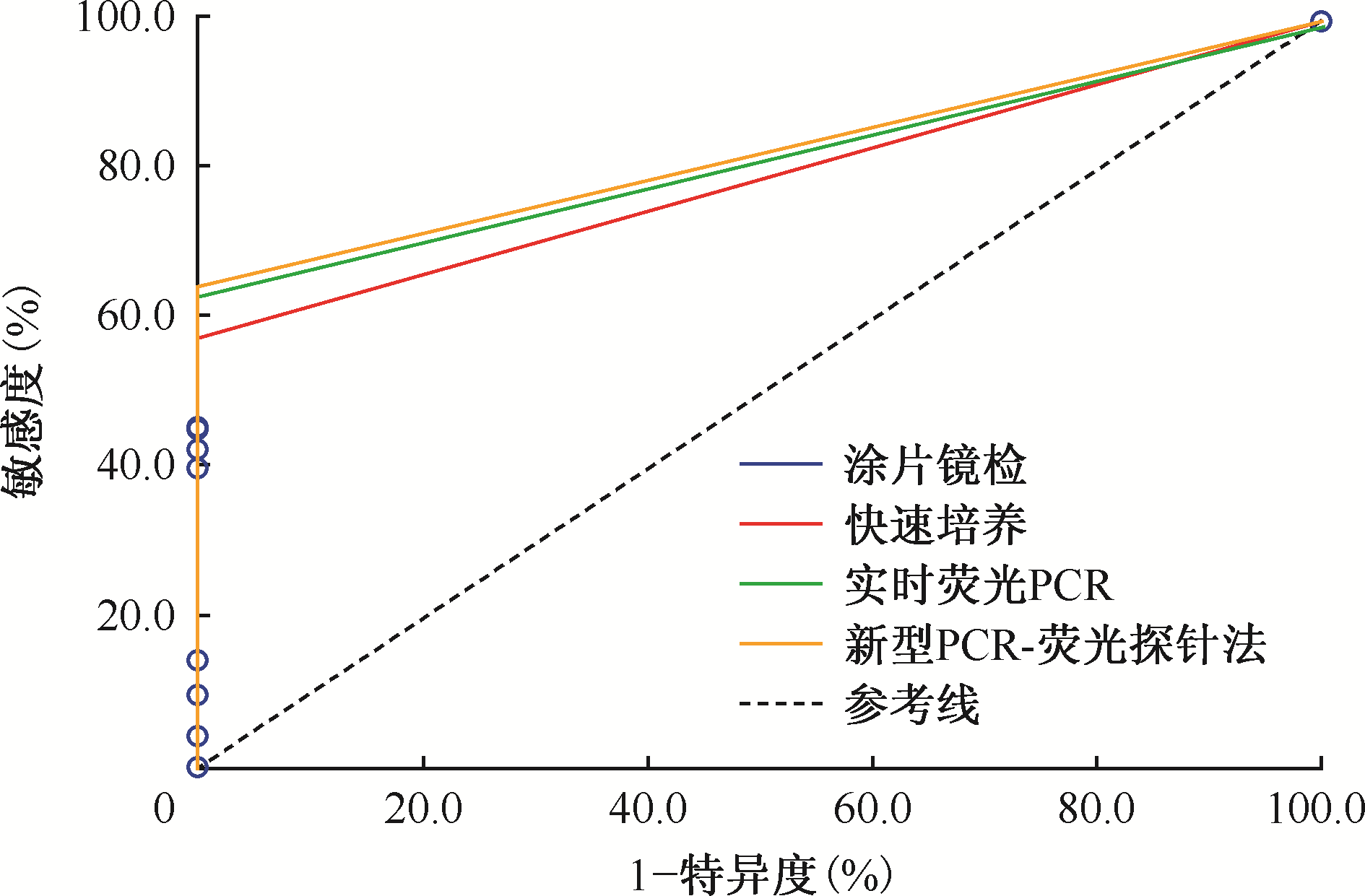
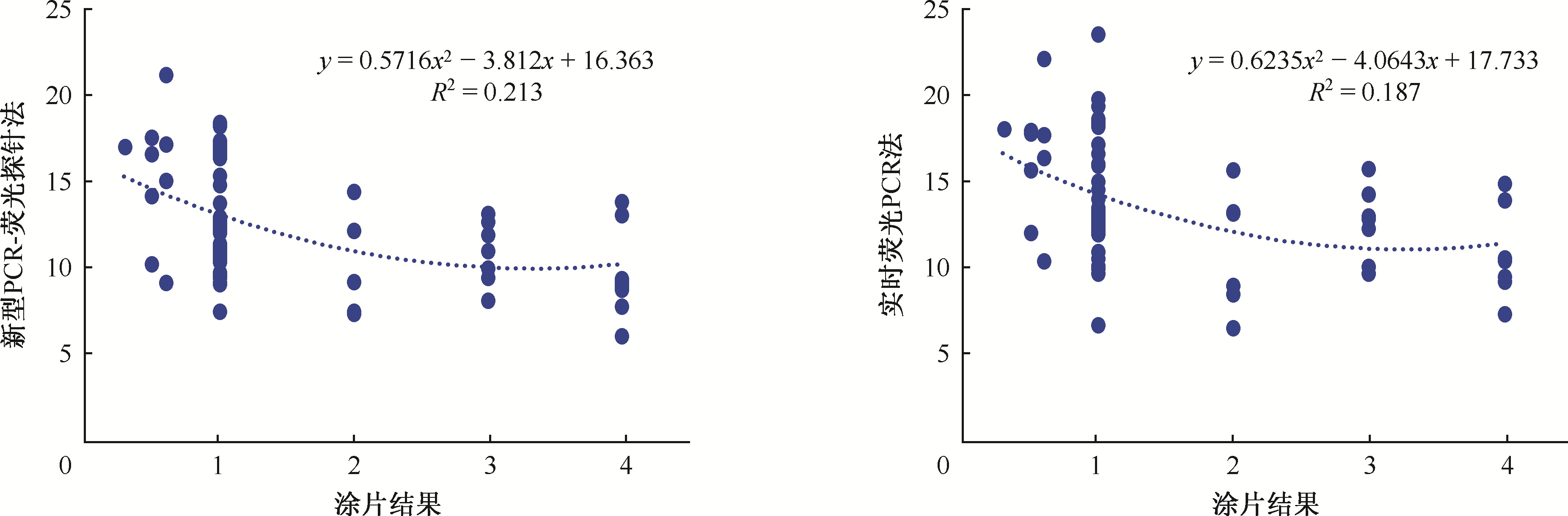
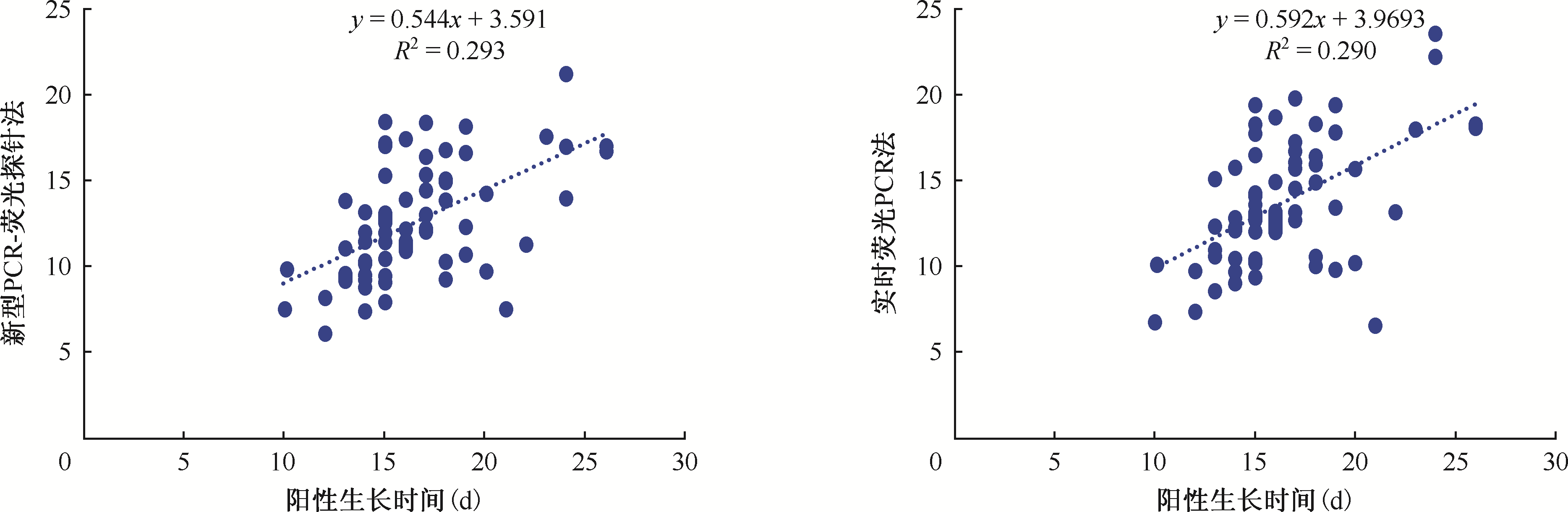
目的: 比较新型PCR-荧光探针法(DiagMed qPCR)与涂片镜检、液体培养和实时荧光PCR法在肺结核检测中的应用效果。方法: 连续纳入2021年3—6月武汉市肺科医院收治的238例疑似肺结核患者的痰标本,以临床综合诊断结果为标准,评估并比较涂片镜检、液体培养、实时荧光PCR法及DiagMed qPCR法的诊断效能。同时,以液体培养及菌种鉴定结果作为参考,评估并比较两种核酸检测方法样本的阈值循环数(Ct)与菌量之间的相关系数。结果: 238例患者中,经临床综合诊断,167例诊断为肺结核,1例诊断为非结核分枝杆菌病,70例诊断为肺部真菌、病毒等感染性非结核病。以临床综合诊断结果为标准,涂片镜检、液体培养、实时荧光PCR法和DiagMed qPCR法诊断肺结核的敏感度分别为45.51%(76/167)、47.31%(79/167)、58.68%(98/167)和58.68%(98/167),特异度分别为100.00%(71/71)、100.00%(71/71)、98.59%(70/71)和98.59%(70/71),曲线下面积分别为72.75%、78.74%、81.14%和82.24%。DiagMed qPCR法与实时荧光PCR法有相同的肺结核阳性检出率(58.68%),DiagMed qPCR法的Ct值与痰菌含量之间的相关决定系数(R2值)较实时荧光PCR法(涂片菌量等级:0.213 vs. 0.187,培养阳性生长时间0.293 vs. 0.290)更高。结论: 对于肺结核的检出率,DiagMed qPCR法与实时荧光PCR法均具有较高的敏感度和特异度,但前者检测结果的Ct值与菌量的负相关性更强,可提高检测效率。

关键词: 结核, 肺, 聚合酶链反应, 临床实验室技术, 敏感性与特异性, 对比研究

Abstract:

Objective: To compare the diagnostic efficacy of the novel PCR-fluorescent probe method (DiagMed qPCR) with smear microscopy, liquid culture, and real-time fluorescent PCR in the detection of pulmonary tuberculosis. Methods: A total of 238 sputum samples from suspected pulmonary tuberculosis patients at Wuhan Pulmonary Hospital from March 20, 2021, to June 1, 2021, were consecutively enrolled. Taking clinical comprehensive diagnosis results as the reference standard, the diagnostic performance of smear microscopy, liquid culture, real-time fluorescent PCR, and DiagMed qPCR was evaluated and compared. Meanwhile, with the results of liquid culture and species identification as references, the correlation coefficient between the threshold cycle number (Ct) and bacterial load in samples from the two nucleic acid testing methods were assessed and compared. Results: Among the 238 patients, 167 cases were diagnosed with pulmonary TB, 1 case with nontuberculous mycobacterial disease, and 70 cases with pulmonary infections caused by fungi, viruses, and other non-tuberculous conditions based on clinical comprehensive diagnosis. Taking the clinical comprehensive diagnosis as the reference, the sensitivities of smear microscopy, liquid culture, real-time fluorescent PCR, and DiagMed qPCR for diagnosing pulmonary tuberculosis were 45.51% (76/167), 47.31% (79/167), 58.68% (98/167), and 58.68% (98/167), respectively; the specificities were 100.00% (71/71), 100.00% (71/71), 98.59% (70/71), and 98.59% (70/71), respectively; the AUC (%) values were 72.75%, 78.74%, 81.14%, and 82.24%, respectively. DiagMed qPCR and real-time fluorescence PCR showed the same positive detection rate for pulmonary TB (58.68%). The correlation coefficient R2 between the Ct value of DiagMed qPCR and sputum bacterial content was higher than that of real-time fluorescent PCR assay (smear bacterial quantity grade: 0.213 vs. 0.187; culture-positive growth time: 0.293 vs. 0.290). Conclusion: In the detection of tuberculosis, both the DiagMed qPCR method and the real-time fluorescent PCR assay exhibit high sensitivity and specificity. However, the former demonstrates a stronger negative correlation between Ct values and bacterial load, which can improve detection efficiency.

Key words: Tuberculosis, pulmonary, Polymerase chain reaction, Clinical laboratory techniques, Sensitivity and specificity, Comparative study

中图分类号: