Email Alert | RSS    帮助

中国防痨杂志 ›› 2026, Vol. 48 ›› Issue (2): 197-205.doi: 10.19982/j.issn.1000-6621.20250366

• 论著 • 上一篇    下一篇

2013—2022年新疆维吾尔自治区喀什地区利福平耐药肺结核患者生存状况及影响因素分析

苏伟1, 白欣煜2, 买吾拉江·依马木3, 克尤木·吾布力喀斯木2, 地尔木拉提·吐孙3, 赖富丽2, 米热尼沙·阿不都热西提2, 西日扎提·马木提2, 周临军2(), 黄飞1()   

  1. 1 中国疾病预防控制中心(中国预防医学科学院)结核病预防控制中心, 北京 102206
    2 新疆维吾尔自治区喀什地区结核病防治所, 喀什 844099
    3 新疆维吾尔自治区喀什地区疾病预防控制中心, 喀什 844100
  • 收稿日期:2025-09-09 出版日期:2026-02-10 发布日期:2026-02-03
  • 通信作者: 周临军,Email:1149306215@qq.com;黄飞,Email:huangfei@chinacdc.cn
  • 基金资助:
    疾病控制-结核病预防控制项目;新疆维吾尔自治区喀什地区科技局项目(KS2022047)

Survival status and influencing factors analysis of patients with rifampicin-resistant pulmonary tuberculosis in Kashgar Prefecture, Xinjiang Uygur Autonomous Region, 2013—2022

Su Wei1, Bai Xinyu2, Maiwulajiang Yimamu3, Keyoumu Wubulikasimu2, Diermulati Tusun3, Lai Fuli2, Mirenisha Abudurexiti2, Xirizhati Mamuti2, Zhou Linjun2(), Huang Fei1()   

  1. 1 National Center for Tuberculosis Control and Prevention, Chinese Center for Disease Control and Prevention (Chinese Academy of Preventive Medicine), Beijing 102206, China
    2 Kashgar Prefectural Institute for Tuberculosis Control and Prevention, Xinjiang Uygur Autonomous Region, Kashgar 844099, China
    3 Kashgar Prefectural Center for Disease Control and Prevention, Xinjiang Uygur Autonomous Region, Kashgar 844100, China
  • Received:2025-09-09 Online:2026-02-10 Published:2026-02-03
  • Contact: Zhou Linjun, Email:1149306215@qq.com;Huang Fei, Email: huangfei@chinacdc.cn
  • Supported by:
    Disease Contro-Tuberculosis Prevention and Control;Science and Technology Bureau of Kashgar Prefecture, Xinjiang Uygur Autonomous Region(KS2022047)

摘要:

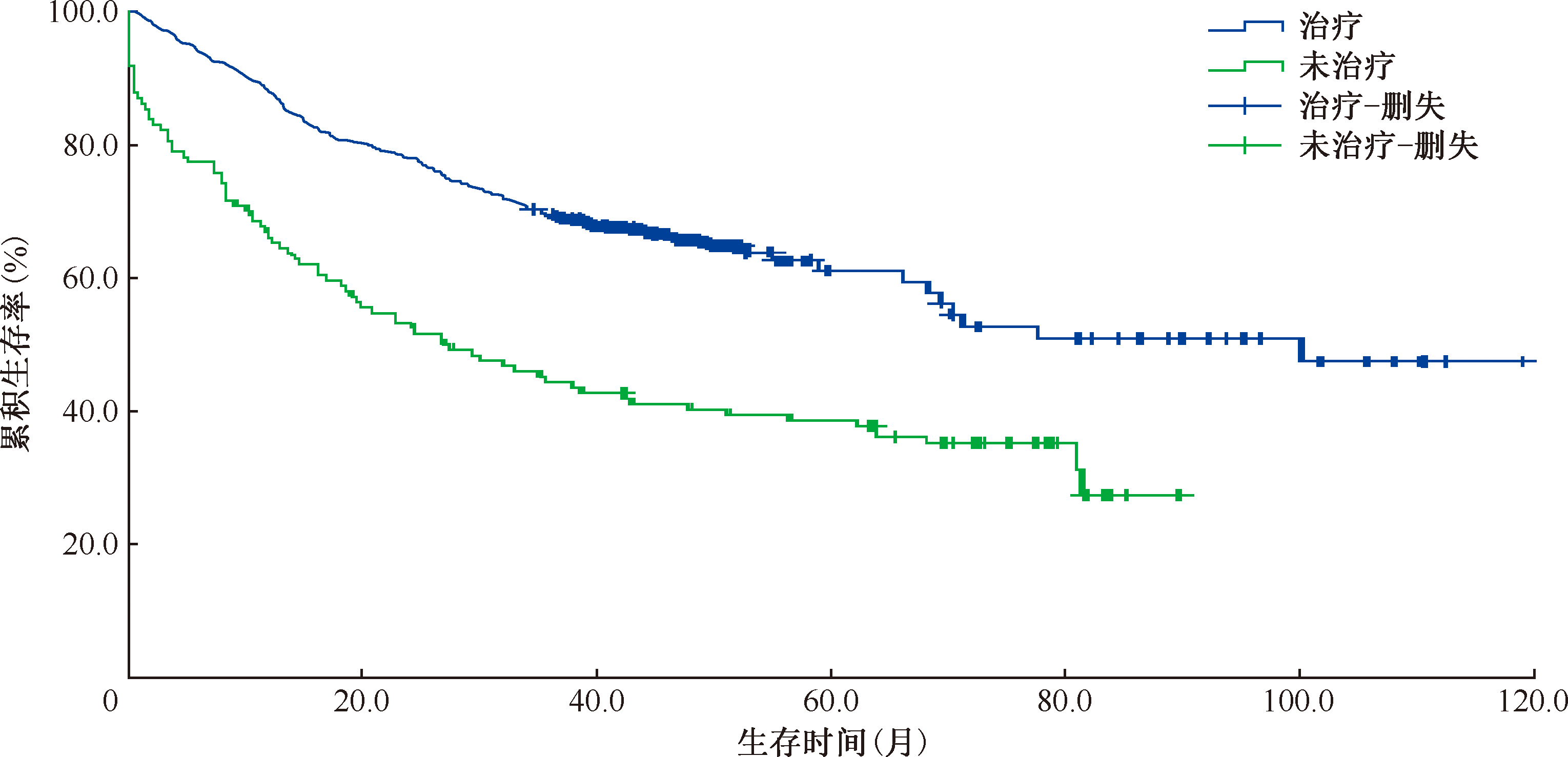
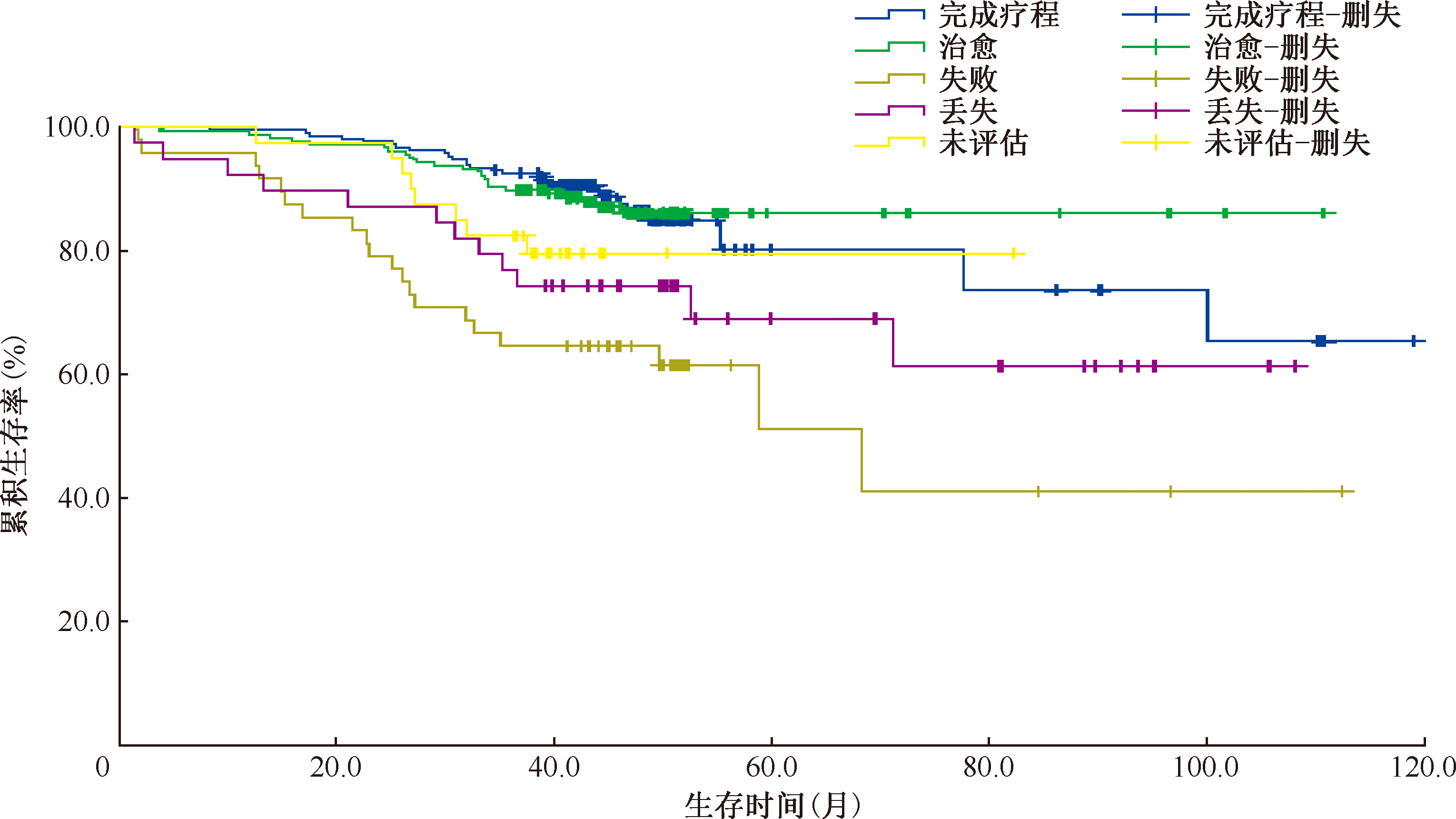
目的: 分析新疆维吾尔自治区喀什地区利福平耐药肺结核(rifampicin-resistant pulmonary tuberculosis,RR-PTB)患者的生存状况及影响因素,为优化耐药结核病防控策略提供科学依据。方法: 回顾性分析喀什地区从2013年开展耐药结核病规范化诊疗以来确诊的RR-PTB患者截止到2022年底的生存情况。采用寿命表法分析研究对象的死亡率、生存率和累积生存率;使用Kaplan-Meier法计算不同研究对象的生存中位时间并绘制生存曲线,采用Log-rank 进行检验;运用单因素和多因素Cox比例风险回归模型分析影响RR-PTB患者生存的危险因素。结果: 共有782例RR-PTB患者纳入分析,随访时间最长达9.9年,其间,40.0%(313/782)的患者死亡,死亡主要集中在确诊后第1年内(121例),尤以确诊后2个月内最多,为31例(25.6%);总死亡密度为4.4/100人年,呈下降趋势;患者中位生存时间为80.9(95%CI:61.3~100.5)个月,第12、36、60个月的累积生存率分别为74.2%、61.5%、52.2%;出现失败、失访和未评估三类不良治疗结局的患者,平均生存时间分别为(67.9±7.9)个月、(67.4±3.8)个月、(71.1±3.6)个月,Log-rank 检验各组生存时间差异有统计学意义(χ2=27.631,P<0.001)。多因素Cox比例风险模型分析结果显示,未治疗(与治疗患者相比,HR=2.642,95%CI:2.018~3.458)、复治(与初治患者相比,HR=1.779,95%CI:1.359~2.329)、教育程度低(与小学及以下组相比,初中组HR=0.652,95%CI:0.443~0.959)均是影响患者生存时间的危险因素。结论: 喀什地区RR-PTB患者病亡率较高,疾病负担较重;未治疗、复治、文化程度低是影响患者生存的危险因素,且治疗失败等不良治疗结局患者存在较长时间的传染期。建议推广快速药物敏感性检测技术和短程治疗方案,确保患者应治尽治,给予患者适宜的健康教育,并强化患者关怀支持。

关键词: 结核,肺, 利福平, 抗药性, 存活率分析, 危险因素

Abstract:

Objective: To analyze the survival status and influencing factors of patients with rifampicin-resistant pulmonary tuberculosis (RR-PTB) in Kashgar Prefecture, Xinjiang Uygur Autonomous Region, and to provide a scientific basis for optimizing the prevention and control strategies of drug-resistant tuberculosis. Methods: A retrospective analysis was performed on the survival status of RR-PTB patients diagnosed in Kashgar Prefecture since the initiation of standardized diagnosis and treatment for drug-resistant tuberculosis in 2013, up to the end of 2022. The life table method was used to analyze the death probability, survival probability and cumulative survival rate of the patients; the Kaplan-Meier method was used to calculate the median survival time and draw the survival curve, and the Log-rank test was performed; univariate and multivariate Cox proportional hazards regression models were applied to analyze the risk factors affecting the survival of RR-PTB patients. Results: A total of 782 RR-PTB patients were included in the analysis, with a maximum follow-up duration of 9.9 years. During the follow-up period, 40.0% (313/782) of the patients died, with deaths predominantly concentrated in the first year after diagnosis (121 cases), particularly within 2 months after diagnosis (31 cases, accounting for 25.6%). The overall mortality density was 4.4/100 person-years, showing a decreasing trend. The median survival time of the patients was 80.9 (95%CI: 61.3-100.5) months, and cumulative survival rates at the 12th, 36th, and 60th months were 74.2%, 61.5%, and 52.2%, respectively. The average survival times of patients who presented with the three adverse treatment outcomes of treatment failure, loss to follow-up, and unevaluated were (67.9±7.9), (67.4±3.8), and (71.1±3.6) months, respectively, and the difference in survival times between the groups was statistically significant by the Log-rank test (χ2=27.631, P<0.001). Multifactorial Cox proportional risk model analysis revealed that non-treatment (compared to the treated patients, HR=2.642,95%CI: 2.018-3.458), retreatment (compared to the new patients, HR=1.779, 95%CI: 1.359-2.329) and low education(compared to the primary school or below group, the junior high school group: HR=0.652, 95%CI: 0.443-0.959)were factors affecting the survival time of patients. Conclusion: RR-PTB patients in Kashgar Prefecture have a notably high mortality rate and bear a heavy disease burden. Non-treatment, retreatment and low education level are risk factors affecting the survival of patients, and patients with adverse treatment outcomes such as treatment failure have a prolonged infectious period. It is recommended to promote rapid drug susceptibility testing technology and short-course treatment regimens, ensure that all eligible patients receive treatment, provide appropriate health education, and strengthen patient care and support, so as to reduce the risk of death and alleviate the disease burden.

Key words: Tuberculosis, pulmonary, Rifampin, Drug resistance, Survival analysis, Risk factors

中图分类号: