Email Alert | RSS 帮助

中国防痨杂志 ›› 2026, Vol. 48 ›› Issue (2): 167-187.doi: 10.19982/j.issn.1000-6621.20250435
中国防痨协会药学专业分会
收稿日期:2025-11-07
出版日期:2026-02-10
发布日期:2026-02-03
基金资助:Pharmaceutical Professional Branch of Chinese Antituberculosis Association
Received:2025-11-07
Online:2026-02-10
Published:2026-02-03
Supported by:摘要:
治疗药物监测(therapeutic drug monitoring,TDM)通过测定患者体内的药物暴露、药理标志物或药效指标,利用定量药理模型,以药物治疗窗为基准,制订适合患者的个体化给药方案,其核心是个体化药物治疗。为进一步指导和规范我国医疗机构开展抗结核药物TDM工作,保证TDM的科学性、伦理性、规范性,使患者最大程度获益,中国防痨协会药学专业分会联合首都医科大学附属北京胸科医院/北京市结核病胸部肿瘤研究所,在2021年《抗结核药治疗药物监测临床应用专家共识》的基础上,对TDM的适应证、监测方法、剂量调整及特殊人群应用等方面进行了系统更新。本共识在国际实践指南平台注册,制订过程遵循方法学原则,由结核病领域的药学及临床专家协作,结合最新循证证据和实践经验完成,将为临床开展TDM提供科学、可行的实践指导。
中图分类号:
中国防痨协会药学专业分会. 抗结核药治疗药物监测临床应用专家共识(2025年更新版)[J]. 中国防痨杂志, 2026, 48(2): 167-187. doi: 10.19982/j.issn.1000-6621.20250435
Pharmaceutical Professional Branch of Chinese Antituberculosis Association. Expert consensus on therapy and drug monitoring clinical application of anti-tuberculosis drug (updated in 2025)[J]. Chinese Journal of Antituberculosis, 2026, 48(2): 167-187. doi: 10.19982/j.issn.1000-6621.20250435
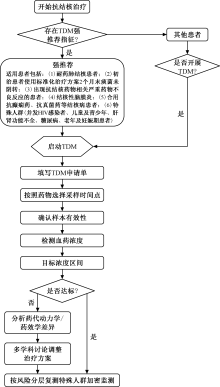
图1
抗结核药物TDM流程 注 TDM:治疗药物监测;TB: 结核病;HIV:人类免疫缺陷病毒
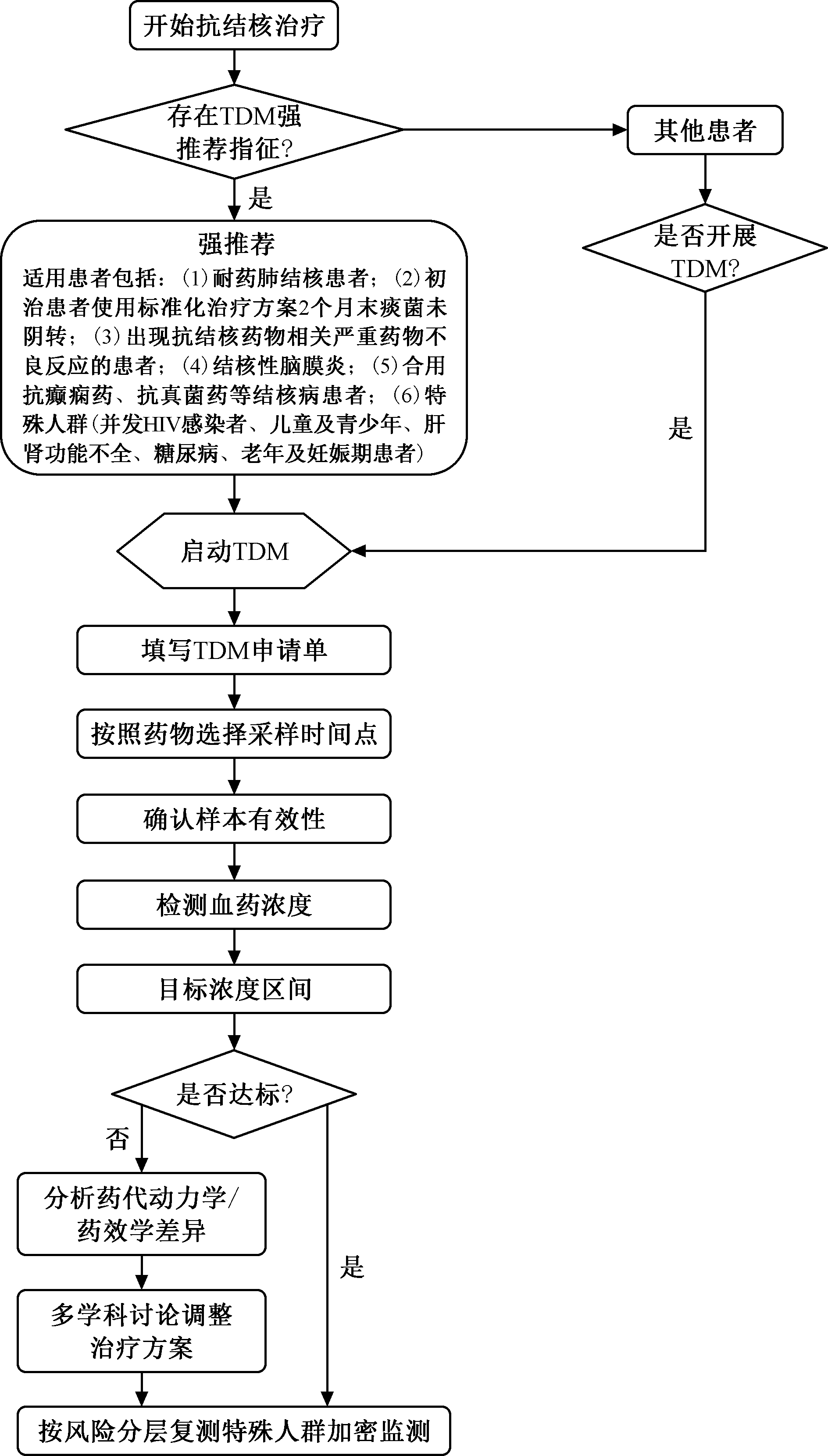

表1
主要抗结核药物 TDM 方案与临床管理意见
 |
表2
特殊人群TDM方案与临床管理意见
| 特殊人群 分类 | TDM核心目标 | 重点监测药物与 关键策略 | TDM关键阈值与 剂量调整 | 临床管理要点 |
|---|---|---|---|---|
| 糖尿病 与结核 病共病 | 确保有效暴露,预防因低暴露导致的获得性耐药。 以RFP达标为首要目标 | 药物:RFP、INH、PZA、Mfx 策略:治疗早期(稳态第3~5天)常规进行。采用服药后2h、6h两点采样估算AUC | 若RFP Cmax<8mg/L或AUC/MIC<435,可将剂量上调至15~20mg/kg,并于1 周后复查TDM | ?对高BMI、胃肠功能障碍者,应增加TDM频次 ?口服降糖药(如磺脲类、DPP-4抑制剂)与RFP存在显著相互作用,会导致降糖疗效减弱或失效 |
| 并发HIV 感染 | 管理复杂DDIs,确保抗结核与抗病毒治疗双重有效 | 药物:RFP、INH、Lzd及抗逆转录病毒药物,如DTG、EFV、RAL 策略:在强化期同步监测。强烈建议优先对CD4<200个/μl、低体质量指数(<18.5kg/m2)、肝功能异常或并发机会性感染者开展TDM监测 | 利福霉素类药物: 联用DTG:DTG 50mg,1次/d,调整为2次/d;停用RFP后维持用药约2 周。DTG与RFB合用无需调整DTG剂量;联用RAL:800mg,2次/d;联用EFV:EFV无须加量,Rfb调整为600mg,1次/d;蛋白酶抑制剂(PI/r):避免联用RFP,改用Rfb Lzd:与齐多夫定均存在骨髓毒性,避免联用 INH:在CYP2B6慢/中等代谢表型人群中,INH可抑制EFV清除 | ?临床判读:需综合CYP2B6等代谢表型、肝功能指标进行动态优化 |
| 肝功能 异常 | 平衡肝毒性风险与治疗疗效,防止肝损伤恶化并保证治疗强度 | 药物:PZA、RFP、INH 策略:以AUC为核心,从治疗早期即开始监测,并每周复查肝酶直至稳定。合并HCV治疗者需并行TDM | 警戒阈值: PZA:AUC0~24h>363mg·h-1·L-1 RFP:AUC0~24h>271mg·h-1·L-1 INH:C2h>6mg/L,慢乙酰化(NAT2)与INH肝损伤风险显著相关 | ?出现肝功能异常时,依据TDM结果优先采取减量或延长给药间隔,而非盲目停药 ?存在肝损伤(ALT>3 ULN)时尽量避免使用PZA |
| 肾功能 异常 | 避免经肾排泄药物蓄积中毒,依据肾功能精准调整 | 药物:EMB、PZA、氨基糖苷类、CS 策略:以Cmin和AUC为核心。依据GFR及RRT方式/频率制定给药方案 | 警戒阈值: EMB:Cmax>6mg/L 氨基糖苷类:Cmin<1~2mg/L,疗效保证Cmax/MIC>8~10 Cs:Cmax 20~35mg/L, Cmin 10~20mg/L | ?透析后需补充给药,尤其是氨基糖苷类和环丝氨酸。对于氨基糖苷类药物,需实施个体化给药,通过延长给药间隔,以保证疗效 |
| 儿童和 青少年 | 克服年龄相关PK差异,确保有效暴露并预防成长发育期毒性 | 药物:RFP、INH、EMB、PZA及二线药(LZD、Bdq) 策略:常规实施。优先覆盖<5岁低龄儿童或营养不良(BMI<15kg/m2)者。采用C2h和有限采样法估算AUC | 疗效阈值: RFP:Cmax>8mg/L;INH:C2h 3~6mg/L,NAT2快乙酰化型患儿,可依据TDM上调剂量至7~10mg·kg-1·d-1);PZA:AUC0-24h>363mg·h-1·L-1 警戒阈值: Lzd: Cmin>2mg/L | ?儿童不同年龄阶段吸收/分布/代谢/排泄差异显著,暴露变异度大,易出现低暴露或毒性难以早期识别,早期开展TDM可同时评估疗效与潜在毒性 |
| 老年患者 | 应对增龄性生理变化及多重用药带来的复杂PK/PD变异,平衡疗效与安全性,预防药物蓄积中毒 | 药物:所有抗结核药物,重点监测经肾排泄的EMB、PZA、Lzd以及治疗窗窄的药物 策略:治疗初期常规实施。以Cmin监测预防蓄积,结合AUC评估总体暴露。需全面评估肝肾功能、合并用药及营养状况 | 疗效阈值: INH:C2h 3~6mg/L RFP:Cmax≥8mg/L PZA:Cmax<35mg/L与失败相关、<58mg/L与痰转阴延迟相关 警戒阈值: EMB:Cmax>6mg/L LZD:Cmin>2mg/L | ?安全监测:强化对肝肾功能、血常规、尿酸及视觉症状的监测,注意区别毒性迹象与衰老症状 ?若Cmin超过目标范围上限或出现毒性迹象,应优先考虑延长给药间隔而非简单减量,以维持峰值浓度保证疗效 |
| 妊娠期 女性 | 应对妊娠期PK变化,保障母婴安全 | 药物:RFP、INH、Lzd、Lfx、Bdq 策略:治疗初期常规实施,以AUC/MIC达标为核心。动态监测母婴药物水平 | 疗效阈值: RFP:AUC/MIC≥271 Lfx:AUC/MIC>146 剂量调整:妊娠期RFP、Lfx、Bdq暴露偏低,需依据TDM结果上调剂量,产后及时复查并调整治疗剂量 | ?应用INH需注意母婴维生素B6与肝功能监测 ?应用Lzd注意观察婴儿胃肠道及念珠菌感染相关表现 ?Bdq在乳汁中显著蓄积,若继续母乳喂养需个体化评估与监测 |
| [1] | 屈燕, 李涛, 马文斌, 等. 世界卫生组织《2025年全球结核病报告》解读. 结核与肺部疾病杂志, 2025, 6(6): 613-623. doi:10.19983/j.issn.2096-8493.20250178. |
| [2] | 首都医科大学附属北京胸科医院, 《中国防痨杂志》编辑委员会. 抗结核药治疗药物监测临床应用专家共识. 中国防痨杂志, 2021, 43(9): 867-873. doi:10.3969/j.issn.1000-6621.2021.09.003. |
| [3] |
Sarkar M, Sarkar J. Therapeutic drug monitoring in tuberculosis. Eur J Clin Pharmacol, 2024, 80(11): 1659-1684. doi:10.1007/s00228-024-03749-8.
URL pmid: 39240337 |
| [4] | Nahid P, Mase SR, Migliori GB, et al. Treatment of Drug-Resistant Tuberculosis. An Official ATS/CDC/ERS/IDSA Clinical Practice Guideline. Am J Respir Crit Care Med, 2019, 200(10): e93-e142. doi:10.1164/rccm.201909-1874ST. |
| [5] |
Sotgiu G, Alffenaar JWC, Centis R, et al. Therapeutic drug monitoring: how to improve drug dosage and patient safety in tuberculosis treatment. Int J Infect Dis, 2015, 32: 101-104. doi:10.1016/j.ijid.2014.12.001.
URL pmid: 25809764 |
| [6] |
Wilby KJ, Ensom MHH, Marra F. Review of evidence for measuring drug concentrations of first-line antitubercular agents in adults. Clin Pharmacokinet, 2014, 53(10): 873-890. doi:10.1007/s40262-014-0170-1.
URL pmid: 25172553 |
| [7] |
Magis-Escurra C, van den Boogaard J, Ijdema D, et al. Therapeutic drug monitoring in the treatment of tuberculosis patients. Pulm Pharmacol Ther, 2012, 25(1): 83-86. doi:10.1016/j.pupt.2011.12.001.
URL pmid: 22179055 |
| [8] | Märtson AG, Burch G, Ghimire S, et al. Therapeutic drug monitoring in patients with tuberculosis and concurrent medical problems. Expert Opin Drug Metab Toxicol, 2021, 17(1): 23-39. doi:10.1080/17425255.2021.1836158. |
| [9] | Kempker RR, Alghamdi WA, Al-Shaer MH, et al. A Pharmacology Perspective of Simultaneous Tuberculosis and Hepatitis C Treatment. Antimicrob Agents Chemother, 2019, 63(12): AAC.01215-19. doi:10.1128/AAC.01215-19. |
| [10] |
Satyaraddi A, Velpandian T, Sharma SK, et al. Correlation of plasma anti-tuberculosis drug levels with subsequent development of hepatotoxicity. Int J Tuberc Lung Dis, 2014, 18(2): 188-195. doi:10.5588/ijtld.13.0128.
URL pmid: 24429311 |
| [11] | Alffenaar JWC, Akkerman OW, Tiberi S, et al. Should we worry about bedaquiline exposure in the treatment of multidrug-resistant and extensively drug-resistant tuberculosis?. Eur Respir J, 2020, 55(2): 1901908. doi:10.1183/13993003.01908-2019. |
| [12] |
Saito N, Yoshii Y, Kaneko Y, et al. Impact of renal function-based anti-tuberculosis drug dosage adjustment on efficacy and safety outcomes in pulmonary tuberculosis complicated with chronic kidney disease. BMC Infect Dis, 2019, 19(1): 374. doi:10.1186/s12879-019-4010-7.
URL pmid: 31046706 |
| [13] | Rao PS, Modi N, Nguyen NTT, et al. Alternative Methods for Therapeutic Drug Monitoring and Dose Adjustment of Tuberculosis Treatment in Clinical Settings: A Systematic Review. Clin Pharmacokinet, 2023, 62(3): 375-398. doi:10.1007/s40262-023-01220-y. |
| [14] | Alffenaar JWC, Gumbo T, Dooley KE, et al. Integrating Pharmacokinetics and Pharmacodynamics in Operational Research to End Tuberculosis. Clin Infect Dis, 2020, 70(8): 1774-1780. doi:10.1093/cid/ciz942. |
| [15] | Kim HY, Byashalira KC, Heysell SK, et al. Therapeutic Drug Monitoring of Anti-infective Drugs: Implementation Strategies for 3 Different Scenarios. Ther Drug Monit, 2022, 44(1): 3-10. doi:10.1097/FTD.0000000000000936. |
| [16] | 乔勇, 童焕, 郭思维, 等. 利福平全血稳定性研究及治疗药物监测的临床采样流程建立. 中国现代应用药学, 2025, 42(7): 1148-1155. doi:10.13748/j.cnki.issn1007-7693.20242385. |
| [17] |
Capiau S, Veenhof H, Koster RA, et al. Official International Association for Therapeutic Drug Monitoring and Clinical Toxicology Guideline: Development and Validation of Dried Blood Spot-Based Methods for Therapeutic Drug Monitoring. Ther Drug Monit, 2019, 41(4): 409-430. doi:10.1097/FTD.0000000000000643.
URL pmid: 31268966 |
| [18] |
Zentner I, Modongo C, Zetola NM, et al. Urine colorimetry for therapeutic drug monitoring of pyrazinamide during tuberculosis treatment. Int J Infect Dis, 2018, 68: 18-23. doi:10.1016/j.ijid.2017.12.017.
URL pmid: 29253711 |
| [19] |
Zentner I, Schlecht HP, Khensouvann L, et al. Urine colorimetry to detect Low rifampin exposure during tuberculosis therapy: a proof-of-concept study. BMC Infect Dis, 2016, 16: 242. doi:10.1186/s12879-016-1576-1.
URL pmid: 27250739 |
| [20] | Nicolau I, Tian L, Menzies D, et al. Point-of-care urine tests for smoking status and isoniazid treatment monitoring in adult patients. PLoS One, 2012, 7(9): e45913. doi:10.1371/journal.pone.0045913. |
| [21] |
van den Elsen SHJ, Oostenbrink LM, Heysell SK, et al. Systematic Review of Salivary Versus Blood Concentrations of Antituberculosis Drugs and Their Potential for Salivary Therapeutic Drug Monitoring. Ther Drug Monit, 2018, 40(1): 17-37. doi:10.1097/FTD.0000000000000462.
URL pmid: 29120971 |
| [22] |
Raju KSR, Taneja I, Singh SP, et al. Utility of noninvasive biomatrices in pharmacokinetic studies. Biomed Chromatogr, 2013, 27(10): 1354-1366. doi:10.1002/bmc.2996.
URL pmid: 23939915 |
| [23] | 赵螈, 雷倩, 党丽云, 等. 抗结核药物血药浓度监测工作的思考和展望. 中国防痨杂志, 2017, 39(11): 1228-1232. doi:10.3969/j.issn.1000-6621.2017.11.015. |
| [24] |
Alsultan A, Peloquin CA. Therapeutic drug monitoring in the treatment of tuberculosis: an update. Drugs, 2014, 74(8): 839-854. doi:10.1007/s40265-014-0222-8.
URL pmid: 24846578 |
| [25] | Magis-Escurra C, Later-Nijland HMJ, Alffenaar JWC, et al. Population pharmacokinetics and limited sampling strategy for first-line tuberculosis drugs and moxifloxacin. Int J Antimicrob Agents, 2014, 44(3): 229-234. doi:10.1016/j.ijantimicag.2014.04.019. |
| [26] |
Medellín-Garibay SE, Correa-López T, Romero-Méndez C, et al. Limited sampling strategies to predict the area under the concentration-time curve for rifampicin. Ther Drug Monit, 2014, 36(6): 746-751. doi:10.1097/FTD.0000000000000093.
URL pmid: 24784025 |
| [27] |
Wicha SG, Märtson AG, Nielsen EI, et al. From Therapeutic Drug Monitoring to Model-Informed Precision Dosing for Antibiotics. Clin Pharmacol Ther, 2021, 109(4): 928-941. doi:10.1002/cpt.2202.
URL pmid: 33565627 |
| [28] | Lange C, Aarnoutse R, Chesov D, et al. Perspective for Precision Medicine for Tuberculosis. Front Immunol, 2020, 11: 566608. doi:10.3389/fimmu.2020.566608. |
| [29] | World Health Organization. Guidelines for treatment of drug-susceptible tuberculosis and patient care. 2017 update. Geneva: World Health Organization, 2017. |
| [30] |
Stott KE, Pertinez H, Sturkenboom MGG, et al. Pharmacokinetics of rifampicin in adult TB patients and healthy volunteers: a systematic review and meta-analysis. J Antimicrob Chemother, 2018, 73(9): 2305-2313. doi:10.1093/jac/dky152.
URL pmid: 29701775 |
| [31] | 中国药理学会治疗药物监测研究专业委员会中国药学会医院药学专业委员会. 治疗药物监测结果解读专家共识. 中国医院药学杂志, 2020, 40(23): 2389-2395. doi:10.13286/j.1001-5213.2020.23.01. |
| [32] |
Müller DM, Rentsch KM. Therapeutic drug monitoring by LC-MS-MS with special focus on anti-infective drugs. Anal Bioanal Chem, 2010, 398(6): 2573-2594. doi:10.1007/s00216-010-3986-z.
URL pmid: 20652551 |
| [33] | Kuhlin J, Sturkenboom MGG, Ghimire S, et al. Mass spectrometry for therapeutic drug monitoring of anti-tuberculosis drugs. Clin Mass Spectrom, 2019, 14 Pt A: 34-45. doi:10.1016/j.clinms.2018.10.002. |
| [34] |
Thomas SN, French D, Jannetto PJ, et al. Liquid chromatography-tandem mass spectrometry for clinical diagnostics. Nat Rev Methods Primers, 2022, 2(1): 96. doi:10.1038/s43586-022-00175-x.
URL pmid: 36532107 |
| [35] |
Stemkens R, Mouhdad C, Franssen EJF, et al. Ten-year results of an international external quality control programme for measurement of anti-tuberculosis drug concentrations. J Antimicrob Chemother, 2024, 79(6): 1346-1352. doi:10.1093/jac/dkae105.
URL pmid: 38581098 |
| [36] |
Aarnoutse RE, Sturkenboom MGG, Robijns K, et al. An interlaboratory quality control programme for the measurement of tuberculosis drugs. Eur Respir J, 2015, 46(1): 268-271. doi:10.1183/09031936.00177014.
URL pmid: 25882800 |
| [37] | Märtson AG, Sturkenboom MGG, Stojanova J, et al. How to design a study to evaluate therapeutic drug monitoring in infectious diseases?. Clin Microbiol Infect, 2020, 26(8): 1008-1016. doi:10.1016/j.cmi.2020.03.008. |
| [38] | Jing W, Zong Z, Tang B, et al. Population Pharmacokinetic Analysis of Isoniazid among Pulmonary Tuberculosis Patients from China. Antimicrob Agents Chemother, 2020, 64(3): e01736-19. doi:10.1128/AAC.01736-19. |
| [39] | Zheng X, Bao Z, Forsman LD, et al. Drug Exposure and Minimum Inhibitory Concentration Predict Pulmonary Tuberculosis Treatment. Res Clin Infect Dis, 2021, 73(9): e3520-e3528. doi:10.1093/cid/ciaa1569. |
| [40] |
Pasipanodya JG, McIlleron H, Burger A, et al. Serum drug concentrations predictive of pulmonary tuberculosis outcomes. J Infect Dis, 2013, 208(9): 1464-1473. doi:10.1093/infdis/jit352.
URL pmid: 23901086 |
| [41] | Srivastava S, Musuka S, Sherman C, et al. Efflux-pump-derived multiple drug resistance to ethambutol monotherapy in Mycobacterium tuberculosis and the pharmacokinetics and pharmacodynamics of ethambutol. J Infect Dis, 2010, 201(8): 1225-1231. doi:10.1086/651377. |
| [42] | Alsultan A, Savic R, Dooley KE, et al. Population Pharmacokinetics of Pyrazinamide in Patients with Tuberculosis. Antimicrob Agents Chemother, 2017, 61(6):e02625-16. doi:10.1128/AAC.02625-16. |
| [43] | Makki H, Sattar Ahmad MAA, Alkreathy H, et al. Therapeutic drug monitoring in optimizing tuberculosis treatment outcomes: A review on the first-line four-drug standard treatment regimen. Saudi J Clin Pharmacy, 2023. doi:10.4103/sjcp.sjcp_6_23. |
| [44] | Zhang N, Savic RM, Boeree MJ, et al. Optimising pyrazinamide for the treatment of tuberculosis. Eur Respir J, 2021, 58(1): 2002013. doi:10.1183/13993003.02013-2020. |
| [45] | Zou J, Chen S, Rao W, et al. Population Pharmacokinetic Modeling of Bedaquiline among Multidrug-Resistant Pulmonary Tuberculosis Patients from China. Antimicrob Agents Chemother, 2022, 66(10): e00811-22. doi:10.1128/aac.00811-22. |
| [46] | Lyons MA. Pharmacodynamics and Bactericidal Activity of Bedaquiline in Pulmonary Tuberculosis. Antimicrob Agents Chemother, 2022, 66(2): e01636-21. doi:10.1128/aac.01636-21. |
| [47] |
Li Y, Lei G, Dong W, et al. Differential distribution of linezolid in diseased and nondiseased bones in patients with spinal tuberculosis. BMC Infect Dis, 2024, 24(1): 50. doi:10.1186/s12879-023-08970-x.
URL pmid: 38182990 |
| [48] | Tietjen AK, Kroemer N, Cattaneo D, et al. Population pharmacokinetics and target attainment analysis of linezolid in multidrug-resistant tuberculosis patients. Brit J Clinical Pharma, 2022, 88(4): 1835-1844. doi:10.1111/bcp.15102. |
| [49] | Lin B, Hu Y, Xu P, et al. Expert consensus statement on therapeutic drug monitoring and individualization of linezolid. Front Public Health, 2022, 10: 967311. doi:10.3389/fpubh.2022.967311. |
| [50] |
Zhu H, Guo SC, Liu ZQ, et al. Therapeutic drug monitoring of cycloserine and linezolid during anti-tuberculosis treatment in Beijing, China. Int J Tuberc Lung Dis, 2018, 22(8): 931-936. doi:10.5588/ijtld.17.0648.
URL pmid: 29991404 |
| [51] | Yan P, Shi QZ, Hu YX, et al. Evaluation of the impact of rifampicin on the plasma concentration of linezolid in tuberculosis co-infected patients. Front Pharmacol, 2023, 14: 1260535. doi:10.3389/fphar.2023.1260535. |
| [52] | Haley CA, Schechter MC, Ashkin D, et al. Implementation of Bedaquiline, Pretomanid, and Linezolid in the United States: Experience Using a Novel All-Oral Treatment Regimen for Treatment of Rifampin-Resistant or Rifampin-Intolerant Tuberculosis Disease. Clin Infect Dis, 2023, 77(7): 1053-1062. doi:10.1093/cid/ciad312. |
| [53] |
Cheng J, Yuan Y, Li J, et al. Therapeutic Drug Monitoring of Linezolid in Drug-Resistant Tuberculosis Patients: Clinical Factors and Hematological Toxicities. Infect Drug Resist, 2024, 17:2531-2540. doi:10.2147/IDR.S464429.
URL pmid: 38933777 |
| [54] | Sarathy J, Blanc L, Alvarez-Cabrera N, et al. Fluoroquinolone Efficacy against Tuberculosis Is Driven by Penetration into Lesions and Activity against Resident Bacterial Populations. Antimicrob Agents Chemother, 2019, 63(5): e02516-18. doi:10.1128/AAC.02516-18. |
| [55] | Deshpande D, Pasipanodya JG, Mpagama SG, et al. Levofloxacin Pharmacokinetics/Pharmacodynamics, Dosing, Susceptibility Breakpoints, and Artificial Intelligence in the Treatment of Multidrug-resistant Tuberculosis. Clin Infect Dis, 2018, 67(suppl_3): S293-S302. doi:10.1093/cid/ciy611. |
| [56] |
Ammerman NC, Swanson RV, Tapley A, et al. Clofazimine has delayed antimicrobial activity against Mycobacterium tuberculosis both in vitro and in vivo. J Antimicrob Chemother, 2017, 72(2): 455-461. doi:10.1093/jac/dkw417.
URL pmid: 27798204 |
| [57] |
Abdelwahab MT, Wasserman S, Brust JCM, et al. Clofazimine pharmacokinetics in patients with TB: dosing implications. J Antimicrob Chemother, 2020, 75(11): 3269-3277. doi:10.1093/jac/dkaa310.
URL pmid: 32747933 |
| [58] | Kempker RR, Smith AGC, Avaliani T, et al. Cycloserine and Linezolid for Tuberculosis Meningitis: Pharmacokinetic Evidence of Potential Usefulness. Clin Infect Dis, 2022, 75(4): 682-689. doi:10.1093/cid/ciab992. |
| [59] | Tandon V, Rani N, Roshi, et al. Cycloserine induced psychosis with hepatic dysfunction Indian. J Pharmacol, 2015, 47(2): 230. doi:10.4103/0253-7613.153439. |
| [60] | Zhu Y, Zhu L, Davies Forsman L, et al. Population Pharmacokinetics and Dose Evaluation of Cycloserine among Patients with Multidrug-Resistant Tuberculosis under Standardized Treatment Regimens. Antimicrob Agents Chemother, 2023, 67(5):e0170022. doi:10.1128/aac.01700-22. |
| [61] | Wang X, Mallikaarjun S, Gibiansky E. Population Pharmacokinetic Analysis of Delamanid in Patients with Pulmonary Multidrug-Resistant Tuberculosis. Antimicrob Agents Chemother, 2020, 65(1): e01202-20. doi:10.1128/AAC.01202-20. |
| [62] |
Tanneau L, Karlsson MO, Diacon AH, et al. Population Pharmacokinetics of Delamanid and its Main Metabolite DM-6705 in Drug-Resistant Tuberculosis Patients Receiving Delamanid Alone or Coadministered with Bedaquiline. Clin Pharmacokinet, 2022, 61(8): 1177-1185. doi:10.1007/s40262-022-01133-2.
URL pmid: 35668346 |
| [63] | Johnson TM, Rivera CG, Lee G, et al. Pharmacology of emerging drugs for the treatment of multi-drug resistant tuberculosis. J Clin Tuberc Other Mycobact Dis, 2024, 37:100470. doi:10.1016/j.jctube.2024.100470. |
| [64] | Alfarisi O, Mave V, Gaikwad S, et al. Effect of Diabetes Mellitus on the Pharmacokinetics and Pharmacodynamics of Tuberculosis Treatment. Antimicrob Agents Chemother, 2018, 62(11):e01383-18. doi:10.1128/AAC.01383-18. |
| [65] | Metwally AS, El-Sheikh SMA, Galal AAA. The impact of diabetes mellitus on the pharmacokinetics of rifampicin among tuberculosis patients: A systematic review and meta-analysis study. Diabetes Metab Syndr, 2022, 16(2):102410. doi:10.1016/j.dsx.2022.102410. |
| [66] |
Mtabho CM, Semvua HH, Van Den Boogaard J, et al. Effect of diabetes mellitus on TB drug concentrations in Tanzanian patients. J Antimicrob Chemother, 2019, 74(12): 3537-3545. doi:10.1093/jac/dkz368.
URL pmid: 31651031 |
| [67] |
Alkabab Y, Warkentin J, Cummins J, et al. Therapeutic drug monitoring and TB treatment outcomes in patients with diabetes mellitus. Int j tuberc lung dis, 2023, 27(2): 135-139. doi:10.5588/ijtld.22.0448.
URL pmid: 36853114 |
| [68] | Heysell SK, Moore JL, Staley D, et al. Early Therapeutic Drug Monitoring for Isoniazid and Rifampin among Diabetics with Newly Diagnosed Tuberculosis in Virginia, USA. Tuberc Res Treat, 2013, 2013: 129723. doi:10.1155/2013/129723. |
| [69] | Maranchick NF, Kwara A, Peloquin CA. Clinical considerations and pharmacokinetic interactions between HIV and tuberculosis therapeutics. Expert Rev Clin Pharmacol, 2024, 17(7):537-547. doi:10.1080/17512433.2024.2317954. |
| [70] |
Gammal R, Court M, Haidar C, et al. Clinical Pharmacogenetics Implementation Consortium (CPIC) Guideline for UGT1A1 and Atazanavir Prescribing. Clin Pharmacol Ther, 2016, 99(4): 363-369. doi:10.1002/cpt.269.
URL pmid: 26417955 |
| [71] | Verrest L, Wilthagen EA, Beijnen JH, et al. Influence of Malnutrition on the Pharmacokinetics of Drugs Used in the Treatment of Poverty-Related Diseases: A Systematic. Review Clin Pharmacokinet, 2021, 60(9): 1149-1169. doi:10.1007/s40262-021-01031-z. |
| [72] | Ribaudo HJ, Liu H, Schwab M, et al. Effect of CYP2B6, ABCB1, and CYP3A5 Polymorphisms on Efavirenz Pharmacokinetics and Treatment Response: An AIDS Clinical Trials Group Study. J Iinfect Dis, 2010, 202(5): 717-722. doi:10.1086/655470. |
| [73] |
Wang T, Liu Y, Zhu C, et al. Pharmacokinetics of Efavirenz 600mg in Combination with Rifampicin in Chinese HIV/TB Co-Infection Patients. Infect Drug Resist, 2023, 16:4659-4666. doi:10.2147/IDR.S415749.
URL pmid: 37484907 |
| [74] | Kawuma AN, Wasmann RE, Dooley KE, et al. Population Pharmacokinetic Model and Alternative Dosing Regimens for Dolutegravir Coadministered with Rifampicin. Antimicrob Agents Chemother, 2022, 66(6): e00215-22. doi:10.1128/aac.00215-22. |
| [75] | Sekaggya-Wiltshire C, Agnes Laker Odongpiny E, Williams Ojara F, et al. Therapeutic drug monitoring for antimicrobial agents for people living with HIV (TAP) Wellcome. Open Res, 2024, 9: 694. doi:10.12688/wellcomeopenres.22707.1. |
| [76] | Kivrane A, Ulanova V, Grinberga S, et al. Exploring Variability in Rifampicin Plasma Exposure and Development of Anti-Tuberculosis Drug-Induced Liver Injury among Patients with Pulmonary Tuberculosis from the Pharmacogenetic Perspective. Pharmaceutics, 2024, 16(3): 388. doi:10.3390/pharmaceutics16030388. |
| [77] | Ashkin A, Alexis A, Ninneman M, et al. Concomitant Treatment of Tuberculosis and Hepatitis C Virus in Coinfected Patients Using Serum Drug Concentration Monitoring. Open Forum Infect Dis, 2023, 10(6): ofad237. doi:10.1093/ofid/ofad237. |
| [78] | Srivastava S, Deshpande D, Magombedze G, et al. Efficacy Versus Hepatotoxicity of High-dose Rifampin, Pyrazinamide, and Moxifloxacin to Shorten Tuberculosis Therapy Duration: There Is Still Fight in the Old Warriors Yet!. Clin Infect Dis, 2018, 67(suppl_3): S359-S364. doi:10.1093/cid/ciy627. |
| [79] | Nahid P, Dorman SE, Alipanah N, et al. Official American Thoracic Society/Centers for Disease Control and Prevention/Infectious Diseases Society of America Clinical Practice Guidelines: Treatment of Drug-Susceptible Tuberculosis. Clin Infect Dis, 2016, 63(7): e147-e195. doi:10.1093/cid/ciw376. |
| [80] | Datta D, Rao IR, Prabhu AR, et al. Effect of chronic kidney disease on adverse drug reactions to anti-tubercular treatment: a retrospective cohort study. Renal Failure, 2024, 46(2): 2392883. doi:10.1080/0886022X.2024.2392883. |
| [81] | Zhang R, Qiu J, Zhou F, et al. Challenges and potential solutions for cycloserine dosing in patients with sepsis undergoing continuous renal replacement therapy. Int J Antimicrob Agents, 2024, 64(5): 107345. doi:10.1016/j.ijantimicag.2024.107345. |
| [82] | Horita Y, Alsultan A, Kwara A, et al. Evaluation of the Adequacy of WHO Revised Dosages of the First-Line Antituberculosis Drugs in Children with Tuberculosis Using Population Pharmacokinetic Modeling and Simulations. Antimicrob Agents Chemother, 2018, 62(9): e00008-18. doi:10.1128/AAC.00008-18. |
| [83] | Gafar F, Wasmann RE, McIlleron HM, et al. Global estimates and determinants of antituberculosis drug pharmacokinetics in children and adolescents: a systematic review and individual patient data meta-analysis. Eur Respir J, 2023, 61(3): 2201596. doi:10.1183/13993003.01596-2022. |
| [84] | Chabala C, Turkova A, Hesseling AC, et al. Pharmacokinetics of First-Line Drugs in Children With Tuberculosis, Using World Health Organization-Recommended Weight Band Doses and Formulations. Clin Infect Dis, 2022, 74(10): 1767-1775. doi:10.1093/cid/ciab725. |
| [85] | Agibothu Kupparam HK, Shah I, Chandrasekaran P, et al. Pharmacokinetics of anti-TB drugs in children and adolescents with drug-resistant TB: a multicentre observational study from India. J Antimicrob Chemother, 2024, 79(11): 2939-2947. doi:10.1093/jac/dkae311. |
| [86] |
Garcia-Prats AJ, Svensson EM, Winckler J, et al. Pharmacokinetics and safety of high-dose rifampicin in children with TB: the Opti-Rif trial. J Antimicrob Chemother, 2021, 76(12): 3237-3246. doi:10.1093/jac/dkab336.
URL pmid: 34529779 |
| [87] |
Lopez-Varela E, Abulfathi AA, Strydom N, et al. Drug concentration at the site of disease in children with pulmonary tuberculosis. J Antimicrob Chemother, 2022, 77(6): 1710-1719. doi:10.1093/jac/dkac103.
URL pmid: 35468189 |
| [88] | Abdelmajid HA, Mustafa GMA, Fernandez A, et al. Congenital tuberculosis (TB) use of second-line medication and therapeutic drug monitoring. Case Rep Perinat Med, 2024, 13(1):20220019. doi:10.1515/crpm-2022-0019. |
| [89] | Kim R, Jayanti RP, Lee H, et al. Development of a population pharmacokinetic model of pyrazinamide to guide personalized therapy: impacts of geriatric and diabetes mellitus on clearance. Front Pharmacol, 2023, 14: 1116226. doi:10.3389/fphar.2023.1116226. |
| [90] | Denti P, Jeremiah K, Chigutsa E, et al. Pharmacokinetics of Isoniazid, Pyrazinamide, and Ethambutol in Newly Diagnosed Pulmonary TB Patients in Tanzania. PLoS One, 2015, 10(10): e0141002. doi:10.1371/journal.pone.0141002. |
| [91] | Eloy G, Lebeaux D, Launay M, et al. Influence of Renal Function and Age on the Pharmacokinetics of Levofloxacin in Patients with Bone and Joint Infections. Antibiotics (Basel), 2020, 9(7):401. doi:10.3390/antibiotics9070401. |
| [92] |
Yagi M, Shindo Y, Mutoh Y, et al. Factors associated with adverse drug reactions or death in very elderly hospitalized patients with pulmonary tuberculosis. Sci Rep, 2023, 13(1): 6826. doi:10.1038/s41598-023-33967-6.
URL pmid: 37100850 |
| [93] | Yoon JY, Kim TO, Kim JS, et al. Impact of pyrazinamide usage on serious adverse events in elderly tuberculosis patients: A multicenter cohort study. PLoS One, 2024, 19(9): e0309902. doi:10.1371/journal.pone.0309902. |
| [94] | Kawuma AN, Ojara FW, Buzibye A, et al. Interim analysis, a tool to enhance efficiency of pharmacokinetic studies: Pharmacokinetics of rifampicin in lactating mother-infant pairs. CPT Pharmacometrics Syst Pharmacol, 2024, 13(11):1915-1923. doi:10.1002/psp4.13247. |
| [95] | Hughes JA, Pinilla M, Brooks KM, et al. Pharmacokinetics and Safety of Levofloxacin for Treatment of Rifampicin-Resistant Tuberculosis During Pregnancy and the Postpartum Period: Results from IMPAACT P1026s. Clin Pharmacokinet, 2025, 64(4): 619-630. doi:10.1007/s40262-025-01498-0. |
| [96] | Court R, Gausi K, Mkhize B, et al. Bedaquiline exposure in pregnancy and breastfeeding in women with rifampicin-resistant tuberculosis. Brit J Clinical Pharma, 2022, 88(8): 3548-3558. doi:10.1111/bcp.15380. |
| [1] | 舒薇, 刘宇红. 世界卫生组织《2025年全球结核病报告》结核病科学研究章节解读[J]. 中国防痨杂志, 2026, 48(3): 307-312. |
| [2] | 王敬, 荆玮, 李维文, 朱庆东, 逄宇, 初乃惠, 聂文娟. 超疗程应用贝达喹啉对于耐多药/利福平耐药肺结核患者的疗效及安全性临床队列分析[J]. 中国防痨杂志, 2026, 48(3): 313-319. |
| [3] | 张宇洁, 周洁, 王芸, 范琳. 血液来源的新型生物标志物对活动性肺结核的诊断价值初探[J]. 中国防痨杂志, 2026, 48(3): 320-328. |
| [4] | 侯田勇, 任丽萍, 李静颖, 王建伟, 樊姝慧, 吴渊明, 王全红, 丁卫民. 支气管肺泡灌洗液分子生物学联合检测对涂阴肺结核患者的诊断价值[J]. 中国防痨杂志, 2026, 48(3): 329-334. |
| [5] | 朱庆东, 赵春艳, 黄雪雯, 黄爱春, 曾春梅, 许超艳, 兰艳群, 宋畅. 宏基因组纳米孔测序在结核浆液性积液诊断及合并感染筛查中的应用价值[J]. 中国防痨杂志, 2026, 48(3): 335-341. |
| [6] | 矫晓克, 田园, 项静灵, 聂文娟, 庞宇, 王敬. 2011—2023年HIV阴性结核性脑膜炎患者致残与死亡的影响因素分析[J]. 中国防痨杂志, 2026, 48(3): 342-348. |
| [7] | 韦柳迎, 吴幸幸, 黄连飘, 曾春梅, 赵春艳, 宋畅, 聂文娟, 裴洁, 韦小英, 黄爱春, 朱庆东, 谢周华, 黄献珍. 复合均衡营养粉在耐多药结核病患者抗结核治疗中的应用效果分析[J]. 中国防痨杂志, 2026, 48(3): 349-355. |
| [8] | 许良, 代婀娜, 杨永瑞, 阮文凯, 李建龙, 党荣潘, 安慧刚, 赵文韬, 李兆飞, 赵颖鑫, 李颖, 孙建民, 谭洪栋. 中医辨证论治联合标准抗结核方案对脊柱结核患者术后康复影响的研究[J]. 中国防痨杂志, 2026, 48(3): 356-365. |
| [9] | 高岩, 彭英杰, 葛萧, 徐健, 刘晓华, 刘金龙, 王媛媛. 基于生物信息学的结核病铁死亡相关基因MT1G的筛选与鉴定[J]. 中国防痨杂志, 2026, 48(3): 366-376. |
| [10] | 顾玉虹, 刘曾维, 伍小英, 何立乾, 张雅惠, 吴桂锋. 结核菌素皮肤试验与γ-干扰素释放试验对学校密切接触者筛查效果及影响因素分析:一项基于真实世界数据的回顾性研究[J]. 中国防痨杂志, 2026, 48(3): 377-385. |
| [11] | 郭卉欣, 巫株华, 陈燕梅, 余美玲, 彭柯皓, 徐镠粤, 张建辉, 陈珣珣. 广东省138家结核病防治机构结核病实验室生物安全现状调查分析[J]. 中国防痨杂志, 2026, 48(3): 386-393. |
| [12] | 曹红, 钱冰, 赵科伕, 陈丽丽, 何玉勤, 吴金菊, 陈双双, 徐瑞, 赵存喜. 2015—2024年合肥市60岁及以上老年肺结核患者流行特征分析[J]. 中国防痨杂志, 2026, 48(3): 394-404. |
| [13] | 张健, 陈彬, 张明五, 秦家胜, 宋玉芳, 李雪静, 王伟. 浙江省长兴县农村老年人群结核分枝杆菌潜伏感染现状及变化的相关因素分析[J]. 中国防痨杂志, 2026, 48(3): 405-412. |
| [14] | 孟秋月, 荣宁宁, 刘亚东, 杨海霞, 马明礼. 肺结核患者治疗依从性干预措施的研究进展[J]. 中国防痨杂志, 2026, 48(3): 413-418. |
| [15] | 王娅, 张云桂. 艾滋病并发利福平耐药结核病和马尔尼菲篮状菌病一例[J]. 中国防痨杂志, 2026, 48(3): 426-428. |
| 阅读次数 | ||||||
|
全文 |
|
|||||
|
摘要 |
|
|||||
 京公网安备11010202007215号
ip访问总数: ip当日访问总数: 当前在线人数:
京公网安备11010202007215号
ip访问总数: ip当日访问总数: 当前在线人数:
 本作品遵循Creative Commons Attribution 3.0 License授权许可
