Email Alert | RSS    帮助

中国防痨杂志 ›› 2026, Vol. 48 ›› Issue (9): 1375-1385.doi: 10.19982/j.issn.1000-6621.20260166

• 论著 • 上一篇    下一篇

基于熵权-TOPSIS与RSR法的广西壮族自治区结核病防治工作质量评价

黄全将1, 黄敏莹2, 崔哲哲2()   

  1. 1 右江民族医学院公共卫生学院, 百色 533000
    2 广西壮族自治区疾病预防控制中心结核病防制所(广西壮族自治区预防医学科学院)/广西结核病防制重点学科平台, 南宁 530028
  • 收稿日期:2026-03-27 出版日期:2026-09-10 发布日期:2026-09-08
  • 通信作者: 崔哲哲 E-mail:czz6997@163.com
  • 基金资助:
    广西疾病预防控制科技项目(GXJKKJ24Z003);广西自然科学基金重点项目(2026GXNSFD202160011)

Quality evaluation of tuberculosis prevention and control work in Guangxi based on Entropy Weight-TOPSIS and RSR method

Huang Quanjiang1, Huang Minying2, Cui Zhezhe2()   

  1. 1 School of Public Health, Youjiang Medical University for Nationalities, Baise 533000, China
    2 Guangxi Zhuang Autonomous Region Center for Disease Control and Prevention, Tuberculosis Prevention and Control Institute (Guangxi Zhuang Autonomous Region Academy of Preventive Medicine)/Key Discipline Platform for Tuberculosis Prevention and Control of Guangxi, Nanning 530028, China
  • Received:2026-03-27 Online:2026-09-10 Published:2026-09-08
  • Contact: Cui Zhezhe E-mail:czz6997@163.com
  • Supported by:
    Guangxi Disease Prevention and Control Science and Technology Project(GXJKKJ24Z003);Guangxi Natural Science Foundation Key Project(2026GXNSFD202160011)

摘要:

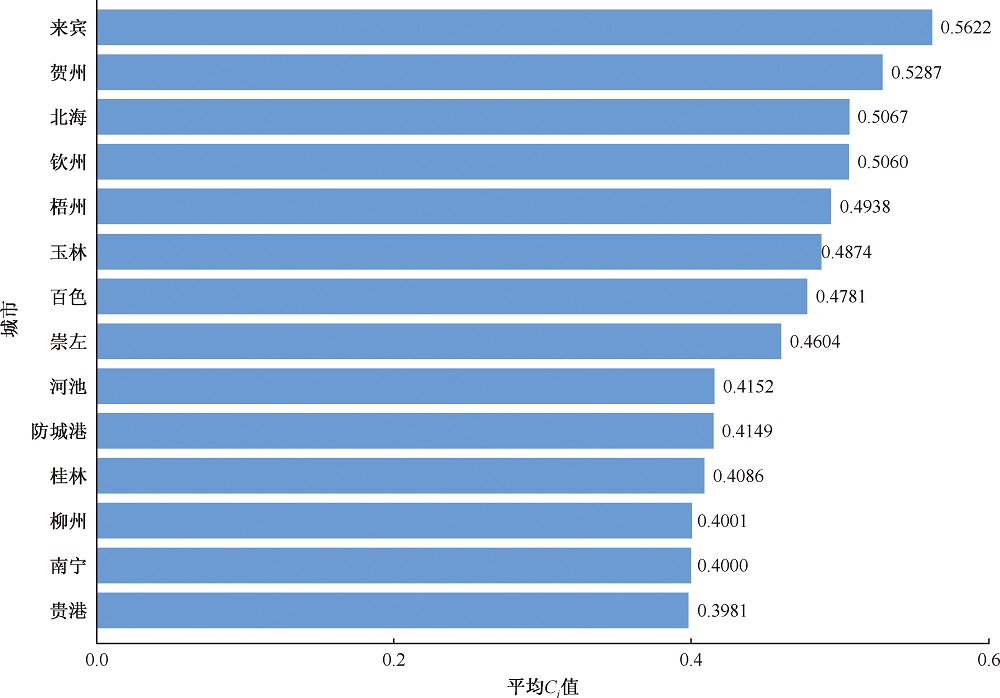
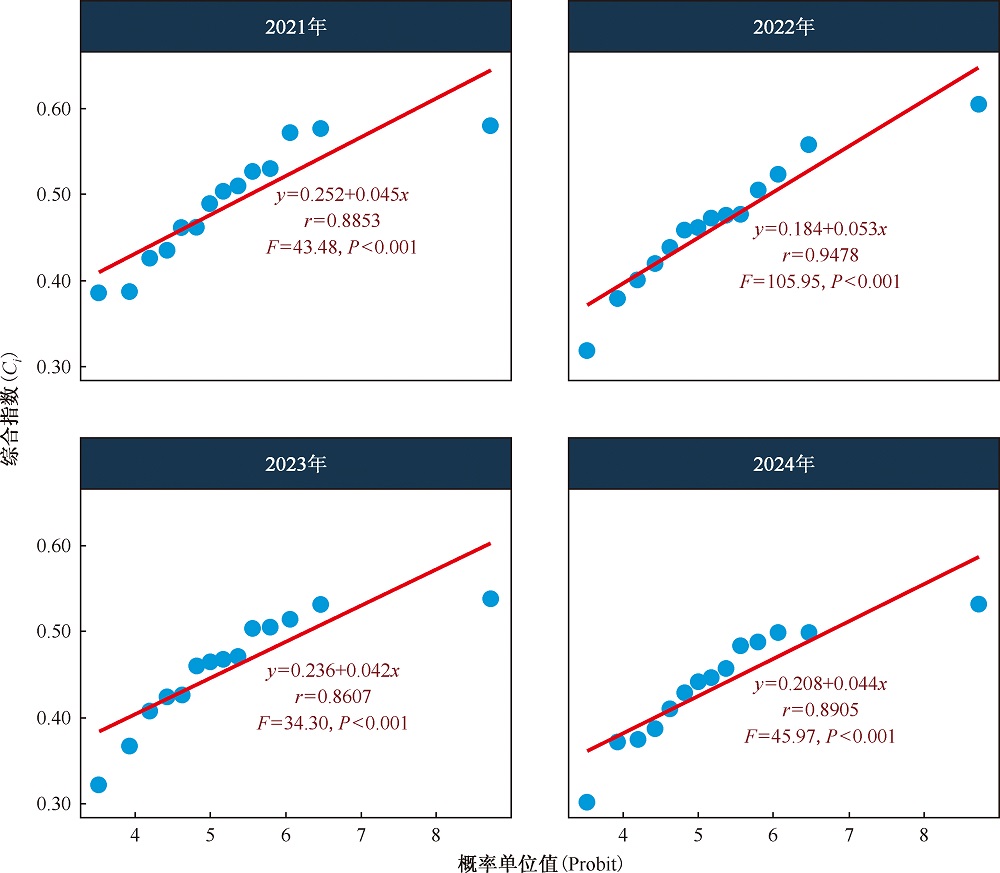
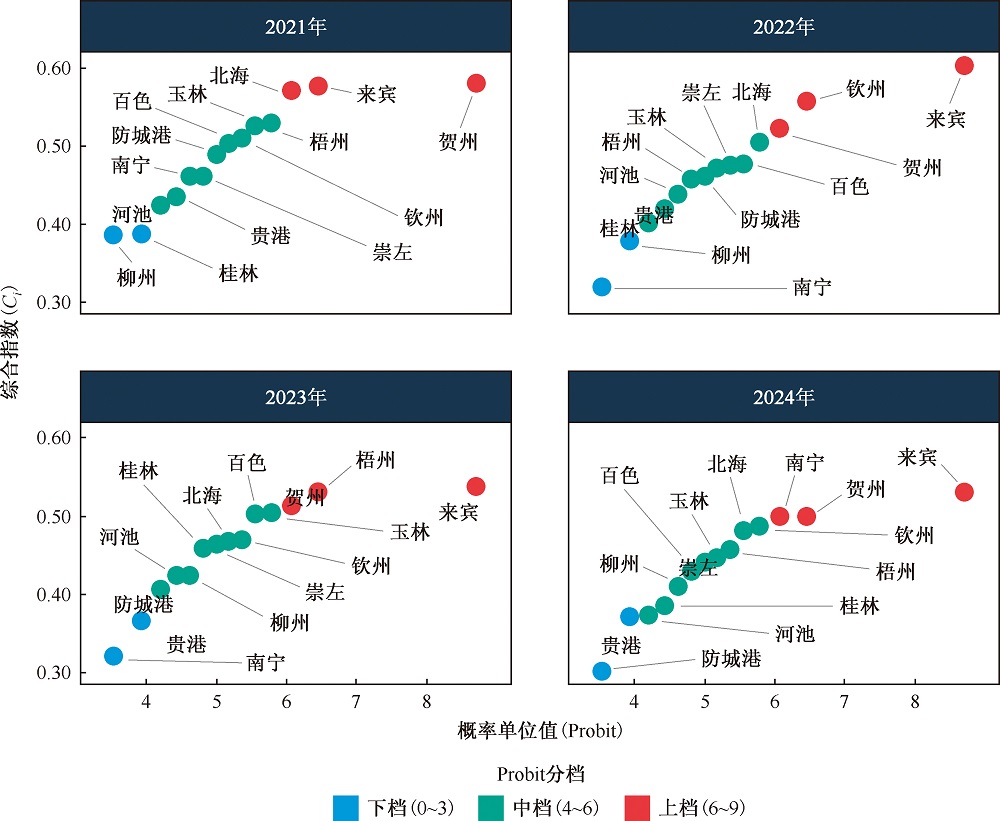
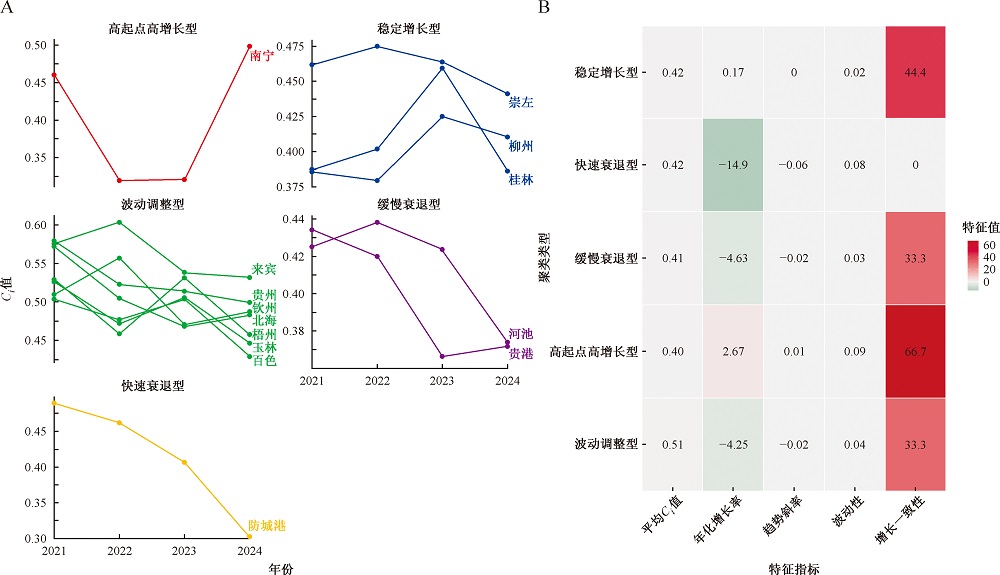
目的: 通过对广西壮族自治区各市2021—2024年结核病防治工作实施综合质量评价,探讨影响综合评价的关键指标,为各市提升结核病防控质量提供参考。 方法: 采用熵权-加权逼近理想解排序(technique for order preference by similarity to an ideal solution, TOPSIS)法与秩和比(ranksum ratio, RSR)法联合应用对各市进行结核病防治工作综合评价。 结果: 广西壮族自治区内14个城市的结核病防治工作成效综合评价存在显著的地区差异性。其中,来宾市与贺州市的综合评价得分持续位于较高档位(Probit>6);百色市、玉林市、梧州市、崇左市、北海市及钦州市得分长期处于中档水平(4≤Probit≤6);而南宁市、防城港市、贵港市、河池市、柳州市与桂林市的综合评价存在一定波动,南宁市2022—2023年为下档(Probit<4),而2024年跃升至上档(Probit>6)。防城港市在2021—2023年为中档(4≤Probit≤6),2024年降至下档(Probit<4)。柳州市2021—2022年为下档(Probit<4),2023—2024年升至中档(4≤Probit≤6)。贵港市2021—2022年为中档(4≤Probit≤6),2023—2024年连续2年降至下档(Probit<4)。聚类分析结果显示,广西肺结核防控质量存在显著的区域分化。桂北地区为稳定增长型;桂中地区两极分化,南宁为高起点高增长型,贵港、来宾分别为缓慢衰退型与波动调整型;桂东地区及桂南沿海地区(除防城港外)为波动调整型,防城港市为快速衰退型;桂西及沿边地区空间异质性最强,崇左为稳定增长型,河池为缓慢衰退型,百色为波动调整型。滞后1年相关性分析未发现结核病防治工作质量综合得分与报告发病率(r=-0.019,P=0.950)、死亡率(ρ=-0.167,P=0.568)的变化幅度之间存在明显相关关系。 结论: 广西各地的结核病防控工作质量呈现较大的不稳定性,西部和中部部分地区可能受到高疫情冲击和社会经济因素影响,工作质量持续处于低位;现有的工作质量评价指标未能直接体现对疫情控制的影响。

关键词: 熵权-TOPSIS, 秩和比法, 结核, 卫生保健质量, 结果评价(卫生保健)

Abstract:

Objective: To explore the key indicators influencing the comprehensive evaluation through the comprehensive quality assessment of tuberculosis prevention and control work in cities of Guangxi Zhuang Autonomous Region from 2021 to 2024, so as to provide a reference for cities to improve the quality of tuberculosis prevention and control. Methods: A comprehensive evaluation of tuberculosis prevention and control performance across various cities was carried out by integrating the entropy-weighted Technique for Order Preference by Similarity to Ideal Solution (TOPSIS) with the rank-sum ratio (RSR) method. Results: There were significant regional differences in the comprehensive evaluation of tuberculosis control efforts across 14 cities in Guangxi Zhuang Autonomous Region. Laibin and Hezhou consistently ranked in the higher tier (Probit >6). Baise, Yulin, Wuzhou, Chongzuo, Beihai, and Qinzhou remained in the middle tier over time (4≤Probit≤6). Nanning, Fangchenggang, Guigang, Hechi, Liuzhou, and Guilin showed certain fluctuations in their evaluations: Nanning was in the lower tier (Probit <4) from 2022 to 2023 but jumped to the upper tier (Probit >6) in 2024; Fangchenggang was in the middle tier (4≤Probit≤6) from 2021 to 2023 but dropped to the lower tier (Probit <4) in 2024; Liuzhou was in the lower tier (Probit <4) from 2021 to 2022 but rose to the middle tier (4≤Probit≤6) from 2023 to 2024; Guigang was in the middle tier (4≤Probit≤6) from 2021 to 2022 but declined to the lower tier (Probit <4) for two consecutive years from 2023 to 2024. Cluster analysis revealed marked regional differentiation in pulmonary tuberculosis prevention and control quality across Guangxi. The northern region exhibited stable growth; the central region showed polarization, with Nanning characterized as high-start and high-growth, while Guigang and Laibin were classified as slow decline and fluctuating adjustment types, respectively; the eastern region and southern coastal areas (except Fangchenggang) were fluctuating adjustment types, whereas Fangchenggang was a rapid decline type; the western and border regions displayed the strongest spatial heterogeneity, with Chongzuo showing stable growth, Hechi exhibiting slow decline, and Baise being fluctuating adjustment. Lag-one-year correlation analysis did not reveal a significant relationship between the comprehensive score of tuberculosis control performance and changes in reported incidence rate (r=-0.019, P=0.950) or mortality rate (ρ=-0.167, P=0.568). Conclusion: The quality of tuberculosis prevention and control efforts across Guangxi demonstrates considerable instability. Certain areas in the western and central regions—potentially influenced by a high epidemic burden and socioeconomic constraints—have persistently performed at suboptimal levels. The current performance evaluation indicators do not directly capture the impact on epidemic trends.

Key words: Entropy weight-TOPSIS, Ranksum ratio method, Tuberculosis, Quality of health care, Outcome assessment (health care)

中图分类号: