
Chinese Journal of Antituberculosis ›› 2026, Vol. 48 ›› Issue (2): 247-255.doi: 10.19982/j.issn.1000-6621.20250309
• Original Articles • Previous Articles Next Articles
Lin Weibing, Shi Yiheng, Guo Yanling, Ma Shang, Yang Bin, Long Sibo, Zheng Maike, Sun Yong, Zhao Yan, Wang Guirong( )
)
Received:2025-07-29
Online:2026-02-10
Published:2026-02-03
Contact:
Wang Guirong
E-mail:wangguirong1230@ccmu.edu.cn
Supported by:CLC Number:
Lin Weibing, Shi Yiheng, Guo Yanling, Ma Shang, Yang Bin, Long Sibo, Zheng Maike, Sun Yong, Zhao Yan, Wang Guirong. Analysis of drug resistance patterns in 241 patients with lymph node tuberculosis[J]. Chinese Journal of Antituberculosis, 2026, 48(2): 247-255. doi: 10.19982/j.issn.1000-6621.20250309
Add to citation manager EndNote|Ris|BibTeX
URL: https://www.zgflzz.cn/EN/10.19982/j.issn.1000-6621.20250309

| 特征 | 例数 (构成比,%) | 特征 | 例数 (构成比,%) | 特征 | 例数 (百分率,%) |
|---|---|---|---|---|---|
| 性别 | 中部 | 49(20.33) | 基础疾病 | ||
| 男性 | 130(53.94) | 西部 | 33(13.69) | 低蛋白血症 | 84(34.85) |
| 女性 | 111(46.06) | 来源地疫情 | 贫血 | 90(37.34) | |
| 年龄组(岁) | 高 | 82(34.02) | 高尿酸血症 | 87(36.10) | |
| <20 | 23(9.54) | 低 | 159(65.98) | 高血压 | 39(16.18) |
| 20~39 | 97(40.25) | 来源地耐药疫情 | 糖尿病 | 57(23.65) | |
| 40~59 | 71(29.46) | 高 | 41(17.01) | 营养不良 | 22(9.13) |
| ≥60 | 50(20.75) | 低 | 94(39.00) | 主要患病部位 | |
| 居住地 | 未划分 | 106(43.98) | 颈部 | 88(36.51) | |
| 城镇 | 134(55.60) | 职业 | 腹腔 | 7(2.90) | |
| 农村 | 107(44.40) | 农民 | 70(29.05) | 肺门 | 9(3.73) |
| 治疗史 | 退(离)休人员 | 30(12.45) | 锁骨上 | 15(6.22) | |
| 初治 | 89(36.93) | 职员 | 38(15.77) | 纵隔 | 59(24.48) |
| 复治 | 152(63.07) | 工人 | 16(6.64) | 患病部位数量 | |
| 地区 | 学生 | 28(11.62) | 2个及以上 | 59(24.48) | |
| 东部 | 159(65.98) | 其他 | 59(24.48) | 3个及以上 | 18(7.47) |
| 药物名称 | 敏感 | 中介 | 耐药 | 药物名称 | 敏感 | 中介 | 耐药 |
|---|---|---|---|---|---|---|---|
| 利福平 | ≤1 | - | ≥2 | 卡那霉素 | ≤2 | - | ≥4 |
| 异烟肼 | ≤0.12 | - | ≥0.24 | 阿米卡星 | ≤1 | - | ≥2 |
| 乙胺丁醇 | ≤2 | 4 | ≥8 | 卷曲霉素 | ≤1 | - | ≥2 |
| 链霉素 | ≤2 | - | ≥4 | 丙硫异烟胺 | ≤10 | - | ≥20 |
| 利福喷丁 | ≤0.5 | - | ≥1 | 对氨基水杨酸 | ≤2 | - | ≥4 |
| 利福布汀 | ≤0.75 | - | ≥2.5 | 对氨基水杨酸异烟肼 | ≤0.5 | - | ≥1 |
| 左旋氧氟沙星 | ≤1 | - | ≥2 | 克拉霉素 | ≤4 | - | ≥8 |
| 莫西沙星 | ≤0.5 | - | ≥1 | 氯法齐明 | ≤0.25 | - | ≥0.5 |
| 耐药类型 | 合计(241例) | 初治(89例) | 复治(152例) | χ2值 | P值 |
|---|---|---|---|---|---|
| 总耐药 | 125(51.87) | 30(33.71) | 95(62.50) | 18.639 | <0.001 |
| 单耐药 | 20(8.30) | 9(10.11) | 11(7.24) | 0.610 | 0.435 |
| 耐多药 | 58(24.07) | 6(6.74) | 52(34.21) | 23.177 | <0.001 |
| 多耐药 | 31(12.86) | 9(10.11) | 22(14.47) | 0.953 | 0.329 |
| 准广泛耐药 | 25(10.37) | 0(0.00) | 25(16.45) | 14.611a | <0.001 |
| 药物种类 | 合计(58例) | 初治(6例) | 复治(52例) | P值a |
|---|---|---|---|---|
| FQs | 25(43.10) | 0/6 | 25(48.08) | 0.032 |
| SLID | 52(89.66) | 4/6 | 48(92.31) | 0.112 |
| FQs+SLID | 24(41.38) | 0/6 | 24(46.15) | 0.037 |
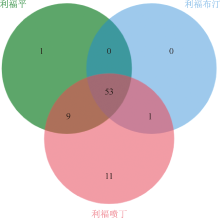

| 耐药类型 | 合计(241例) | 初治(89例) | 复治(152例) | χ2值 | P值 |
|---|---|---|---|---|---|
| 链霉素 | 79(32.78) | 8(8.99) | 71(46.71) | 36.249 | <0.001 |
| 异烟肼 | 83(34.44) | 12(13.48) | 71(46.71) | 27.448 | <0.001 |
| 利福喷丁 | 74(30.71) | 11(12.36) | 63(41.45) | 22.322 | <0.001 |
| 对氨基水杨酸 | 59(24.48) | 6(6.74) | 53(34.87) | 24.020 | <0.001 |
| 利福平 | 63(26.14) | 8(8.99) | 55(36.18) | 21.502 | <0.001 |
| 利福布汀 | 54(22.41) | 7(7.87) | 47(30.92) | 17.162 | <0.001 |
| 卷曲霉素 | 25(10.37) | 6(6.74) | 19(12.50) | 2.002 | 0.157 |
| 左氧氟沙星 | 39(16.18) | 3(3.37) | 36(23.68) | 17.077 | <0.001 |
| 对氨基水杨酸 | 42(17.43) | 9(10.11) | 33(21.71) | 5.247 | 0.022 |
| 克拉霉素 | 13(5.39) | 2(2.25) | 11(7.24) | 1.848 | 0.174a |
| 氯法齐明 | 32(13.28) | 10(11.24) | 22(14.47) | 0.511 | 0.475 |
| 乙胺丁醇 | 27(11.20) | 3(3.37) | 24(15.79) | 8.702 | 0.003 |
| 乙硫异烟胺 | 18(7.47) | 2(2.25) | 16(10.53) | 4.434 | 0.035a |
| 卡那霉素 | 22(9.13) | 3(3.37) | 19(12.50) | 4.593 | 0.032a |
| 阿米卡星 | 17(7.05) | 1(1.12) | 16(10.53) | 6.203 | 0.013a |
| 莫西沙星 | 16(6.64) | 3(3.37) | 13(8.55) | 1.668 | 0.197a |
| [1] | 中国人民解放军总医院第八医学中心结核病医学部, 《中国防痨杂志》编辑委员会, 中国医疗保健国际交流促进会结核病防治分会. 浅表淋巴结结核的诊断与治疗专家共识. 中国防痨杂志, 2023, 45(6):531-542. doi:10.19982/j.issn.1000-6621.20230120. |
| [2] | Fang T, Xiang Y, Li W, et al. Analysis on epidemiological and drug resistance characteristics of lymph node tuberculosis from Hunan province, China. Front Public Health, 2024, 12:1432065. doi:10.3389/fpubh.2024.1432065. |
| [3] | 胡鑫洋, 高静韬. 世界卫生组织《2024年全球结核病报告》解读. 结核与肺部疾病杂志, 2024, 5(6): 500-504. doi:10.19983/j.issn.2096-8493.2024164. |
| [4] | 中华人民共和国财政部. 关于明确东中西部地区划分的意见. 财办预〔2005〕5号. 2005-11-17. |
| [5] | 宋媛媛, 李涛, 夏辉, 等. 1997—2023年全国肺结核报告发病流行病学特征. 中国防痨杂志, 2024, 46(10):1198-1208. doi:10.19982/j.issn.1000-6621.20240382. |
| [6] | 陈诚, 李仁忠, 陈明亭, 等. 全国结核病流行病学抽样调查及各省耐药监测中耐药结核病疫情资料分析. 疾病监测, 2013, 28(4):265-268. doi:10.3784/j.issn.1003-9961.2013.4.005. |
| [7] | 中国防痨协会基础专业委员会. 结核病诊断实验室检验规程. 北京: 中国教育文化出版社, 2006. |
| [8] | Kim H, Kim SH, Shim TS, et al. Differentiation of Mycobacterium species by analysis of the heat-shock protein 65 gene (hsp65). Int J Syst Evol Microbiol, 2005, 55(Pt 4): 1649-1656. doi:10.1099/ijs.0.63553-0. |
| [9] |
Turenne CY, Tschetter L, Wolfe J, et al. Necessity of quality-controlled 16S rRNA gene sequence databases: identifying nontuberculous Mycobacterium species. J Clin Microbiol, 2001, 39(10): 3637-3648. doi:10.1128/JCM.39.10.3638-3648.2001.
URL pmid: 11574585 |
| [10] | Turenne C, Chedore P, Wolfe J, et al. Mycobacterium lacus sp. nov., a novel slowly growing, non-chromogenic clinical isolate. Int J Syst Evol Microbiol, 2002, 52(Pt 6): 2135-2140. doi:10.1099/00207713-52-6-2135. |
| [11] | 中国防痨协会. 耐药结核病化学治疗指南(2019年简版). 中国防痨杂志, 2019, 41(10): 1025-1073. doi:10.3969/j.issn.1000-6621.2019.10.001. |
| [12] | 刘一典. 复治肺结核病诊断和治疗专家共识. 中国防痨杂志, 2021, 43(12): 1226-1238. doi:10.3969/j.issn.1000-6621.2021.12.002. |
| [13] |
Zhang X, Dong Z, Li H, et al. Development and validation of a deep learning ultrasound radiomics model for predicting drug resistance in lymph node tuberculosis a multicenter study. Int J Surg, 2025, 111(10):6627-6637. doi:10.1097/JS9.0000000000002850.
URL pmid: 40607926 |
| [14] | Alsayed SSR, Gunosewoyo H. Tuberculosis: Pathogenesis, Current Treatment Regimens and New Drug Targets. Int J Mol Sci, 2023, 24(6):5202. doi:10.3390/ijms24065202. |
| [15] |
Salari N, Kanjoori AH, Hosseinian-Far A, et al. Global prevalence of drug-resistant tuberculosis: a systematic review and meta-analysis. Infect Dis Poverty, 2023, 12(1):57. doi:10.1186/s40249-023-01107-x.
URL pmid: 37231463 |
| [16] |
Chandrappa N, Rastogi A, Bhatnagar AK. Cartridge based nucleic acid amplification test is superior in diagnosing lymphnode tuberculosis. Indian J Tuberc, 2019, 66(3):402-406. doi:10.1016/j.ijtb.2018.04.001.
URL pmid: 31439187 |
| [17] | 中华人民共和国卫生部. 全国结核病耐药性基线调查报告(2007—2008年). 北京: 人民卫生出版社, 2010:24-33. |
| [18] | 徐涛, 李文彬, 孙庆, 等. 2013—2022年湖南省某医院577例病原学阳性淋巴结结核病的临床特征和耐药状况分析. 实用预防医学, 2025, 32(11):1295-1300. doi:10.3969/j.issn.1006-3110.2025.11.004. |
| [19] | Wu L, Xia D, Xu S, et al. Drug resistance patterns, trends, and risk factors for multidrug resistance of tuberculosis in Wenzhou, China: a ten-year retrospective analysis (2014—2023). Front Med (Lausanne), 2025, 12:1611322. doi:10.3389/fmed.2025.1611322. |
| [20] | Li Q, Zhao G, Wu L, et al. Prevalence and patterns of drug resistance among pulmonary tuberculosis patients in Hangzhou, China. Antimicrob Resist Infect Control, 2018, 7:61. doi:10.1186/s13756-018-0348-7. |
| [21] | Yuan X, Zhang T, Kawakami K, et al. Molecular characteri-zation of multidrug- and extensively drug-resistant Mycobacterium tuberculosis strains in Jiangxi, China. J Clin Microbiol, 2012, 50(7):2404-2413. doi:10.1128/JCM.06860-11. |
| [22] |
Zhang C, Wang Y, Shi G, et al. Determinants of multidrug-resistant tuberculosis in Henan province in China: a case control study. BMC Public Health, 2016, 16:42. doi:10.1186/s12889-016-2711-z.
URL pmid: 26775263 |
| [23] | Hatiya M, Merid Y, Mola A, et al. Prevalence of drug-resistant Mycobacterium tuberculosis and its associated factors among tuberculosis patients attending Dilla university referral hospital, Ethiopia. BMC Infect Dis, 2025, 25(1):797. doi:10.1186/s12879-025-11191-z. |
| [24] |
Nsofor CA, Jiang Q, Wu J, et al. Transmission is a Noticeable Cause of Resistance Among Treated Tuberculosis Patients in Shanghai, China. Sci Rep, 2017, 7(1):7691. doi:10.1038/s41598-017-08061-3.
URL pmid: 28794425 |
| [25] | 王胜芬, 周杨, 欧喜超, 等. 我国结核病耐药状况:2018年全国结核病耐药监测数据分析. 中国防痨杂志, 2022, 44(11): 1141-1147. doi:10.19982/j.issn.1000-6621.20220268. |
| [26] | World Health Organization. WHO consolidated guidelines on tuberculosis: Module 4: treatment-drug-resistant tuberculosis treatment, 2022 update. Geneva: World Health Organization, 2022. |
| [27] | 林立敏, 叶寒辉. 利福霉素类药物治疗结核病的临床应用研究进展. 药物评价研究, 2020, 43(11): 2335-2339. doi:10.7501/j.issn.1674-6376.2020.11.032. |
| [28] |
Dickinson JM, Mitchison DA. In vitro activity of new rifamycins against rifampicin-resistant M.tuberculosis and MAIS-complex mycobacteria. Tubercle, 1987, 68(3):177-182. doi:10.1016/0041-3879(87)90053-5.
URL pmid: 2834842 |
| [29] | Ganchua SKC, White AG, Klein EC, et al. Lymph nodes-The neglected battlefield in tuberculosis. PLoS Pathog, 2020, 16(8):e1008632. doi:10.1371/journal.ppat.1008632. |
| [30] | Gopalaswamy R, Dusthackeer VNA, Kannayan S, et al. Extrapulmonary Tuberculosis—An Update on the Diagnosis, Treatment and Drug Resistance. J Respir, 2021, 1(2):141-164. doi:10.3390/jor1020015. |
| [31] | Bernardo J, Yew WW. How are we creating fluoroquinolone-resistant tuberculosis?. Am J Respir Crit Care Med, 2009, 180(4): 288-289. doi:10.1164/rccm.200906-0863ED. |
| [32] | Al-Mutairi MM, Ahmad S, Mokaddas E. Increasing prevalence of resistance to second-line drugs among multidrug-resistant Mycobacterium tuberculosis isolates in Kuwait. Sci Rep, 2021, 11(1): 7765. doi:10.1038/s41598-021-87516-0. |
| [33] | 全国第五次结核病流行病学抽样调查技术指导组, 全国第五次结核病流行病学抽样调查办公室. 2010年全国第五次结核病流行病学抽样调查报告. 中国防痨杂志, 2012, 34(8):485-508. |
| [34] | 易俊莉, 杨新宇, 陈昊, 等. 1156株结核分枝杆菌临床分离株耐药情况分析. 中国防痨杂志, 2021, 43(7):677-681. doi:10.3969/j.issn1000-6621.2021.07.007. |
| [35] | 包训迪, 梁锁, 李军, 等. 2016—2022年安徽省结核病耐药监测结果分析. 中国防痨杂志, 2024, 46(5):531-537. doi:10.19982/j.issn.1000-6621.20240029. |
| [36] | Hang NT, Maeda S, Lien LT, et al. Primary drug-resistant tuberculosis in Hanoi, Vietnam: present status and risk factors. PLoS One, 2013, 8(8):e71867. doi:10.1371/journal.pone.0071867. |
| [37] | Williams DL, Spring L, Collins L, et al. Contribution of rpoB mutations to development of rifamycin cross-resistance in Mycobacterium tuberculosis. Antimicrob Agents Chemother, 1998, 42(7):1853-1857. doi:10.1128/AAC.42.7.1853. |
| [1] | Sun Qing, Wang Xiaoping, Yang Xiaomei, Han Ruihao, Gu Yeqiu, Fu Jian. Analysis on the current situation and trend of tuberculosis disease burden of people aged ≤24 in China from 2000 to 2021 [J]. Chinese Journal of Antituberculosis, 2026, 48(1): 21-33. |
| [2] | Gu Yuzhen, Chen Siyi, Huang Hairong, Yu Xia. Evaluation of in vitro activity of lefamulin against mycobacteria [J]. Chinese Journal of Antituberculosis, 2025, 47(6): 732-737. |
| [3] | Tuberculosis Basic Professional Branch, Chinese Antituberculosis Association. Expert consensus on the standardization of broth microdilution method for drug susceptibility testing of Mycobacterium tuberculosis in China [J]. Chinese Journal of Antituberculosis, 2025, 47(5): 535-545. |
| [4] | Jiang Xue, Bai Yunlong, Ma Jianjun, An Yuan, Yang Fan, Zhao Qinglong. Status and influencing factors of diagnosis and treatment delay of rifampicin resistant pulmonary tuberculosis patients, Jilin Province, 2020—2023 [J]. Chinese Journal of Antituberculosis, 2025, 47(4): 416-424. |
| [5] | Li Nana, Wang Hong, Tian Peng, Wen Jixiu, Yang Dan, Wu Xia, Lan Yuanbo. Investigation into the impact of Rv2048c gene knockout on the drug susceptibility of Mycobacterium tuberculosis [J]. Chinese Journal of Antituberculosis, 2025, 47(12): 1621-1628. |
| [6] | Ding Yuanlu, Xiao Wenjing, Tao Fangfang, Feng Wei, Wang Ye, Rao Lixin, Shen Xin, Chen Jian, Chen Jing. Analysis of reported incidence trends of pulmonary tuberculosis in Shanghai, China, 2009—2023, using a Joinpoint regression model [J]. Chinese Journal of Antituberculosis, 2025, 47(10): 1289-1299. |
| [7] | Liang Linlong, Pei Yi, Zhou Haiyi, Xie Qifang, Zhang Feng, Jiang Jie, Liu Fuqiang. The epidemiological characteristics and trends of tuberculosis among children aged 0-14 years in Hunan Province from 2014 to 2023 [J]. Chinese Journal of Antituberculosis, 2025, 47(1): 29-35. |
| [8] | Wang Xiaomin, Chen Jinyun, Zeng Yuqin, Ma Quan, Kong Xingxing, Meng Jianzhou, Lu Shuihua. Interpretation of the third edition of WHO consolidated guidelines on tuberculosis: module 3: diagnosis: rapid diagnostics for tuberculosis detection [J]. Chinese Journal of Antituberculosis, 2024, 46(9): 1006-1022. |
| [9] | Chen Shuangshuang, Tian Lili, Wang Nenhan, Yang Xinyu, Zhao Yanfeng, Li Chuanyou, Dai Xiaowei. Analysis of in vitro antibacterial effects of 17 antibiotics against rapidly growing mycobacteria in the Beijing area [J]. Chinese Journal of Antituberculosis, 2024, 46(9): 1056-1062. |
| [10] | Yu Lan, Chen Shuangshuang, Wang Nenhan, Tian Lili, Zhao Yanfeng, Fan Ruifang, Liu Haican, Li Chuanyou, Dai Xiaowei. Consistency between phenotypic resistance to fluoroquinolones and genetic mutations in rifampicin resistant Mycobacterium tuberculosis strains [J]. Chinese Journal of Antituberculosis, 2024, 46(8): 942-950. |
| [11] | Lei Hui, Zhang Shu, Li Ting, Gao Yuan, Liu Shuang, Chen Chuang, Xia Lan, Wang Weina, Gao Wenfeng, He Jinge. Analysis of infection patterns and drug resistance of 22 recurrent pulmonary tuberculosis patients in Sichuan based on whole-genome sequencing [J]. Chinese Journal of Antituberculosis, 2024, 46(6): 641-647. |
| [12] | Cheng Mengli, Jiang Guanglu, Huo Fengmin, Xue Yi, Yu Xia. Evaluation of in vitro activity of fusidic acid against mycobacteria [J]. Chinese Journal of Antituberculosis, 2024, 46(4): 461-466. |
| [13] | Pei Shaojun, Ou Xichao. Interpretation of the World Health Organization’s Catalogue of mutations in Mycobacterium tuberculosis complex and their association with drug resistance (2nd Edition) [J]. Chinese Journal of Antituberculosis, 2024, 46(3): 260-266. |
| [14] | Song Yuanyuan, Li Tao, Xia Hui, Zhang Lijie, Zhang Hui, Zhao Yanlin, Wang Lixia. Analysis of the epidemiological characteristics of national reported pulmonary tuberculosis incidence, 1997—2023 [J]. Chinese Journal of Antituberculosis, 2024, 46(10): 1198-1208. |
| [15] | Du Yongcheng, Lin Shufang, Dai Zhisong, Lin Jian. Analysis on the epidemiological characteristics of pulmonary tuberculosis among children aged 0-14 in Fujian Province from 2008 to 2022 [J]. Chinese Journal of Antituberculosis, 2024, 46(10): 1219-1226. |
| Viewed | ||||||
|
Full text |
|
|||||
|
Abstract |
|
|||||
 京公网安备11010202007215号
Total visitors: Visitors of today: Now online:
京公网安备11010202007215号
Total visitors: Visitors of today: Now online:
 This work is licensed under Creative Commons Attribution 3.0 License.
