Email Alert | RSS    帮助

中国防痨杂志 ›› 2026, Vol. 48 ›› Issue (6): 769-778.doi: 10.19982/j.issn.1000-6621.20250503

• 论著 • 上一篇    下一篇

结核病与糖尿病共病患者营养风险、炎症指标与血糖控制的相关性分析

范佳画1, 颜亮2, 陈华3, 卢春丽1, 汪敏3, 黄亚玲1, 李艳3()   

  1. 1 广州市胸科医院临床营养科, 广州 510095
    2 广州市胸科医院院感科, 广州 510095
    3 广州市胸科医院结核科, 广州 510095
  • 收稿日期:2025-12-17 出版日期:2026-06-10 发布日期:2026-05-25
  • 通信作者: 李艳 E-mail:13826198848@163.com
  • 基金资助:
    广州国家实验室专项(GZNL2024A01030);广州市科技计划项目(2025A03J3707);广州市科技计划项目(2025A03J3448);广东省医学科研基金(B2023259)

Association between nutritional risk, inflammatory indicators, and glycemic control in patients with tuberculosis complicated by diabetes mellitus

Fan Jiahua1, Yan Liang2, Chen Hua3, Lu Chunli1, Wang Min3, Huang Yaling1, Li Yan3()   

  1. 1 Department of Clinical Nutrition, Guangzhou Chest Hospital, Guangzhou 510095, China
    2 Department of Hospital Sensory, Guangzhou Chest Hospital, Guangzhou 510095, China
    3 Department of Tuberculosis, Guangzhou Chest Hospital, Guangzhou 510095, China
  • Received:2025-12-17 Online:2026-06-10 Published:2026-05-25
  • Contact: Li Yan E-mail:13826198848@163.com
  • Supported by:
    Guangzhou National Laboratory Special Project(GZNL2024A01030);Guangzhou Science and Technology Program Project(2025A03J3707);Guangzhou Science and Technology Program Project(2025A03J3448);Guangdong Provincial Medical Research Fund(B2023259)

摘要:

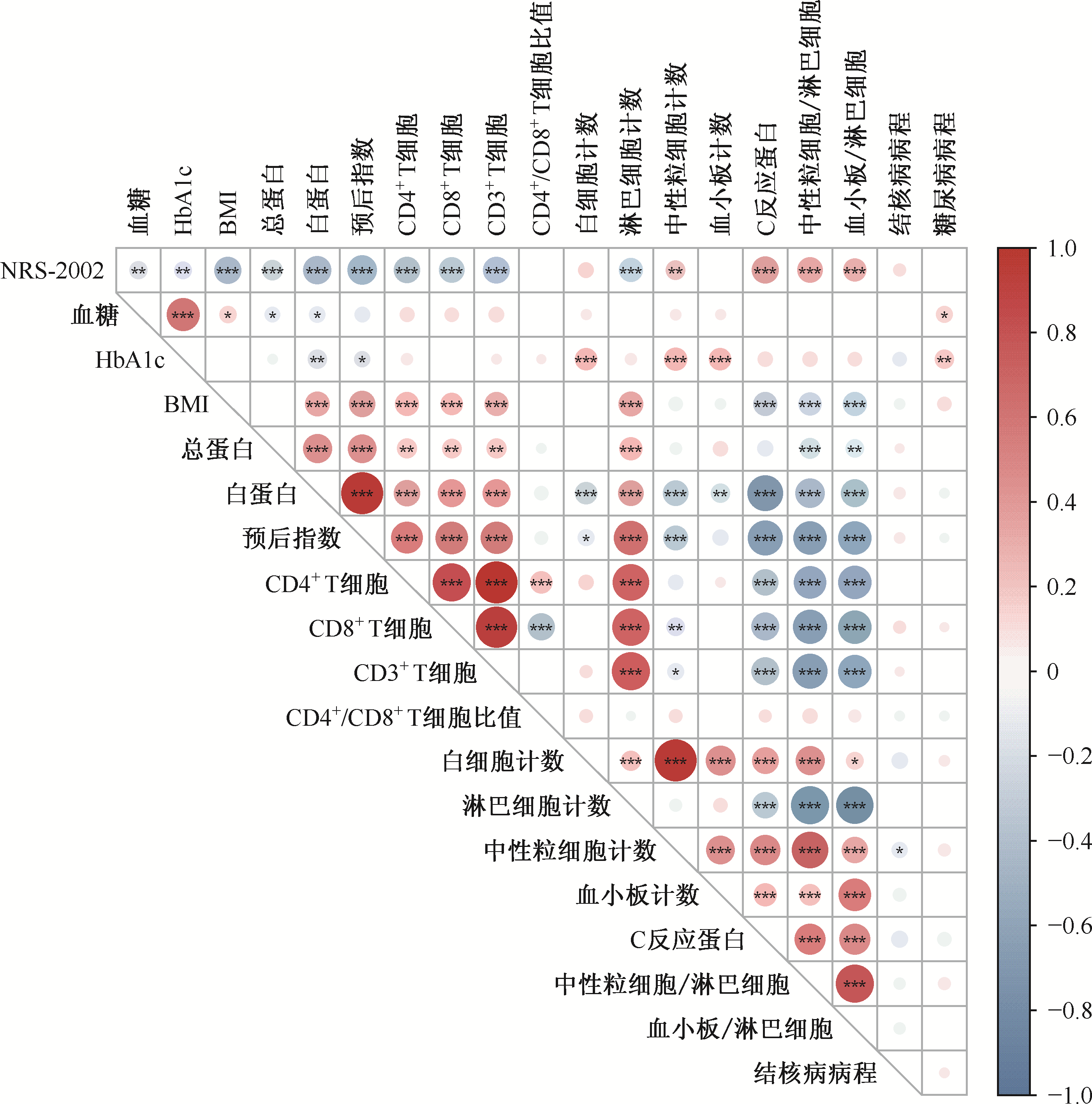
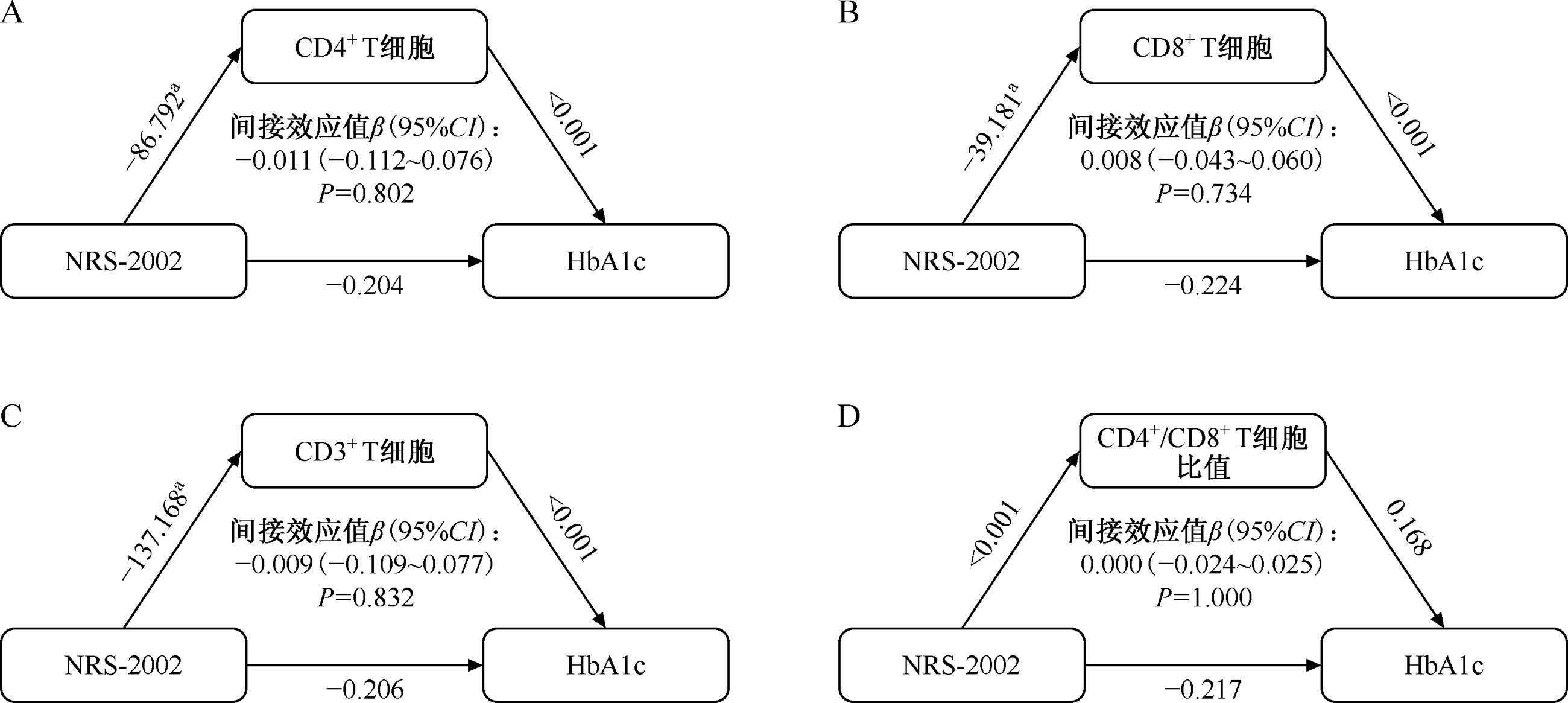
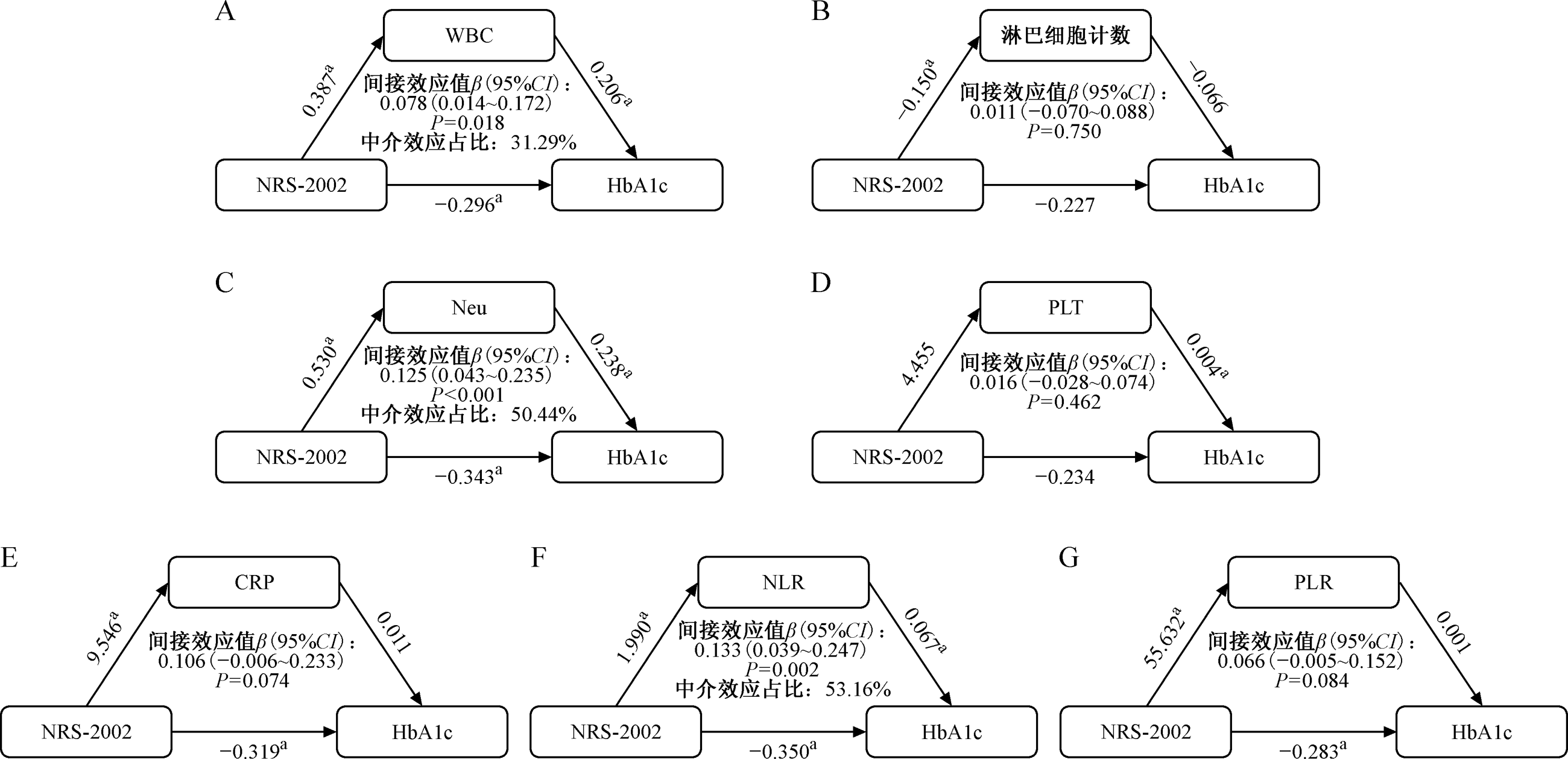
目的: 探讨结核病与糖尿病共病(TB-DM)患者营养风险、炎症指标与血糖控制的关系,为优化TB-DM患者的综合管理提供依据。方法: 采用横断面研究设计,纳入2023年1—12月广州市胸科医院收治的264例TB-DM患者。根据营养风险筛查2002(NRS-2002)评分和糖化血红蛋白(HbA1c)水平进行分组比较。收集患者的营养指标[如体质量指数(BMI)、白蛋白(ALB)、预后营养指数(PNI)]、免疫炎症指标[如CD细胞系列、白细胞计数(WBC)、中性粒细胞计数(Neu)、淋巴细胞计数(LYM)、中性粒细胞与淋巴细胞比值(NLR)、血小板与淋巴细胞比值(PLR)等]及血糖指标(随机血糖和HbA1c)。采用多因素logistic回归分析营养风险与血糖控制不佳的关联,并进一步运用中介效应分析炎症指标在营养风险与血糖控制间的中介作用。结果: 存在营养风险(NRS-2002≥3分)的患者占50.4%(133/264)。与无营养风险组相比,有营养风险组患者的营养及免疫指标均明显降低,如BMI[20.20(18.73,22.95)kg/m2和22.14(20.55,24.22)kg/m2,Z=-4.759,P<0.001]、ALB[(30.93±7.02)g/L和(36.48±7.08) g/L,t=6.393,P<0.001]、CD4+ T细胞计数[392(260,560)个/μl和564(394,756)个/μl,Z=-5.108,P<0.001],且痰涂片阳性率更高[60.90%(81/133)和39.69%(52/131),χ2=11.874,P<0.001]。有营养风险组患者炎症水平明显升高,如NLR[5.20(3.54,10.14)和3.64(2.61,5.48),Z=-4.510,P<0.001]、C反应蛋白[22.54(6.36,58.32)mg/L和5.23(1.36,22.12)mg/L,Z=-4.852,P<0.001],但HbA1c水平反而较低[7.50%(6.60%,10.00%)和8.60%(7.35%,10.20%),Z=-2.711,P=0.007]。多因素logistic回归分析结果表明,在校正混杂因素后,营养风险与血糖控制不佳呈独立负向关联(OR=0.357, 95%CI: 0.194~0.656)。中介效应分析显示,炎症指标(WBC、Neu、NLR)是营养风险影响HbA1c水平的显著中介变量,中介效应占比分别为31.29%、50.44%和53.16%。结论: 在TB-DM患者中,存在营养风险者往往伴有更严重的炎症状态和免疫抑制,但其血糖水平可能因机体严重消耗而相对更低。炎症是连接营养风险与血糖控制的关键路径。临床在管理TB-DM患者时,应在积极控制血糖的基础上,高度重视营养评估,并将调控炎症作为综合治疗的重要环节。

关键词: 结核, 糖尿病, 共病现象, 营养状况, 炎症, 血糖

Abstract:

Objective: To investigate the relationship between nutritional risk, inflammatory markers, and glycemic control in patients with tuberculosis and diabetes comorbidity (TB-DM), providing evidence for optimizing the integrated management of TB-DM patients. Methods: A cross-sectional study was conducted, enrolling 264 TB-DM patients admitted to the Guangzhou Chest Hospital from January to December 2023. Patients were grouped and compared based on their Nutritional Risk Screening 2002 (NRS-2002) scores and glycated hemoglobin (HbA1c) levels. Data collected included nutritional indicators such as body mass index (BMI), albumin (ALB), prognostic nutritional index (PNI), immuno-inflammatory indicators such as CD cell subsets, white blood cell count (WBC), neutrophil count (Neu), lymphocyte count (LYM), neutrophil-to-lymphocyte ratio (NLR), platelet-to-lymphocyte ratio (PLR), and glycemic indicators (random blood glucose and HbA1c). Multivariable logistic regression was used to analyze the association between nutritional risk and poor glycemic control. Mediation analysis was further employed to examine the mediating role of inflammatory markers in the relationship between nutritional risk and glycemic control. Results: Patients with nutritional risk (NRS-2002 ≥3) accounted for 50.4% (133/264). Compared to the no-nutritional-risk group, the nutritional-risk group had significantly lower nutritional and immune indicators: BMI (20.20 (18.73, 22.95) kg/m2 vs. 22.14 (20.55, 24.22) kg/m2, Z=-4.759, P<0.001), ALB ((30.93±7.02) g/L vs. (36.48±7.08) g/L, t=6.393, P<0.001), CD4+ T-cell count (392 (260, 560) cells/μl vs. 564 (394, 756) cells/μl, Z=-5.108, P<0.001), and a higher sputum smear-positive rate (60.90% (81/133) vs. 39.69% (52/131), χ2=11.874, P<0.001). Notably, this group had significantly higher inflammatory levels: NLR (5.20 (3.54, 10.14) vs. 3.64 (2.61, 5.48), Z=-4.510, P<0.001), C-reactive protein (22.54 (6.36, 58.32) mg/L vs. 5.23 (1.36, 22.12) mg/L, Z=-4.852, P<0.001), but lower HbA1c levels (7.50% (6.60%, 10.00%) vs. 8.60% (7.35%, 10.20%), Z=-2.711, P=0.007). Multivariable logistic regression analysis indicated that, after adjusting for confounders, nutritional risk was independently inversely association with poor glycemic control (OR=0.357, 95%CI: 0.194-0.656). Mediation analysis revealed that inflammatory markers (WBC, Neu, NLR) were significant mediators in the effect of nutritional risk on HbA1c levels, accounting for 31.29%, 50.44%, and 53.16% of the total effect, respectively. Conclusion: In TB-DM patients, those with nutritional risk often present with more severe inflammatory status and immunosuppression, but their blood glucose levels may be relatively lower, potentially due to severe bodily catabolism. Inflammation is a key pathway linking nutritional risk to glycemic control. In the clinical management of TB-DM patients, while actively controlling blood glucose, we should attach high importance to nutritional assessment, and regulating inflammation should be considered a crucial component of comprehensive treatment.

Key words: Tuberculosis, Diabetes mellitus, Comorbidity, Nutritional status, Inflammation, Blood glucose

中图分类号: