
Chinese Journal of Antituberculosis ›› 2026, Vol. 48 ›› Issue (1): 121-130.doi: 10.19982/j.issn.1000-6621.20250292
• Original Articles • Previous Articles Next Articles
Tan Xiao1, Li Fangping1, Zhang Qian2, Zhang Meijia1( )
)
Received:2025-07-17
Online:2026-01-10
Published:2025-12-31
Contact:
Zhang Meijia, Email: Supported by:CLC Number:
Tan Xiao, Li Fangping, Zhang Qian, Zhang Meijia. Causal effects of gut microbiota on non-tuberculous mycobacterial lung infection: a bidirectional two-sample mendelian randomization study[J]. Chinese Journal of Antituberculosis, 2026, 48(1): 121-130. doi: 10.19982/j.issn.1000-6621.20250292
Add to citation manager EndNote|Ris|BibTeX
URL: https://www.zgflzz.cn/EN/10.19982/j.issn.1000-6621.20250292

| 暴露/结局 | 数据来源 | 样本数(例) | 样本来源 | 数据下载链接 |
|---|---|---|---|---|
| 肠道菌群 | FINRISK 2002 | 5959 | 欧洲人种 | https://www.ebi.ac.uk/gwas/ |
| 非结核分枝杆菌肺病 | The FinnGen Biobank | 483557 | 欧洲人种 | https://www.finngen.fi/en |
| 肠道菌群 | 方法 | 单核苷酸多态性(个) | P值 | OR(95%CI)值 |
|---|---|---|---|---|
| 苏黎世杆菌科 | IVW | 18 | 0.031 | 0.570(0.343~0.949) |
| MR-Egger | 18 | 0.430 | 0.615(0.189~2.000) | |
| WME | 18 | 0.164 | 0.626(0.323~1.211) | |
| SM | 18 | 0.666 | 0.760(0.224~2.581) | |
| WM | 18 | 0.725 | 0.818(0.272~2.457) | |
| RUG420 sp900317985 | IVW | 17 | 0.011 | 0.153(0.036~0.649) |
| MR-Egger | 17 | 0.040 | 0.018 (0.000~0.599) | |
| WME | 17 | 0.047 | 0.125(0.016~0.970) | |
| SM | 17 | 0.173 | 0.056(0.001~2.927) | |
| WM | 17 | 0.206 | 0.063(0.001~3.843) | |
| 厚壁菌门E | IVW | 19 | 0.033 | 0.084(0.009~0.814) |
| MR-Egger | 19 | 0.998 | 0.995(0.006~163.499) | |
| WME | 19 | 0.299 | 0.201(0.010~4.150) | |
| SM | 19 | 0.486 | 0.138(0.001~32.230) | |
| WM | 19 | 0.466 | 0.138(0.001~25.124) | |
| 人肠道杆菌属 | IVW | 24 | 0.006 | 0.386(0.197~0.756) |
| MR-Egger | 24 | 0.373 | 0.445(0.077~2.553) | |
| WME | 24 | 0.052 | 0.431(0.185~1.006) | |
| SM | 24 | 0.281 | 0.429(0.096~1.924) | |
| WM | 24 | 0.225 | 0.408(0.100~1.670) | |
| CAG-145 sp000435615 | IVW | 19 | 0.023 | 0.575(0.357~0.927) |
| MR-Egger | 19 | 0.413 | 0.642(0.227~1.810) | |
| WME | 19 | 0.134 | 0.614(0.324~1.163) | |
| SM | 19 | 0.534 | 0.668(0.192~2.324) | |
| WM | 19 | 0.552 | 0.679(0.194~2.377) |
| 肠道菌群 | 方法 | 单核苷酸多态性(个) | P值 | OR(95%CI)值 |
|---|---|---|---|---|
| 羊毛状臭气杆菌 | IVW | 24 | 0.044 | 1.798(1.017~3.180) |
| MR-Egger | 24 | 0.806 | 1.161(0.358~3.766) | |
| WME | 24 | 0.172 | 1.674(0.799~3.505) | |
| SM | 24 | 0.519 | 1.690(0.351~8.126) | |
| WM | 24 | 0.467 | 1.690(0.421~6.782) | |
| 懒惰脱硫弧菌 | IVW | 24 | 0.019 | 1.508(1.069~2.128) |
| MR-Egger | 24 | 0.119 | 1.849(0.879~3.887) | |
| WME | 24 | 0.342 | 1.262(0.781~2.041) | |
| SM | 24 | 0.595 | 1.260(0.544~2.917) | |
| WM | 24 | 0.662 | 1.232(0.488~3.110) | |
| 汉氏布劳特氏菌 | IVW | 19 | 0.012 | 2.487(1.222~5.062) |
| MR-Egger | 19 | 0.017 | 6.986(1.666~29.299) | |
| WME | 19 | 0.007 | 3.740(1.445~9.680) | |
| SM | 19 | 0.072 | 5.006(0.959~26.129) | |
| WM | 19 | 0.083 | 4.704(0.901~24.574) |
| 暴露 | MR-Egger截距 | 多效性检验P值 | MR-PRESSO全局检验P值 |
|---|---|---|---|
| 苏黎世杆菌科 | -0.009 | 0.891 | 0.981 |
| RUG420 sp900317985 | 0.085 | 0.208 | 0.461 |
| 厚壁菌门E | -0.065 | 0.304 | 0.923 |
| 人肠道杆菌属 | -0.011 | 0.866 | 0.139 |
| CAG-145 sp000435615 | -0.014 | 0.818 | 0.977 |
| 羊毛状臭气杆菌 | 0.047 | 0.413 | 0.355 |
| 懒惰脱硫弧菌 | -0.033 | 0.551 | 0.982 |
| 汉氏布劳特氏菌 | -0.098 | 0.126 | 0.392 |
| 暴露 | Cochrane Q值 | 异质性检验P值 | 暴露 | Cochrane Q值 | 异质性检验P值 |
|---|---|---|---|---|---|
| 苏黎世杆菌科 | 7.718 | 0.518 | CAG-145 sp000435615 | 8.236 | 0.975 |
| RUG420 sp900317985 | 16.041 | 0.370 | 羊毛状臭气杆菌 | 25.711 | 0.315 |
| 厚壁菌门E | 10.111 | 0.928 | 懒惰脱硫弧菌 | 11.610 | 0.976 |
| 人肠道杆菌属 | 31.511 | 0.111 | 汉氏布劳特氏菌 | 19.367 | 0.370 |
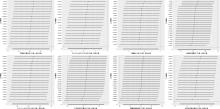

| 肠道菌群 | 方法 | 单核苷酸多态性(个) | P值 | OR(95%CI)值 |
|---|---|---|---|---|
| 苏黎世杆菌科 | IVW | 43 | 0.556 | 1.004(0.990~1.019) |
| MR-Egger | 43 | 0.808 | 0.995(0.956~1.036) | |
| WME | 43 | 0.640 | 1.050(0.984~1.027) | |
| SM | 43 | 0.784 | 0.994(0.952~1.038) | |
| WM | 43 | 0.618 | 0.989(0.948~1.032) | |
| RUG420 sp900317985 | IVW | 43 | 0.639 | 1.001(0.996~1.007) |
| MR-Egger | 43 | 0.813 | 0.998(0.983~1.013) | |
| WME | 43 | 0.447 | 0.997(0.989~1.005) | |
| SM | 43 | 0.298 | 0.991(0.974~1.008) | |
| WM | 43 | 0.290 | 0.991(0.976~1.007) | |
| 厚壁菌门E | IVW | 43 | 0.662 | 1.001(0.994~1.004) |
| MR-Egger | 43 | 0.621 | 1.002(0.998~1.011) | |
| WME | 43 | 0.357 | 1.002(0.998~1.007) | |
| SM | 43 | 0.999 | 1.000(0.989~1.011) | |
| WM | 43 | 0.643 | 1.002(0.993~1.011) | |
| 人肠道杆菌属 | IVW | 43 | 0.521 | 1.004(0.992~1.017) |
| MR-Egger | 43 | 0.617 | 1.009(0.974~1.045) | |
| WME | 43 | 0.865 | 0.999(0.982~1.015) | |
| SM | 43 | 0.692 | 0.993(0.958~1.029) | |
| WM | 43 | 0.691 | 0.993(0.961~1.027) | |
| CAG-145 sp000435615 | IVW | 43 | 0.843 | 1.002(0.986~1.017) |
| MR-Egger | 43 | 0.494 | 1.015(0.973~1.058) | |
| WME | 43 | 0.921 | 0.999(0.978~1.020) | |
| SM | 43 | 0.602 | 0.987(0.939~1.037) | |
| WM | 43 | 0.539 | 0.987(0.946~1.029) | |
| 羊毛状臭气杆菌 | IVW | 43 | 0.873 | 0.999(0.987~1.011) |
| MR-Egger | 43 | 0.035 | 1.037(1.004~1.071) | |
| WME | 43 | 0.937 | 0.999(0.981~1.017) | |
| SM | 43 | 0.429 | 1.016(0.977~1.056) | |
| WM | 43 | 0.541 | 1.011(0.976~1.048) | |
| 懒惰脱硫弧菌 | IVW | 43 | 0.886 | 1.001(0.983~1.021) |
| MR-Egger | 43 | 0.271 | 1.030(0.978~1.085) | |
| WME | 43 | 0.910 | 0.999(0.973~1.021) | |
| SM | 43 | 0.924 | 0.997(0.940~1.058) | |
| WM | 43 | 0.936 | 0.998(0.948~1.050) | |
| 汉氏布劳特氏菌 | IVW | 43 | 0.515 | 0.997(0.987~1.007) |
| MR-Egger | 43 | 0.335 | 1.014(0.986~1.042) | |
| WME | 43 | 0.406 | 0.994(0.980~1.008) | |
| SM | 43 | 0.559 | 0.991(0.960~1.022) | |
| WM | 43 | 0.558 | 0.991(0.962~1.021) |
| [1] | 鲍容, 沈佳瑾, 陈裕, 等. 综合性医院非结核分枝杆菌菌种分布及其耐药性. 中华医院感染学杂志, 2025, 35(2): 202-206. doi:10.11816/cn.ni.2025-248493. |
| [2] | 储美萍, 钱静娟, 程亮, 等. 非结核分枝杆菌病临床特征及临床分离株的菌种分布及耐药性. 中华医院感染学杂志, 2024, 34(1): 41-44. doi:10.11816/cn.ni.2024-230785. |
| [3] | Cristancho-Rojas C, Varley CD, Lara SC, et al. Epidemiology of Mycobacterium abscessus. Clin Microbiol Infect, 2024, 30(6):712-717. doi:10.1016/j.cmi.2023.08.035. |
| [4] |
Singh K, Kumari R, Tripathi R, et al. Detection of clinically important non tuberculous mycobacteria (NTM) from pulmonary samples through one-step multiplex PCR assay. BMC Microbiol, 2020, 20(1): 267. doi:10.1186/s12866-020-01952-y.
pmid: 32847517 |
| [5] | 张良登, 冯兴中, 姜敏, 等. 基于肺与大肠相表里的肺病患者肠道便菌群特点研究. 中国中医药信息杂志, 2018, 25(4):19-23. doi:10.3969/j.issn.1005-5304.2018.04.005. |
| [6] | Enaud R, Hooks KB, Barre A, et al. Intestinal Inflammation in Children with Cystic Fibrosis Is Associated with Crohn’s-Like Microbiota Disturbances. J Clin Med, 2019, 8(5):645. doi:10.3390/jcm8050645. |
| [7] | Hu Y, Feng Y, Wu J, et al. The Gut Microbiome Signatures Discriminate Healthy From Pulmonary Tuberculosis Patients. Front Cell Infect Microbiol, 2019, 9:90. doi:10.3389/fcimb.2019.00090. |
| [8] | 李寒雪, 张瑶, 马燕. “肺-肠轴”理论下肠道菌群与肺动脉高压炎症机制的研究进展. 中国慢性病预防与控制, 2025, 33(5): 385-390. doi:10.16386/j.cjpccd.issn.1004-6194.20240717.0527. |
| [9] | 毛振南, 杨占东. 肠道菌群在慢性阻塞性肺疾病中的作用. 生理科学进展, 2025, 56(1): 30-38. doi:10.20059/j.cnki.pps.2024.12.1233. |
| [10] | 何嘉伟, 毛宁锋, 赵毅, 等. 基于“肺与大肠相表里”探讨肠道菌群和下呼吸道感染的因果关联:一项双样本孟德尔随机化研究. 中华中医药杂志, 2024, 39(12): 6678-6683. |
| [11] | 孔令宜, 王园园, 缪长宏, 等. 肠道微生物与细菌性肺炎易感性的因果关系:双样本双向孟德尔随机化研究及cML-MA的应用. 中国急救医学, 2024, 44(2):148-155. doi:10.3969/j.issn.1002-1949.2024.02.009. |
| [12] | Carroll KC, Adams LL. Lower Respiratory Tract Infections. Microbiol Spectr, 2016, 4(4). doi:10.1128/microbiolspec.DMIH2-0029-2016. |
| [13] | 周望展, 何卫, 张颖. 某医院住院患者下呼吸道感染的病原体分布及流行病学特征. 中华医院感染学杂志, 2025, 35(18): 2741-2745. doi:10.11816/cn.ni.2025-250372. |
| [14] | 全国第五次结核病流行病学抽样调查技术指导组, 全国第五次结核病流行病学抽样调查办公室. 2010年全国第五次结核病流行病学抽样调查报告. 中国防痨杂志, 2012, 34(8): 485-508. |
| [15] | Kim YJ, Lee JY, Lee JJ, et al. Arginine-mediated gut microbiome remodeling promotes host pulmonary immune defense against nontuberculous mycobacterial infection. Gut Microbes, 2022, 14(1):2073132. doi:10.1080/19490976.2022.2073132. |
| [16] |
Lawlor DA, Harbord RM, Sterne JA, et al. Mendelian randomization: using genes as instruments for making causal inferences in epidemiology. Stat Med, 2008, 27(8):1133-1163. doi:10.1002/sim.3034.
pmid: 17886233 |
| [17] | Lu J, Lin Y, Jiang J, et al. Investigating the potential causal association between consumption of green tea and risk of lung cancer: a study utilizing Mendelian randomization. Front Nutr, 2024, 11:1265878. doi:10.3389/fnut.2024.1265878. |
| [18] | Tang F, Wang S, Zhao H, et al. Mendelian randomization analysis does not reveal a causal influence of mental diseases on osteoporosis. Front Endocrinol (Lausanne), 2023, 14: 1125427. doi:10.3389/fendo.2023.1125427. |
| [19] |
Balavoine C, Andréjak C, Marchand-Adam S, et al. Relationships between COPD and nontuberculous mycobacteria pulmonary infections. Rev Mal Respir, 2017, 34(10):1091-1097. doi:10.1016/j.rmr.2017.09.004.
pmid: 29150178 |
| [20] |
Honda JR, Alper S, Bai X, et al. Acquired and genetic host susceptibility factors and microbial pathogenic factors that predispose to nontuberculous mycobacterial infections. Curr Opin Immunol, 2018, 54:66-73. doi:10.1016/j.coi.2018.06.001.
pmid: 29936307 |
| [21] | 张晓萌, 李敏, 柴英辉, 等. 肠道菌群短链脂肪酸与肺结核相关性研究进展. 中国防痨杂志, 2023, 45(7): 699-706. doi:10.19982/j.issn.1000-6621.20230079. |
| [22] | 杨艳青, 李灿委, 杨自忠, 等. 肠道菌群代谢物——短链脂肪酸的研究进展. 实用医学杂志, 2022, 38(14): 1834-1837. doi:10.3969/j.issn.1006-5725.2022.14.023. |
| [23] | Lin TL, Kuo YL, Lai JH, et al. Gut microbiota dysbiosis-related susceptibility to nontuberculous mycobacterial lung disease. Gut Microbes, 2024, 16(1):2361490. doi:10.1080/19490976.2024.2361490. |
| [24] |
Tiffany CR, Lee JY, Rogers AWL, et al. The metabolic footprint of Clostridia and Erysipelotrichia reveals their role in depleting sugar alcohols in the cecum. Microbiome, 2021, 9(1):174. doi:10.1186/s40168-021-01123-9.
pmid: 34412707 |
| [25] | Di Modica M, Gargari G, Regondi V, et al. Gut Microbiota Condition the Therapeutic Efficacy of Trastuzumab in HER2-Positive Breast Cancer. Cancer Res, 2021, 81(8):2195-2206. doi:10.1158/0008-5472.CAN-20-1659. |
| [26] |
Rowan S, Taylor A. Gut microbiota modify risk for dietary glycemia-induced age-related macular degeneration. Gut Microbes, 2018, 9(5):452-457. doi:10.1080/19490976.2018.1435247.
pmid: 29431583 |
| [27] | Vich Vila A, Imhann F, Collij V, et al. Gut microbiota composition and functional changes in inflammatory bowel disease and irritable bowel syndrome. Sci Transl Med, 2018, 10(472): eaap8914. doi:10.1126/scitranslmed. aap8914. |
| [28] | Ma J, Zhu Z, Yishajiang Y, et al. Role of gut microbiota and inflammatory factors in acute respiratory distress syndrome: a Mendelian randomization analysis. Front Microbiol, 2023, 14:1294692. doi:10.3389/fmicb.2023.1294692. |
| [29] | Cheng ZX, Hua JL, Jie ZJ, et al. Genetic Insights into the Gut-Lung Axis: Mendelian Randomization Analysis on Gut Microbiota, Lung Function, and COPD. Int J Chron Obstruct Pulmon Dis, 2024, 19:643-653. doi:10.2147/COPD.S441242. |
| [30] | 热西丁·阿不都艾尼. 毛螺菌科的定向分离培养与其代谢组学特性研究. 北京: 中国科学院大学, 2022. |
| [31] | Dora D, Weiss GJ, Megyesfalvi Z, et al. Computed Tomography-Based Quantitative Texture Analysis and Gut Microbial Community Signatures Predict Survival in Non-Small Cell Lung Cancer. Cancers (Basel), 2023, 15(20):5091. doi:10.3390/cancers15205091. |
| [32] |
Song P, Yang D, Wang H, et al. Relationship between intestinal flora structure and metabolite analysis and immunotherapy efficacy in Chinese NSCLC patients. Thorac Cancer, 2020, 11(6):1621-1632. doi:10.1111/1759-7714.13442.
pmid: 32329229 |
| [33] | Sun Y, Zhang S, Nie Q, et al. Gut firmicutes: Relationship with dietary fiber and role in host homeostasis. Crit Rev Food Sci Nutr, 2023, 63(33): 12073-12088. doi:10.1080/10408398.2022.2098249. |
| [34] | 肖祥, 吴宣諭, 韩洁榕, 等. “肺与大肠相表里”视角下探索肠道菌群与肺癌因果关联及潜在干预中药预测. 中草药, 2024, 55(12): 4108-4120. doi:10.7501/j.issn.0253-2670.2024.12.018. |
| [35] |
Huber-Ruano I, Calvo E, Mayneris-Perxachs J, et al. Orally administered Odoribacter laneus improves glucose control and inflammatory profile in obese mice by depleting circulating succinate. Microbiome, 2022, 10(1):135. doi:10.1186/s40168-022-01306-y.
pmid: 36002880 |
| [36] | Lee SB, Gupta H, Min BH, et al. A consortium of Hordeum vulgare and gut microbiota against non-alcoholic fatty liver disease via data-driven analysis. Artif Cells Nanomed Biotechnol, 2024, 52(1):250-260. doi:10.1080/21691401.2024.2347380. |
| [37] |
Nguyen SM, Tran HTT, Long J, et al. Gut microbiome in association with chemotherapy-induced toxicities among patients with breast cancer. Cancer, 2024, 130(11):2014-2030. doi:10.1002/cncr.35229.
pmid: 38319284 |
| [38] | Gou Y, Lin F, Dan L, et al. Exposure to toluene diisocyanate induces dysbiosis of gut-lung homeostasis: Involvement of gut microbiota. Environ Pollut, 2024, 363(Pt 1):125119. doi:10.1016/j.envpol.2024.125119. |
| [39] | Fan L, Chen J, Zhang Q, et al. Fecal microbiota transplantation for hypertension: an exploratory, multicenter, randomized, blinded, placebo-controlled trial. Microbiome, 2025, 13(1):133. doi:10.1186/s40168-025-02118-6. |
| [40] |
Wang Y, Zhang Y, Lane NE, et al. Population-based metagenomics analysis reveals altered gut microbiome in sarcopenia: data from the Xiangya Sarcopenia Study. J Cachexia Sarcopenia Muscle, 2022, 13(5):2340-2351. doi:10.1002/jcsm.13037.
pmid: 35851765 |
| [41] |
Shibata M, Ozato N, Tsuda H, et al. Mouse Model of Anti-Obesity Effects of Blautia hansenii on Diet-Induced Obesity. Curr Issues Mol Biol, 2023, 45(9):7147-7160. doi:10.3390/cimb45090452.
pmid: 37754236 |
| [42] | Ozato N, Yamaguchi T, Mori K, et al. Two Blautia Species Associated with Visceral Fat Accumulation: A One-Year Longitudinal Study. Biology (Basel), 2022, 11(2):318. doi:10.3390/biology11020318. |
| [43] |
Jia Y, He T, Wu D, et al. The treatment of Qibai Pingfei Capsule on chronic obstructive pulmonary disease may be mediated by Th17/Treg balance and gut-lung axis microbiota. J Transl Med, 2022, 20(1):281. doi:10.1186/s12967-022-03481-w.
pmid: 35729584 |
| [1] | Liu Shuya, Zhang Ting, Wang Qingya, Fan Jun, Wang Ni. Analysis of close contacts screening situation and time changing trends of pulmonary tuberculosis patients in Chongqing from 2015 to 2024 [J]. Chinese Journal of Antituberculosis, 2026, 48(2): 230-237. |
| [2] | Ji Yuanfei, Yu Xia, Wang Jue, Sun Mengyan, He Wei, Lyu Yan, Hou Dailun, Li Chenghai. The CT imaging features of Mycobacterium avium-intracellulare pneumonia and the diagnostic evaluation of in non-tuberculous mycobacterium pneumonia [J]. Chinese Journal of Antituberculosis, 2026, 48(2): 256-263. |
| [3] | Zhou Cang, Li Guoli, Jiang Hui, Shao Yan, Song Honghuan, Xue Hao, Ning Jingxian, Pan Yuchen, Fei Xinru, Sun Zheng, Chen Cheng, Zhu Limei, Liu Qiao. Evaluation of the diagnostic efficacy of AIMTB-fluorescent immunochromatography for screening latent tuberculosis infection [J]. Chinese Journal of Antituberculosis, 2026, 48(2): 289-298. |
| [4] | Shang Yuanyuan, Nie Wenjuan, Chu Naihui. Comparison of clinical characteristics and prognostic factors between elderly and non-elderly patients with Mycobacterium abscessus pulmonary disease [J]. Chinese Journal of Antituberculosis, 2026, 48(1): 106-112. |
| [5] | Ren Hangkong, Sun Weifeng, Wang Linbao. Analysis of surgery effectiveness in treating chronic cavitary lung disease [J]. Chinese Journal of Antituberculosis, 2025, 47(9): 1180-1186. |
| [6] | Fan Ruifang, Dai Xiaowei, Yang Xinyu, Chen Shuangshuang, Chen Hao, Yu Lan, Zhao Yanfeng, Li Chuanyou, Wang Nenhan. A study on the identification of Mycobacterium species using fluorescent PCR probe melting curve technique and DNA microarray chip technique [J]. Chinese Journal of Antituberculosis, 2025, 47(8): 1031-1037. |
| [7] | Nontuberculous Mycobacterial Diseases Branch of Chinese Antituberculosis Association. Expert consensus on molecular biology diagnosis of nontuberculous mycobacteria diseases [J]. Chinese Journal of Antituberculosis, 2025, 47(8): 961-975. |
| [8] | Liu Yiping, Lin Youfei, Chen Xiaohong, Pan Jianguang. A case of pulmonary Castleman disease prone to misdiagnosis: a literature review [J]. Chinese Journal of Antituberculosis, 2025, 47(7): 921-929. |
| [9] | Li Longfen, Shi Chunjing, Luo Yun, Zhang Huajie, Liu Jun, Wang Ge, Zhao Yanhong, Yuan Lijuan, Li Shan, Li Wenming, Shen Lingjun. Establishing and validating a prediction model for HIV-associated nontuberculous mycobacterial disease based on machine learning [J]. Chinese Journal of Antituberculosis, 2025, 47(6): 708-718. |
| [10] | Ying Guangzhi, Cai Qingshan, Ma Xiaoqing, Chen Lingyan, Chen Yuanyuan. Diagnostic value of Nanopore targeted sequencing for detecting nontuberculous mycobacteria in respiratory specimens [J]. Chinese Journal of Antituberculosis, 2025, 47(5): 589-596. |
| [11] | Wang Lei, Chen Chidao, Su Lianzheng, Li Lingwei, Wang Xinmiao, Wang Peng, Huang Zhonghao. Causality between coronavirus disease 2019 and tuberculosis in Europeans: a two-sample Mendelian randomization study [J]. Chinese Journal of Antituberculosis, 2025, 47(5): 653-659. |
| [12] | Wang Yingchao, Liu Weiyi, Ji Xiuxiu, Shang Xuetian, Jia Hongyan, Zhang Lanyue, Sun Qi, Du Boping, Zhu Chuanzhi, Pan Liping, Zhang Zongde. Profile analysis of circRNA expression and identification of diagnostic markers in peripheral blood mononuclear cells of tuberculosis patients [J]. Chinese Journal of Antituberculosis, 2025, 47(4): 460-470. |
| [13] | Song Feier, Mao Yanjun, Xia Qiuyue, Zhou Yang, Lin Huan. The prevalence and influencing factors of post-tuberculosis lung disease: A Meta-analysis [J]. Chinese Journal of Antituberculosis, 2025, 47(3): 322-330. |
| [14] | Feng Yinping, Zhang Zunjing, Cai Qiujie, Wang Xiaomeng, Ma Yan, Liu Zhongda, Gao Lei. Exploring diagnostic and therapeutic approaches for latent tuberculosis infection based on the theory of hidden pathogen (Fu Xie) [J]. Chinese Journal of Antituberculosis, 2025, 47(10): 1249-1253. |
| [15] | Shi Xiaojing, Wang Xin, Guo Jianhua, Zhao Qingran, Wang Yuhan. Research on influencing factors of preventive treatment of latent tuberculosis infection based on thematic analysis:Taking Shijiazhuang City as an example [J]. Chinese Journal of Antituberculosis, 2025, 47(10): 1326-1332. |
| Viewed | ||||||
|
Full text |
|
|||||
|
Abstract |
|
|||||
 京公网安备11010202007215号
Total visitors: Visitors of today: Now online:
京公网安备11010202007215号
Total visitors: Visitors of today: Now online:
 This work is licensed under Creative Commons Attribution 3.0 License.
