
Chinese Journal of Antituberculosis ›› 2026, Vol. 48 ›› Issue (2): 264-273.doi: 10.19982/j.issn.1000-6621.20250346
• Original Articles • Previous Articles Next Articles
Shang Yuanyuan1, Wang Xueyu2, Wang Yujin2, Yu Xia3, Huang Hairong3( ), Nie Wenjuan2()
Received:2025-08-25
Online:2026-02-10
Published:2026-02-03
Contact:
Nie Wenjuan, Email: Supported by:CLC Number:
Shang Yuanyuan, Wang Xueyu, Wang Yujin, Yu Xia, Huang Hairong, Nie Wenjuan. Functional annotation of single nucleotide polymorphisms and analysis of drug resistance-related pathways in Mycobacterium abscessus strains resistant to Sudapyridine[J]. Chinese Journal of Antituberculosis, 2026, 48(2): 264-273. doi: 10.19982/j.issn.1000-6621.20250346
Add to citation manager EndNote|Ris|BibTeX
URL: https://www.zgflzz.cn/EN/10.19982/j.issn.1000-6621.20250346


| 基因名称 | 突变类型 | 变异在cDNA中 的位置(X/Y) | 变异在蛋白质中 的位置(A/B) | 变异点 |
|---|---|---|---|---|
| Control_00084_gene | 同义突变 | 12/951 | 4/316 | c.12TG |
| xapB | 同义突变 | 597/1284 | 199/427 | c.597T>C |
| xapB | 错义突变 | 576/1284 | 192/427 | c.576G>C |
| Control_00164_gene | 错义突变 | 985/1221 | 329/406 | c.985T>C |
| Control_00578_gene | 错义突变 | 330/339 | 110/112 | c.330A>C |
| Control_00659_gene | 错义突变 | 28/1248 | 10/415 | c.28G>A |
| rhtB | 同义突变 | 504/642 | 168/213 | c.504T>C |
| rhtB | 错义突变 | 488/642 | 163/213 | c.488C>T |
| rhtB | 错义突变 | 476/642 | 159/213 | c.476T>C |
| rhtB | 同义突变 | 471/642 | 157/213 | c.471T>C |
| dagK | 错义突变 | 187/879 | 63/292 | c.187C>G |
| dagK | 错义突变 | 160/879 | 54/292 | c.160T>C |
| Control_00820_gene | 错义突变 | 518/1407 | 173/468 | c.518T>G |
| Control_00820_gene | 错义突变 | 503/1407 | 168/468 | c.503G>T |
| Control_01036_gene | 错义突变 | 250/342 | 84/113 | c.250C>G |
| Control_01038_gene | 错义突变 | 767/1353 | 256/450 | c.767T>G |
| Control_01038_gene | 错义突变 | 757/1353 | 253/450 | c.757G>A |
| Control_01038_gene | 同义突变 | 747/1353 | 249/450 | c.747A>C |
| rhtA_2 | 同义突变 | 88/807 | 30/268 | c.88T>C |
| Control_01935_gene | 错义突变 | 565/681 | 189/226 | c.565C>A |
| Control_02156_gene | 错义突变 | 1105/1440 | 369/479 | c.1105T>C |
| Control_02216_gene | 错义突变 | 680/1080 | 227/359 | c.680C>A |
| Control_02216_gene | 错义突变 | 691/1080 | 231/359 | c.691A>G |
| dap4 | 错义突变 | 761/2238 | 254/745 | c.761C>A |
| dap4 | 错义突变 | 767/2238 | 256/745 | c.767A>G |
| dap4 | 错义突变 | 778/2238 | 260/745 | c.778T>C |
| Control_03110_gene | 错义突变 | 69/1230 | 23/409 | c.69G>C |
| Control_03877_gene | 错义突变 | 362/1554 | 121/517 | c.362C>T |
| pcaB_1 | 错义突变 | 827/999 | 276/332 | c.827G>C |
| leuA | 同义突变 | 1821/1824 | 607/607 | c.1821T>C |
| leuA | 错义突变 | 1814/1824 | 605/607 | c.1814T>C |
| Control_04429_gene | 错义突变 | 47/666 | 16/221 | c.47G>C |
| Control_04459_gene | 错义突变 | 490/624 | 164/207 | c.490G>A |
| Control_04459_gene | 错义突变 | 511/624 | 171/207 | c.511A>C |
| Control_04459_gene | 同义突变 | 516/624 | 172/207 | c.516T>C |
| mviN | 错义突变 | 643/3435 | 215/1144 | c.643A>C |
| mviN | 错义突变 | 611/3435 | 204/1144 | c.611A>C |
| dcd_2 | 错义突变 | 1097/1947 | 366/648 | c.1097G>T |
| dcd_2 | 错义突变 | 1109/1947 | 370/648 | c.1109G>A |
| pstC2_1 | 错义突变 | 17/1053 | 6/350 | c.17C>A |
| pstC2_1 | 同义突变 | 30/1053 | 10/350 | c.30T>C |
| mmpL4_16 | 同义突变 | 2538/2904 | 846/967 | c.2538T>C |
| Control_05039_gene | 错义突变 | 372/744 | 124/247 | c.372C>A |
| Control_00084_gene | 同义突变 | 12/951 | 4/316 | c.12T>G |
| 突变类型 | SNP数量 | 占比(%) |
|---|---|---|
| 编码区突变 | 187 | 9.14 |
| 基因间区 | 31 | 1.51 |
| 错义变异 | 92 | 4.49 |
| 非编码转录本变异 | 2 | 0.10 |
| 获得性终止密码子 | 1 | 0.05 |
| 同义变异 | 61 | 2.98 |
| 非编码区突变 | 1860 | 90.86 |
| 上游基因突变 | 799 | 39.03 |
| 下游基因突变 | 1061 | 51.83 |
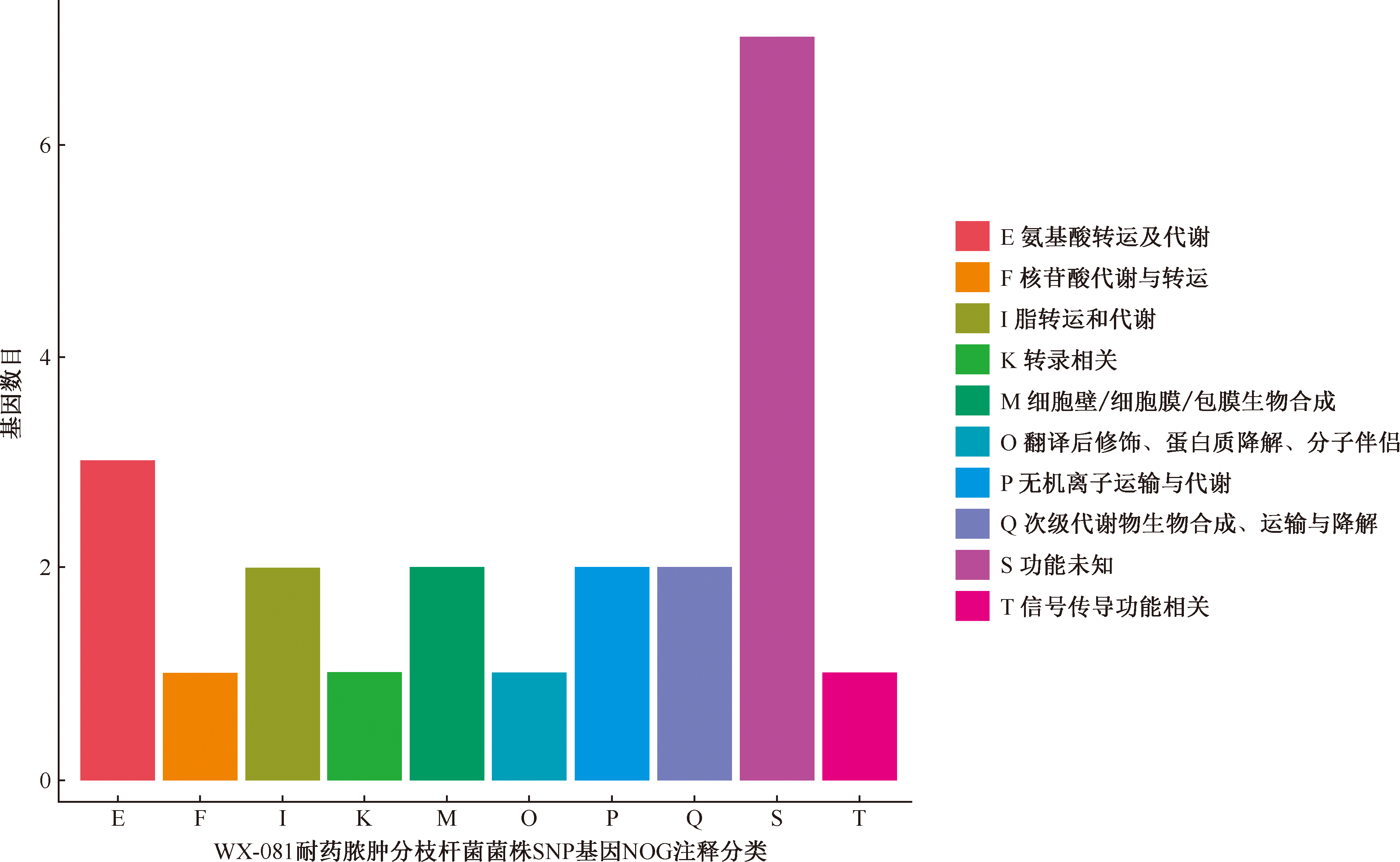
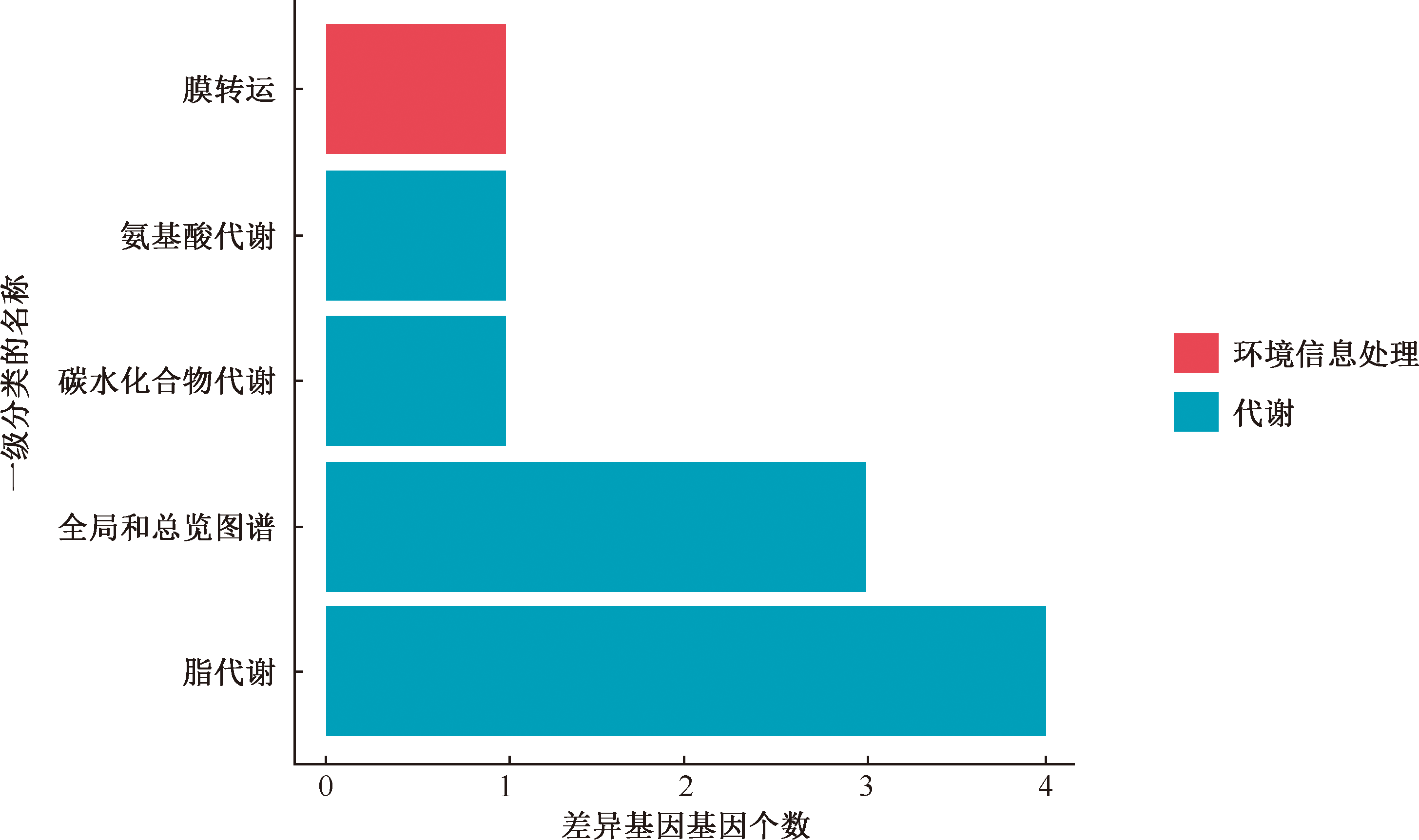
| [1] | Sur S, Patra T, Karmakar M, et al. Mycobacterium abscessus: insights from a bioinformatic perspective. Crit Rev Microbiol, 2023, 49(4):499-514. doi:10.1080/1040841X.2022.2082268. |
| [2] |
Ruth MM, Sangen JJN, Remmers K, et al. A bedaquiline/clofazimine combination regimen might add activity to the treatment of clinically relevant non-tuberculous mycobacteria. J Antimicrob Chemother, 2019, 74(4):935-943. doi:10.1093/jac/dky526.
URL pmid: 30649327 |
| [3] |
Gil E, Sweeney N, Barrett V, et al. Bedaquiline as Treatment for Disseminated Nontuberculous Mycobacteria Infection in 2 Patients Co-Infected with HIV. Emerg Infect Dis, 2021, 27(3):944-948. doi:10.3201/eid2703.202359.
URL pmid: 33622490 |
| [4] | Erber J, Weidlich S, Tschaikowsky T, et al. Successful bedaquiline-containing antimycobacterial treatment in post-traumatic skin and soft-tissue infection by Mycobacterium fortuitum complex: a case report. BMC Infect Dis, 2020, 20(1):365. doi:10.1186/s12879-020-05075-7. |
| [5] | Harikishore A, Grüber G. Mycobacterium tuberculosis F-ATP Synthase Inhibitors and Targets. Antibiotics (Basel), 2024, 13(12):1169. doi:10.3390/antibiotics13121169. |
| [6] | Dupont C, Viljoen A, Thomas S, et al. Bedaquiline Inhibits the ATP Synthase in Mycobacterium abscessus and Is Effective in Infected Zebrafish. Antimicrob Agents Chemother, 2017, 61(11):e01225-17. doi:10.1128/AAC.01225-17. |
| [7] | Li X, Luo X, Wang B, et al. Sudapyridine (WX-081) inhibits Mycobacterium tuberculosis by targeting ATP synthase and upregulating host innate immunity. mSphere, 2025, 10(6):e0014925. doi:10.1128/msphere.00149-25. |
| [8] | Yao R, Wang B, Fu L, et al. Sudapyridine (WX-081), a Novel Compound against Mycobacterium tuberculosis. Microbiol Spectr, 2022, 10(1):e0247721. doi:10.1128/spectrum.02477-21. |
| [9] | 王雪钰, 王宇津, 初乃惠, 等. 舒达吡啶与氯法齐明或克拉霉素联用增加脓肿分枝杆菌感染大鼠体内暴露水平的初步研究. 中国防痨杂志, 2025, 47(2):150-157. doi:10.19982/j.issn.1000-6621.20240484. |
| [10] |
Xiao H, Yu X, Shang Y, et al. In vitro and Intracellular Antibacterial Activity of Sudapyridine (WX-081) Against Tuberculosis. Infect Drug Resist, 2023, 16:217-224. doi:10.2147/IDR.S390187.
URL pmid: 36647451 |
| [11] | Zhu R, Shang Y, Chen S, et al. In Vitro Activity of the Sudapyridine (WX-081) against Non-Tuberculous Mycobacteria Isolated in Beijing, China. Microbiol Spectr, 2022, 10(6):e0137222. doi:10.1128/spectrum.01372-22. |
| [12] | 苏雷, 刘丽娜, 王庆枫, 等. 新型化合物舒达吡啶(WX-081)对脓肿分枝杆菌的抗菌活性. 中国防痨杂志, 2023, 45(12):1147-1151. doi:10.19982/j.issn.1000-6621.20230364. |
| [13] | 王伟, 逄宇, 王庆枫, 等. 新化合物舒达吡啶对脓肿分枝杆菌的体外活性和耐药机制. 中国临床医生杂志, 2024, 52(4):490-493. doi:10.3969/j.issn.2095-8552.2024.04.028. |
| [14] | Cambau E, Delogu G, van Ingen J, et al. All you want to know about Mycobacterium abscessus. Clin Microbiol Infect, 2024, 30(6):709-711. doi:10.1016/j.cmi.2024.02.019. |
| [15] | Kong W, Liang H, Zhang Y, et al. Population pharmacokinetic and exposure-response study of a novel anti-tuberculosis drug to inform its dosage design in phase Ⅲ clinical trial. Eur J Pharm Sci, 2025, 212:107160. doi:10.1016/j.ejps.2025.107160. |
| [16] |
Andries K, Verhasselt P, Guillemont J, et al. A diarylquinoline drug active on the ATP synthase of Mycobacterium tuberculosis. Science, 2005, 307(5707):223-227. doi:10.1126/science.1106753.
URL pmid: 15591164 |
| [17] | Chen S, Shang Y, Zheng J, et al. In vitro monitoring of drug resistance emergence during stepwise induction of bedaquiline and clofazimine, alone and in combination: a phenotypic and genotypic analysis. J Antimicrob Chemother, 2025, 80(1):262-269. doi:10.1093/jac/dkae405. |
| [18] | Wang M, Men P, Zhang W, et al. Bedaquiline susceptibility testing of Mycobacterium abscessus complex and Mycobacterium avium complex: A meta-analysis study. J Glob Antimicrob Resist, 2024, 37:135-140. doi:10.1016/j.jgar.2024.03.009. |
| [19] | Halloum I, Viljoen A, Khanna V, et al. Resistance to Thiace-tazone Derivatives Active against Mycobacterium abscessus Involves Mutations in the MmpL5 Transcriptional Repressor MAB_4384. Antimicrob Agents Chemother, 2017, 61(4):e02509-16. doi:10.1128/AAC.02509-16. |
| [20] | Saeed DK, Ashraf J, Hasan Z, et al. Bedaquiline resistant Mycobacterium tuberculosis clinical isolates with and without rv0678 mutations have similar growth patterns under varying BDQ drug pressure. Tuberculosis, 2022, 137:102266. doi:10.1016/j.tube.2022.102266. |
| [21] |
Viljoen A, Dubois V, Girard-Misguich F, et al. The diverse family of MmpL transporters in mycobacteria: from regulation to antimicrobial developments. Mol Microbiol, 2017, 104(6):889-904. doi:10.1111/mmi.13675.
URL pmid: 28340510 |
| [22] | Gutiérrez AV, Richard M, Roquet-Banères F, et al. The TetR Family Transcription Factor MAB_2299c Regulates the Expression of Two Distinct MmpS-MmpL Efflux Pumps Involved in Cross-Resistance to Clofazimine and Bedaquiline in Mycobacterium abscessus. Antimicrob Agents Chemother, 2019, 63(10):e01000-19. doi:10.1128/AAC.01000-19. |
| [23] | Zhang R, Luo S, Wang N, et al. Epidemiology of Nontuberculous Mycobacteria in Nanjing and MAB_0540 Mutations Associated with Clofazimine Resistance in Mycobacterium abscessus. Infect Drug Resist, 2023, 16:2751-2764. doi:10.2147/IDR.S408986. |
| [24] | Zhang H, Wang S, Zhang Y, et al. Mutations in the transcriptional regulator MAB_2885 confer tedizolid and linezolid resistance through the MmpS-MmpL efflux pump MAB_2302-MAB_2303 in Mycobacterium abscessus. PLoS Pathog, 2025, 21(5):e1013190. doi:10.1371/journal.ppat.1013190. |
| [25] | Martini MC, Hicks ND, Xiao J, et al. Loss of RNase J leads to multi-drug tolerance and accumulation of highly structured mRNA fragments in Mycobacterium tuberculosis. PLoS Pathog, 2022, 18(7):e1010705. doi:10.1371/journal.ppat.1010705. |
| [26] | John J, Narendrakumar L, Thomas S, et al. Hybrid genome assembly and annotation of multidrug-resistant Staphylococcus aureus genotype ST672-SCCmec type IVd (2B). J Glob Antimicrob Resist, 2023, 32:74-77. doi:10.1016/j.jgar.2022.12.011. |
| [27] | Homolka S, Niemann S, Russell DG, et al. Functional genetic diversity among Mycobacterium tuberculosis complex clinical isolates: delineation of conserved core and lineage-specific transcriptomes during intracellular survival. PLoS Pathog, 2010, 6(7):e1000988. doi:10.1371/journal.ppat.1000988. |
| [28] | Parmar S, Tocheva EI. The cell envelope of Mycobacterium abscessus and its role in pathogenesis. PLoS Pathog, 2023, 19(5):e1011318. doi:10.1371/journal.ppat.1011318. |
| [29] | Rindi L. Efflux Pump Inhibitors Against Nontuberculous Mycobacteria. Int J Mol Sci, 2020, 21(12):4191. doi:10.3390/ijms21124191. |
| [30] | Koul A, Vranckx L, Dhar N, et al. Delayed bactericidal response of Mycobacterium tuberculosis to bedaquiline involves remodelling of bacterial metabolism. Nat Commun, 2014, 5:3369. doi:10.1038/ncomms4369. |
| [31] |
Mackenzie JS, Lamprecht DA, Asmal R, et al. Bedaquiline reprograms central metabolism to reveal glycolytic vulnerability in Mycobacterium tuberculosis. Nat Commun, 2020, 11(1):6092. doi:10.1038/s41467-020-19959-4.
URL pmid: 33257709 |
| [32] | Xu Y, Banerjee R, Kasibhatla S, et al. Differential producibility analysis reveals drug-associated carbon and nitrogen metabolite expressions in Mycobacterium tuberculosis. J Biol Chem, 2025, 301(3):108288. doi:10.1016/j.jbc.2025.108288. |
| [33] | Goossens SN, Sampson SL, Van Rie A. Mechanisms of Drug-Induced Tolerance in Mycobacterium tuberculosis. Clin Microbiol Rev, 2020, 34(1):e00141-20. doi:10.1128/CMR.00141-20. |
| [34] | Yu W, Ju Y, Han X, et al. Bactericidal and sterilizing activity of sudapyridine-clofazimine-TB 47 combined with linezolid or pyrazinamide in a murine model of tuberculosis. Antimicrob Agents Chemother, 2024, 68(6):e0012424. doi:10.1128/aac.00124-24. |
| [1] | Hou Tianyong, Ren Liping, Li Jingying, Wang Jianwei, Fan Shuhui, Wu Yuanming, Wang Quanhong, Ding Weimin. Clinical application value of combined molecular biology testing with bronchoalveolar lavage fluid (BALF) for diagnosing smear-negative pulmonary tuberculosis [J]. Chinese Journal of Antituberculosis, 2026, 48(3): 329-334. |
| [2] | Zhang Jian, Chen Bin, Zhang Mingwu, Qin Jiasheng, Song Yufang, Li Xuejing, Wang Wei. Analysis of the dynamics and influencing factors of latent tuberculosis infection in a rural elderly population in Changxing County [J]. Chinese Journal of Antituberculosis, 2026, 48(3): 405-412. |
| [3] | Ni Sheng, Sha Wei, Wang Li. Research progress on the mechanisms of lung injury caused by Mycobacterium abscessus [J]. Chinese Journal of Antituberculosis, 2026, 48(3): 419-425. |
| [4] | Su Wei, Bai Xinyu, Maiwulajiang Yimamu, Keyoumu Wubulikasimu, Diermulati Tusun, Lai Fuli, Mirenisha Abudurexiti, Xirizhati Mamuti, Zhou Linjun, Huang Fei. Survival status and influencing factors analysis of patients with rifampicin-resistant pulmonary tuberculosis in Kashgar Prefecture, Xinjiang Uygur Autonomous Region, 2013—2022 [J]. Chinese Journal of Antituberculosis, 2026, 48(2): 197-205. |
| [5] | Liu Shuya, Zhang Ting, Wang Qingya, Fan Jun, Wang Ni. Analysis of close contacts screening situation and time changing trends of pulmonary tuberculosis patients in Chongqing from 2015 to 2024 [J]. Chinese Journal of Antituberculosis, 2026, 48(2): 230-237. |
| [6] | Ji Yuanfei, Yu Xia, Wang Jue, Sun Mengyan, He Wei, Lyu Yan, Hou Dailun, Li Chenghai. The CT imaging features of Mycobacterium avium-intracellulare pneumonia and the diagnostic evaluation of in non-tuberculous mycobacterium pneumonia [J]. Chinese Journal of Antituberculosis, 2026, 48(2): 256-263. |
| [7] | Zhou Cang, Li Guoli, Jiang Hui, Shao Yan, Song Honghuan, Xue Hao, Ning Jingxian, Pan Yuchen, Fei Xinru, Sun Zheng, Chen Cheng, Zhu Limei, Liu Qiao. Evaluation of the diagnostic efficacy of AIMTB-fluorescent immunochromatography for screening latent tuberculosis infection [J]. Chinese Journal of Antituberculosis, 2026, 48(2): 289-298. |
| [8] | Shang Yuanyuan, Nie Wenjuan, Chu Naihui. Comparison of clinical characteristics and prognostic factors between elderly and non-elderly patients with Mycobacterium abscessus pulmonary disease [J]. Chinese Journal of Antituberculosis, 2026, 48(1): 106-112. |
| [9] | Tan Xiao, Li Fangping, Zhang Qian, Zhang Meijia. Causal effects of gut microbiota on non-tuberculous mycobacterial lung infection: a bidirectional two-sample mendelian randomization study [J]. Chinese Journal of Antituberculosis, 2026, 48(1): 121-130. |
| [10] | Tian Xiaomei, Jiang Xuefeng, Yang Xia, Sha Xiaolan, Lei Juan, Wang Xiaowei, Liu Jing. Analysis of case detection and anti-tuberculosis treatment outcomes in Mycobacterium tuberculosis/HIV co-infected patients in Ningxia from 2015 to 2023 [J]. Chinese Journal of Antituberculosis, 2026, 48(1): 57-63. |
| [11] | Jiangxi Chest Hospital/Jiangxi Provincial Key Laboratory of Tuberculosis , Guangzhou National Laboratory , Chinese Antituberculosis Association . Expert consensus on the application of host biomarkers for tuberculosis [J]. Chinese Journal of Antituberculosis, 2026, 48(1): 9-20. |
| [12] | Yan Yueming, Chen Meng, Li Xuekui, Wang Zhongdong, Sun Haiyan, Dai Xiaoqi, Song Song, Xu Honghong, Zhang Menghan, Wang Zhi, Lyu Kunzheng. Prevalence and influencing factors of latent tuberculosis infection among elderly residents in nursing homes in Qingdao [J]. Chinese Journal of Antituberculosis, 2025, 47(9): 1148-1153. |
| [13] | Zhu Tingting, Wang Mingzhe, Zulikatiayi Abudula, Gulina Badeerhan, Kaideliyan Abuduwaili, Wang Le. Preliminary analysis of the construction of mouse models infected with Xinjiang Uygur Autonomous Region Mycobacterium tuberculosis CAS lineage and H37Rv standard strain [J]. Chinese Journal of Antituberculosis, 2025, 47(9): 1187-1195. |
| [14] | Wang Lin, Qu Yan. Research progress on hospital infection prevention and control of multidrug-resistant organisms [J]. Chinese Journal of Antituberculosis, 2025, 47(9): 1196-1203. |
| [15] | Zhang Xiaoke, Chen Ling. Research progress on the anti-tuberculosis effect and mechanism of cinnamaldehyde on Mycobacterium tuberculosis [J]. Chinese Journal of Antituberculosis, 2025, 47(9): 1220-1226. |
| Viewed | ||||||
|
Full text |
|
|||||
|
Abstract |
|
|||||
 京公网安备11010202007215号
Total visitors: Visitors of today: Now online:
京公网安备11010202007215号
Total visitors: Visitors of today: Now online:
 This work is licensed under Creative Commons Attribution 3.0 License.
