
Chinese Journal of Antituberculosis ›› 2026, Vol. 48 ›› Issue (9): 1331-1337.doi: 10.19982/j.issn.1000-6621.20260071
• Original Articles • Previous Articles Next Articles
Zhao Yuchuan1, Chen Yanmei2, Zhang Chenchen1, Yu Meiling2, Peng Kehao2, Xu Liuyue2, Liang Hongdi3, Chen Xunxun1( )
)
Received:2026-02-02
Online:2026-09-10
Published:2026-09-08
Contact:
Chen Xunxun
E-mail:grace_chen514@163.com
Supported by:CLC Number:
Zhao Yuchuan, Chen Yanmei, Zhang Chenchen, Yu Meiling, Peng Kehao, Xu Liuyue, Liang Hongdi, Chen Xunxun. Research on performance comparison and selection strategies of digital PCR platforms for tuberculosis detection[J]. Chinese Journal of Antituberculosis, 2026, 48(9): 1331-1337. doi: 10.19982/j.issn.1000-6621.20260071
Add to citation manager EndNote|Ris|BibTeX
URL: https://www.zgflzz.cn/EN/10.19982/j.issn.1000-6621.20260071

| dPCR平台参数 | 平台A | 平台B | 平台C |
|---|---|---|---|
| 液滴生成方式 | 十字交叉油包水 | 振动微滴 | 振动微滴 |
| 检测方式 | 液滴流式 | 拍照法 | 拍照法 |
| 检测器 | PMT | CMOS | CMOS |
| 光源 | 固态激光 | LED | LED |
| 最大反应体积 | 50μl | 20μl | 25μl |
| 最大液滴数 | 10万 | 2万 | 2万 |
| 最大检测通量 | 32 | 24 | 24 |
| 检测通道数量 | 5 | 6 | 5 |
| PCR模块数量 | 4 | 3 | 3 |
| PCR模块独立程序 | 是 | 否 | 是 |
| 荧光通道 | FAM/VIC/ROX/CY5/Q705 | FAM/VIC/ROX/CY5/定制/定制 | FAM/VIC/ROX/CY5/Q705 |
| 荧光通道 | 靶基因 | ||
|---|---|---|---|
| 平台A | 平台B | 平台C | |
| FAM | IS1081 | IS1081 | |
| VIC | IS6110 | IS6110 | |
| CY5 | rpoB/gyrB(野生型,WT) | ||
| ROX | rpoB(p.Ser531Leu)(C1592T) | IS6110 | |
| CY5.5 | gyrB(p.Asp500Ala)(A1499C) | ||
| 平台配套试剂盒 | 体系 |
|---|---|
| 平台A | dPCR预混液(7.5μl)+探针检测液(3μl)+内标对照品(2μl)+核酸提取液(17.5μl) |
| 平台B | dPCR预混液(6μl)+检测液(2μl)+核酸提取液(14μl) |
| 平台C | dPCR预混液(12.5μl)+检测液(2.5μl)+核酸提取液(10μl) |
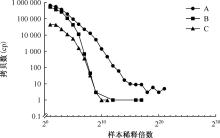
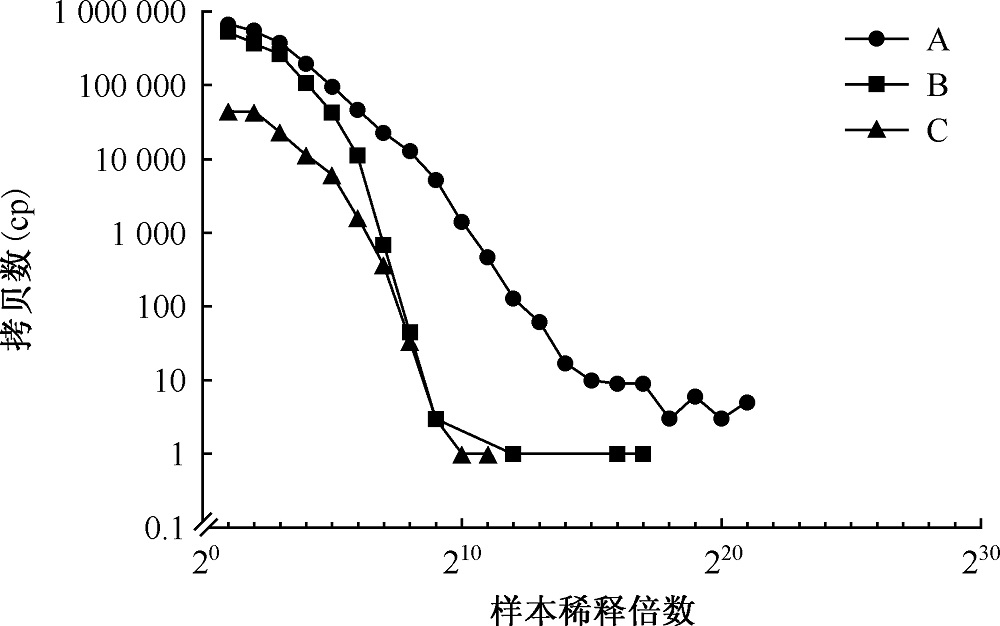
| 稀释 倍数 | 平台A | 平台B | 平台C | |||||
|---|---|---|---|---|---|---|---|---|
| 合计 | FAM | VIC | 合计 | FAM | VIC | CY5 | ROX | |
| IS1081 | IS6110 | IS1081 | IS6110 | rpoB/gyrB | IS6110 | |||
| 0 | 901720 | 420091 | 481629 | 613320 | 203646 | 204838 | 204836 | 47810 |
| 21 | 677162 | 215388 | 461774 | 538973 | 190732 | 203850 | 144391 | 45069 |
| 22 | 550885 | 124080 | 426805 | 366543 | 94849 | 202947 | 68746 | 43238 |
| 23 | 376550 | 60214 | 316336 | 267451 | 51366 | 179393 | 36692 | 23360 |
| 24 | 198228 | 31702 | 166526 | 107418 | 23506 | 67702 | 16211 | 11339 |
| 25 | 96375 | 16292 | 80083 | 42620 | 9105 | 27055 | 6460 | 6144 |
| 26 | 46705 | 6450 | 40255 | 11206 | 2359 | 7129 | 1718 | 1615 |
| 27 | 22687 | 3431 | 19256 | 693 | 146 | 431 | 116 | 369 |
| 28 | 12711 | 1945 | 10766 | 45 | 9 | 24 | 12 | 34 |
| 29 | 5236 | 829 | 4407 | 3 | 1 | 2 | 0 | 3 |
| 210 | 1413 | 213 | 1201 | 0 | 0 | 0 | 0 | 1 |
| 211 | 473 | 76 | 397 | 0 | 0 | 0 | 0 | 1 |
| 212 | 130 | 21 | 109 | 1 | 0 | 1 | 0 | 0 |
| 213 | 62 | 4 | 59 | 0 | 0 | 0 | 0 | 0 |
| 214 | 17 | 1 | 16 | 0 | 0 | 0 | 0 | 0 |
| 215 | 10 | 1 | 9 | 0 | 0 | 0 | 0 | 0 |
| 216 | 9 | 0 | 9 | 1 | 0 | 1 | 0 | 0 |
| 217 | 9 | 4 | 5 | 1 | 1 | 0 | 0 | 0 |
| 218 | 3 | 1 | 20 | 0 | 0 | 0 | 0 | |
| 219 | 6 | 4 | 2 | 0 | 0 | 0 | 0 | 0 |
| 220 | 3 | 0 | 3 | 0 | 0 | 0 | 0 | 0 |
| 221 | 5 | 1 | 4 | 0 | 0 | 0 | 0 | 0 |
| 阳性 | 901 | 182 | 719 | 8788 | 5235 | 1124 | 2429 | 1878 |
| 阴性 | 0 | 0 | 0 | 0 | 0 | 0 | 0 | 0 |
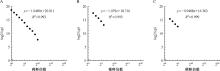
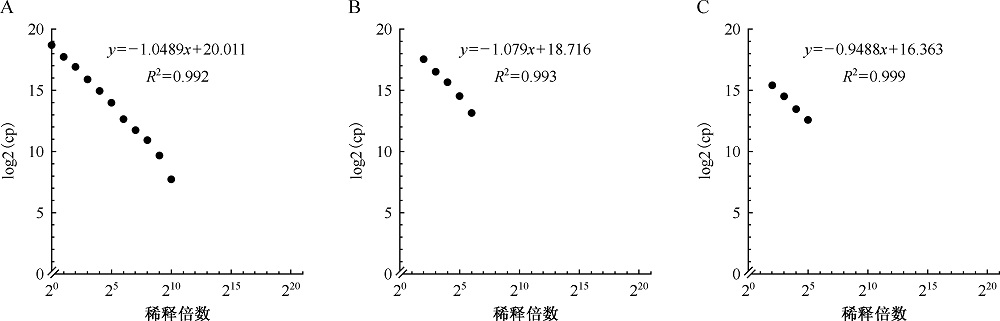
| 稀释 倍数 | 平台A | 平台B | 平台C | |||||
|---|---|---|---|---|---|---|---|---|
| 合计 | FAM | VIC | 合计 | FAM | VIC | CY5 | ROX | |
| IS1081 | IS6110 | IS1081 | IS6110 | rpoB/gyrB | IS6110 | |||
| 0 | 19.78 | 18 . 68 | 18.88 | 19.23 | 17.64 | 17.64 | 17.64 | 15.55 |
| 21 | 19.37 | 17 . 72 | 18.82 | 19.04 | 17 . 54 | 17.64 | 17 . 14 | 15.46 |
| 22 | 19 . 07 | 16 . 92 | 18 . 70 | 18.48 | 16 . 53 | 17.63 | 16 . 07 | 15 . 40 |
| 23 | 18 . 52 | 15 . 88 | 18 . 27 | 18 . 03 | 15 . 65 | 17 . 45 | 15 . 16 | 14 . 51 |
| 24 | 17 . 60 | 14 . 95 | 17 . 35 | 16 . 71 | 14 . 52 | 16 . 05 | 13 . 98 | 13 . 47 |
| 25 | 16 . 56 | 13 . 99 | 16 . 29 | 15 . 38 | 13 . 15 | 14 . 72 | 12 . 66 | 12 . 58 |
| 26 | 15 . 51 | 12 . 66 | 15 . 30 | 13 . 45 | 11.20 | 12 . 80 | 10.75 | 10.66 |
| 27 | 14 . 47 | 11 . 74 | 14 . 23 | 9.44 | 7.19 | 8.75 | 6.86 | 8.53 |
| 28 | 13 . 63 | 10 . 93 | 13 . 39 | 5.49 | 3.17 | 4.59 | 3.58 | 5.10 |
| 29 | 12 . 35 | 9 . 69 | 12 . 11 | 1.56 | -0.02 | 0.98 | ND | 1.63 |
| 210 | 10.46 | 7 . 73 | 10.23 | ND | ND | ND | ND | -1.00 |
| 211 | 8.89 | 6.25 | 8.63 | ND | ND | ND | ND | -1.00 |
| 212 | 7.02 | 4.39 | 6.77 | -0.06 | ND | -0.06 | ND | ND |
| 213 | 5.96 | 1.93 | 5.87 | ND | ND | ND | ND | ND |
| 214 | 4.12 | 0.26 | 4.02 | ND | ND | ND | ND | ND |
| 215 | 3.31 | 0.26 | 3.12 | ND | ND | ND | ND | ND |
| 216 | 3.15 | ND | 3.15 | -0.04 | ND | -0.04 | ND | ND |
| 217 | 3.15 | 1.93 | 2.35 | -0.01 | -0.01 | ND | ND | ND |
| 218 | 1.00 | 0.00 | 0.14 | ND | ND | ND | ND | ND |
| 219 | 2.61 | 1.89 | 1.26 | ND | ND | ND | ND | -2.00 |
| 220 | 1.14 | ND | 1.14 | ND | ND | ND | ND | ND |
| 221 | 2.26 | 0.26 | 1.85 | ND | ND | ND | ND | ND |
| + | 9.82 | 7.51 | 9.49 | 13.10 | 12.35 | 10.13 | 11.25 | 10.87 |
| - | ND | ND | ND | ND | ND | ND | ND | ND |
| 平台 | 靶基因 | 线性范围 (R2≥0.99) | 符合R2≥0.99 的连续梯度数 | 线性回归方程 | R2 |
|---|---|---|---|---|---|
| A | cp总数 | 22~29 | 8 | y=-0.9749x+20.352 | 0.995 |
| FAM-IS1081 | 0~210 | 11 | y=-1.0489x+20.011 | 0.992 | |
| VIC-IS6110 | 22~29 | 8 | y=-0.9631x+20.039 | 0.993 | |
| B | cp总数 | 23~26 | 3 | y=-1.5064x+19.659 | 0.990 |
| FAM-IS1081 | 21~25 | 5 | y=-1.0790x+18.716 | 0.993 | |
| VIC-IS6110 | 23~26 | 3 | y=-1.5283x+19.076 | 0.992 | |
| CY5-rpoB/gyrB | 21~25 | 5 | y=-1.1049x+18.317 | 0.995 | |
| C | ROX-IS6110 | 22~25 | 4 | y=-0.9488x+16.363 | 0.999 |
| [1] | Badal-Faesen S, Firnhaber C, Kendall M A, et al. Impact of Larger Sputum Volume on Xpert® MTB/RIF Assay Detection ofMycobacterium tuberculosis in Smear-Negative Individuals with Suspected Tuberculosis[J]. J Clin Med, 2017, 6(8):78. doi:10.3390/jcm6080078. |
| [2] |
Ari O, Durmaz R, Vezir S, et al. Development of a Multiplex Real-Time PCR for Diagnosis of Tuberculosis and Multidrug Resistance[J]. Curr Microbiol, 2025, 82(5):219. doi:10.1007/s00284-025-04196-z.
pmid: 40153064 |
| [3] |
Ramos A P, Burneo J G. Seizures and epilepsy associated with central nervous system tuberculosis[J]. Seizure, 2023, 107:60-66. doi:10.1016/j.seizure.2023.03.006.
pmid: 36963243 |
| [4] |
Devonshire A S, O’Sullivan D M, Honeyborne I, et al. The use of digital PCR to improve the application of quantitative molecular diagnostic methods for tuberculosis[J]. BMC Infect Dis, 2016, 16:366. doi:10.1186/s12879-016-1696-7.
pmid: 27487852 |
| [5] | Malla B, Shrestha S, Haramoto E. Optimization of a 6-plex Crystal Digital PCR® assay and its application to simultaneous surveillance of enteric and respiratory viruses in wastewater[J]. Sci Total Environ, 2025, 970: 178939. doi:10.1016/j.scitotenv.2025.178939. |
| [6] | Lee C J, Shin W, Song M, et al. Comparison of digital PCR platforms using the molecular marker[J]. Genomics Inform, 2023, 21(2):e24. doi:10.5808/gi.23008. |
| [7] |
Peñuelas-Urquides K, Villarreal-Treviño L, Silva-Ramírez B, et al. Measuring of Mycobacterium tuberculosis groth. A correlation of the optical measurements with colony forming units[J]. Braz J Microbiol, 2013, 44(1):287-289. doi:10.1590/S1517-83822013000100042.
pmid: 24159318 |
| [8] |
Lei S, Chen S, Zhong Q. Digital PCR for accurate quantification of pathogens: Principles, applications, challenges and future prospects[J]. Int J Biol Macromol, 2021, 184:750-759. doi:10.1016/j.ijbiomac.2021.06.132.
pmid: 34171259 |
| [9] | Velapatiño B, Locher K, Belanger C R, et al. Mycobacterium tuberculosis DNA detection in formalin-fixed paraffin-embedded tissue using Digital PCR: a proof-of-concept study[J]. Diagn Microbiol Infect Dis, 2025, 111(3):116697. doi:10.1016/j.diagmicrobio.2025.116697. |
| [10] | Xu F, Du W, Li C, et al. Evaluation of droplet digital polymerase chain reaction by detecting cell-free deoxyribonucleic acid in pleural effusion for the diagnosis of tuberculous pleurisy: a multicentre cohort study[J]. Clin Microbiol Infect, 2024, 30(9):1164-1169. doi:10.1016/j.cmi.2024.05.012. |
| [11] | Zhang S, Chen X, Lin Z, et al. Quantification-of-isoniazid-heteroresistant-mycobacterium-tuberculosis using droplet digital pcr[J]. J Clin Microbiol, 2023, 61(6):e0188422. doi:10.1128/jcm.01884-22. |
| [12] | Zhang S, Xu Y, Huang M, et al. Enhanced diagnosis of tuberculous pleurisy using a multiplex droplet digital PCR assay targeting circulating mycobacterial DNA[J]. Thorax, 2026, 81(8):738-748. doi:10.1136/thorax-2025-223553. |
| [13] | Choi Y J, Kim Y, Park H J, et al. Development of a multiplex droplet digital PCR method for detection and monitoring of Mycobacterium tuberculosis and drug-resistant tuberculosis[J]. Ann Clin Microbiol Antimicrob, 2024, 23(1): 29. doi:10.1186/s12941-024-00687-2. |
| [14] | Qu Y, Liu M, Sun X, et al. Development and evaluation of a triplex droplet digital PCR method for differentiation of M.tuberculosis, M.bovis and BCG[J]. Front Microbiol, 2024, 15:1397792. doi:10.3389/fmicb.2024.1397792. |
| [15] | Hayden R T, Gu Z, Sam S S, et al. Comparative Performance of Reagents and Platforms for Quantitation of Cytomegalovirus DNA by Digital PCR[J]. J Clin Microbiol, 2016, 54(10):2602-2608. doi:10.1128/JCM.01474-16. |
| [16] | Hindson B J, Ness K D, Masquelier D A, et al. High-throughput droplet digital PCR system for absolute quantitation of DNA copy number[J]. Anal Chem, 2011, 83(22):8604-8610. doi:10.1021/ac202028g. |
| [17] | Lyu L, Li Z, Pan L, et al. Evaluation of digital PCR assay in detection of M.tuberculosis IS6110 and IS1081 in tuberculosis patients plasma[J]. BMC Infect Dis, 2020, 20(1): 657. doi:10.1186/s12879-020-05375-y. |
| [18] | Morlock G P, Plikaytis B B, Crawford J T. Characterization of Spontaneous, In Vitro-Selected, Rifampin-Resistant Mutants of Mycobacterium tuberculosis Strain H37Rv[J]. Antimicrob Agents Chemother, 2000, 44(12): 3298-3301. doi:10.1128/AAC.44.12.3298-3301.2000. |
| [19] |
Umar F F, Husain D R, Hatta M M, et al. Molecular characterisation of mutations associated with resistance to first- and second-line drugs among Indonesian patients with tuberculosis[J]. J Taibah Univ Med Sci, 2020, 15(1): 54-58. doi:10.1016/j.jtumed.2019.12.003.
pmid: 32110183 |
| [1] | Standardization Professional Branch of Chinese Antituberculosis Association, Tuberculosis Infect Control Branch of Chinese Antituberculosis Association, Editorial Board of Chinese Journal of Antituberculosis. Guidelines for the application of tuberculin skin test [J]. Chinese Journal of Antituberculosis, 2026, 48(8): 1083-1095. |
| [2] | Xia Hongli, Hua Jiao, Lu Jiankang. Investigation results and analysis of associated factors of tuberculosis infection and disease among school students in Xichang City, Sichuan Province, 2023 [J]. Chinese Journal of Antituberculosis, 2026, 48(8): 1130-1138. |
| [3] | Liu Zisen, Zhao Yaqi, Zhang Bin, Xin Henan, Du Jiang, Feng Boxuan, He Yijun, Li Zihan, Yu Yilin, Wang Dakuan, Yan Jiaoxia, Gao Lei, Jin Qi, Duan Weitao, Cao Xuefang. Analysis of re-screening for latent tuberculosis infection in 2025 and related factors affecting infection status among rural doctors in Zhongmu County, Henan Province, based on 2017 screening [J]. Chinese Journal of Antituberculosis, 2026, 48(8): 1139-1147. |
| [4] | Qi Yunfeng, Wang Xueyu, Kang Wanli, Nie Wenjuan, Wang Yiwen. The application value of tongue swab nucleic acid testing in the diagnosis of suspected tuberculosis [J]. Chinese Journal of Antituberculosis, 2026, 48(8): 1163-1169. |
| [5] | Zeng Lina, Li Wensi, Lu Hailin, Wang Wenfei, Chen Xinchun, Deng Guofang, Xie Shuixiang. Advances in Mycobacterium tuberculosis regulation of host lipid metabolism reprogramming [J]. Chinese Journal of Antituberculosis, 2026, 48(8): 1214-1219. |
| [6] | Zhou Wenxian, Qin Yamei, Yang Xuan, Zhao Na, Wu Kunli, He Qilian. A qualitative study on symptom cluster experience and management needs of patients with post-tuberculosis lung disease [J]. Chinese Journal of Antituberculosis, 2026, 48(7): 1015-1020. |
| [7] | Zeng Yi, Gao Weiwei, Shi Cuilin, Su Shifang, Wang Hua, Tang Jun, Shi Jichan, Nie Qi, Sun Yan, Cui Junwei, Yang Junjun, Fan Jiahua. Effectiveness and safety of Yujieli as a nutritional supplement in newly diagnosed, nutritionally deficient patients with rifampicin-sensitive active pulmonary tuberculosis: a multicenter, randomized, controlled clinical trial [J]. Chinese Journal of Antituberculosis, 2026, 48(7): 925-932. |
| [8] | Wang Congli, Wang Haoran, Huang Hairong, Jiang Guanglu. Performance evaluation of the Genewise-MTBC System in the rapid detection of the Mycobacterium tuberculosis complex [J]. Chinese Journal of Antituberculosis, 2026, 48(7): 985-991. |
| [9] | Li Jing, Chen Shuangshuang, Chen Chunhua, Yang Guoxiang, Yang Chengnao, Zheng Luyun, Tan Chengjian, Li Chuanyou, Li Jie, Zhou Peifu, Dai Xiaowei. Screening of anti-tuberculosis activity and analysis of chemical constituents of the Ethnomedicine Botrychium ternatum [J]. Chinese Journal of Antituberculosis, 2026, 48(6): 787-794. |
| [10] | Jiang Xuefeng, Zhou Linjun, Sun Yan, Jiang Mingxia, Ma Ling, Mei Li, Liu Dongxin. Analysis of drug resistance gene mutation characteristics in Mycobacterium tuberculosis strains from five northwestern provinces of China [J]. Chinese Journal of Antituberculosis, 2026, 48(6): 856-864. |
| [11] | Qiao Xiaobo, Li Jing, Wang Baoqian, Zhou Weidong, Wang Fei, Zhang Qibo, Li Tongxia. Study on the diagnostic value of GeneXpert MTB/RIF and BACTEC MGIT 960 in bronchoalveolar lavage fluid combined with peripheral blood IGRA testing for etiologically negative pulmonary tuberculosis diagnosis [J]. Chinese Journal of Antituberculosis, 2026, 48(6): 874-881. |
| [12] | Huang Guojun, Wang Qiqi, Zheng Wenjing, Liu Jianjun, Bai Liqiong, Liang Jun, Yu Shicheng, Xu Zuhui, Wan Yanping, Liu Xie, Yao Hongyan, Ming Hui. Trend of pulmonary tuberculosis reported incidence in Hunan Province from 2009 to 2023: a population-based study using Joinpoint regression model [J]. Chinese Journal of Antituberculosis, 2026, 48(5): 567-575. |
| [13] | Che Yang, Zhang Dongliang, Li Xiangchen, Lu Yewei, Liu Zhengwei. Molecular characterization and risk factors of cross-resistance between isoniazid and prothionamide in multidrug-resistant Mycobacterium tuberculosis in Ningbo, China [J]. Chinese Journal of Antituberculosis, 2026, 48(5): 576-585. |
| [14] | Wu Yaning, Huang Misun, Guo Yi, Bo Xianglong, Wang Ruihuan, Xing Jianliang, Fan Xueting, Xu Da, Zhao Lili, Zhao Xiuqin, Li Guilian, Liu Haican, Li Machao. Analysis of genetic mutation characteristics associated with linezolid resistance in Mycobacterium tuberculosis [J]. Chinese Journal of Antituberculosis, 2026, 48(5): 603-615. |
| [15] | Wu Gang, Zhang Zhengbin, Lu Zhouqin, Wang Xiaojun, Zhou Meilan, Li Yuehua. Comparison of clinical application effect between a novel fluorescent probe-based PCR method and three laboratory methods for detecting the Mycobacterium tuberculosis [J]. Chinese Journal of Antituberculosis, 2026, 48(5): 616-620. |
| Viewed | ||||||
|
Full text |
|
|||||
|
Abstract |
|
|||||
 京公网安备11010202007215号
Total visitors: Visitors of today: Now online:
京公网安备11010202007215号
Total visitors: Visitors of today: Now online:
 This work is licensed under Creative Commons Attribution 3.0 License.
