
Chinese Journal of Antituberculosis ›› 2026, Vol. 48 ›› Issue (2): 206-216.doi: 10.19982/j.issn.1000-6621.20250360
• Original Articles • Previous Articles Next Articles
Wu Xiaoying( ), He Gang, Cai Xiaoting, He Liqian, Deng Hong, He Liyan
Received:2025-09-07
Online:2026-02-10
Published:2026-02-03
Contact:
Wu Xiaoying
E-mail:wuxiaoying86@163.com
Supported by:CLC Number:
Wu Xiaoying, He Gang, Cai Xiaoting, He Liqian, Deng Hong, He Liyan. Analysis on the prognostic outcome model of elderly pulmonary tuberculosis patients with comorbidities based on the Chinese multimorbidity-weighted index[J]. Chinese Journal of Antituberculosis, 2026, 48(2): 206-216. doi: 10.19982/j.issn.1000-6621.20250360
Add to citation manager EndNote|Ris|BibTeX
URL: https://www.zgflzz.cn/EN/10.19982/j.issn.1000-6621.20250360

| 特征 | 合计 (1423例) | 成功治疗结局[例(构成比,%)] | χ2值 | P值 | |
|---|---|---|---|---|---|
| 是(1205例) | 否(218例) | ||||
| 性别 | 1.710 | 0.191 | |||
| 男性 | 1121 | 942(78.17) | 179(82.11) | ||
| 女性 | 302 | 263(21.83) | 39(17.89) | ||
| 年龄组(岁) | 35.352 | <0.001 | |||
| 60~70 | 776 | 687(57.01) | 89(40.83) | ||
| 71~79 | 347 | 296(24.56) | 51(23.39) | ||
| ≥80 | 300 | 222(18.43) | 78(35.78) | ||
| 民族 | 0.918 | 0.338 | |||
| 汉族 | 1418 | 1200(99.59) | 218(100.00) | ||
| 少数民族 | 5 | 5(0.41) | 0(0.00) | ||
| 户籍 | 8.663 | 0.003 | |||
| 本地 | 1018 | 844(70.04) | 174(79.82) | ||
| 非本地 | 405 | 361(29.96) | 44(20.18) | ||
| 发现方式 | 0.550 | 0.458 | |||
| 因症就诊 | 1028 | 866(71.87) | 162(74.31) | ||
| 主动发现 | 395 | 339(28.13) | 56(25.69) | ||
| 临床症状 | 11.246 | 0.001 | |||
| 无症状 | 320 | 290(24.07) | 30(13.76) | ||
| 有症状 | 1103 | 915(75.93) | 188(86.24) | ||
| 就诊延误 | 4.602 | 0.032 | |||
| 否 | 643 | 559(46.39) | 84(38.53) | ||
| 是 | 780 | 646(53.61) | 134(61.47) | ||
| 发现延误 | 6.011 | 0.014 | |||
| 否 | 570 | 499(41.41) | 71(32.57) | ||
| 是 | 853 | 706(58.59) | 147(67.43) | ||
| 病原学检查 | 36.920 | <0.001 | |||
| 阴性 | 585 | 536(44.48) | 49(22.48) | ||
| 阳性 | 838 | 669(55.52) | 169(77.52) | ||
| 治疗分类 | 6.088 | 0.014 | |||
| 初治 | 1219 | 1044(86.64) | 175(80.28) | ||
| 复治 | 204 | 161(13.36) | 43(19.72) | ||
| 耐药情况 | 166.575 | <0.001 | |||
| 非耐药 | 761 | 650(97.16) | 111(65.68) | ||
| 单耐药 | 31 | 12(1.79) | 19(11.24) | ||
| 耐多药 | 46 | 7(1.05) | 39(23.08) | ||
| 重症肺结核 | 196.403 | <0.001 | |||
| 否 | 1027 | 955(79.25) | 72(33.03) | ||
| 是 | 396 | 250(20.75) | 146(66.97) | ||
| CMWI值(分) | 131.577 | <0.001 | |||
| <2 | 876 | 802(66.56) | 74(33.94) | ||
| 2~4 | 333 | 274(22.74) | 59(27.06) | ||
| >4 | 214 | 129(10.70) | 85(39.00) | ||
| 规则治疗 | 272.506 | <0.001 | |||
| 否 | 224 | 108(8.96) | 116(53.21) | ||
| 是 | 1199 | 1097(91.04) | 102(46.79) | ||
| 变量名 | 研究因素 | 赋值 | 变量名 | 研究因素 | 赋值 |
|---|---|---|---|---|---|
| X1 | 年龄 | 原值代入 | X7 | 治疗分类 | 初治=0;复治=1 |
| X2 | 户籍 | 本地=0;非本地=1 | X8 | 耐药情况 | 非耐药=0;单耐药=1; 耐多药=2 |
| X3 | 临床症状 | 无=0;有=1 | |||
| X4 | 就诊延误 | 无=0;有=1 | X9 | 重症肺结核 | 否=0;是=1 |
| X5 | 发现延误 | 无=0;有=1 | X10 | 规则治疗 | 否=0;是=1 |
| X6 | 病原学检查 | 阴性=0;阳性=1 | X11 | CMWI值 | 原值代入 |
| 因素 | β值 | Wald χ2值 | P值 | HR(95%CI)值 | |
|---|---|---|---|---|---|
| 常数 | -8.136 | 0.891 | 83.457 | <0.001 | |
| 年龄 | 0.053 | 0.010 | 25.916 | <0.001 | 1.054(1.033~1.076) |
| 户籍 | |||||
| 本地 | 1.000 | ||||
| 非本地 | 0.510 | 0.231 | 4.857 | 0.028 | 1.655(1.058~2.621) |
| 临床症状 | |||||
| 无 | 1.000 | ||||
| 有 | 0.796 | 0.259 | 9.424 | 0.002 | 2.216(1.333~3.683) |
| 就诊延误 | |||||
| 无 | 1.000 | ||||
| 有 | -0.109 | 0.236 | 0.215 | 0.643 | 0.896(0.564~1.424) |
| 发现延误 | |||||
| 无 | 1.000 | ||||
| 有 | 0.482 | 0.247 | 3.813 | 0.051 | 1.620(0.998~2.629) |
| 病原学检查 | |||||
| 阴性 | 1.000 | ||||
| 阳性 | 1.335 | 0.211 | 39.896 | <0.001 | 3.802(2.512~5.754) |
| 治疗分类 | |||||
| 初治 | 1.000 | ||||
| 复治 | 0.300 | 0.242 | 1.533 | 0.216 | 1.350(0.840~2.171) |
| 耐药情况 | |||||
| 非耐药 | 1.000 | ||||
| 单耐药 | 0.698 | 0.371 | 3.536 | 0.060 | 0.490(0.240~1.030) |
| 耐多药 | 0.409 | 0.221 | 3.403 | 0.065 | 1.505(0.975~2.322) |
| 重症肺结核 | |||||
| 否 | 1.000 | ||||
| 是 | 1.532 | 0.227 | 45.713 | <0.001 | 4.628(2.968~7.216) |
| 规则治疗 | |||||
| 否 | 1.000 | ||||
| 是 | -1.254 | 0.234 | 28.802 | <0.001 | 0.285(0.180~0.451) |
| CMWI值 | 0.263 | 0.043 | 37.419 | <0.001 | 1.301(1.196~1.415) |
| 真实情况 | 预测结果 | 合计 | |
|---|---|---|---|
| 成功治疗患者 | 不良结局患者 | ||
| 成功治疗患者 | 1160 | 45 | 1205 |
| 不良结局患者 | 130 | 88 | 218 |
| 合计 | 1290 | 133 | 1423 |
| 真实情况 | 预测结果 | 合计 | |
|---|---|---|---|
| 成功治疗患者 | 不良结局患者 | ||
| 成功治疗患者 | 1127 | 78 | 1205 |
| 不良结局患者 | 90 | 128 | 218 |
| 合计 | 1217 | 206 | 1423 |
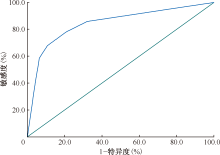
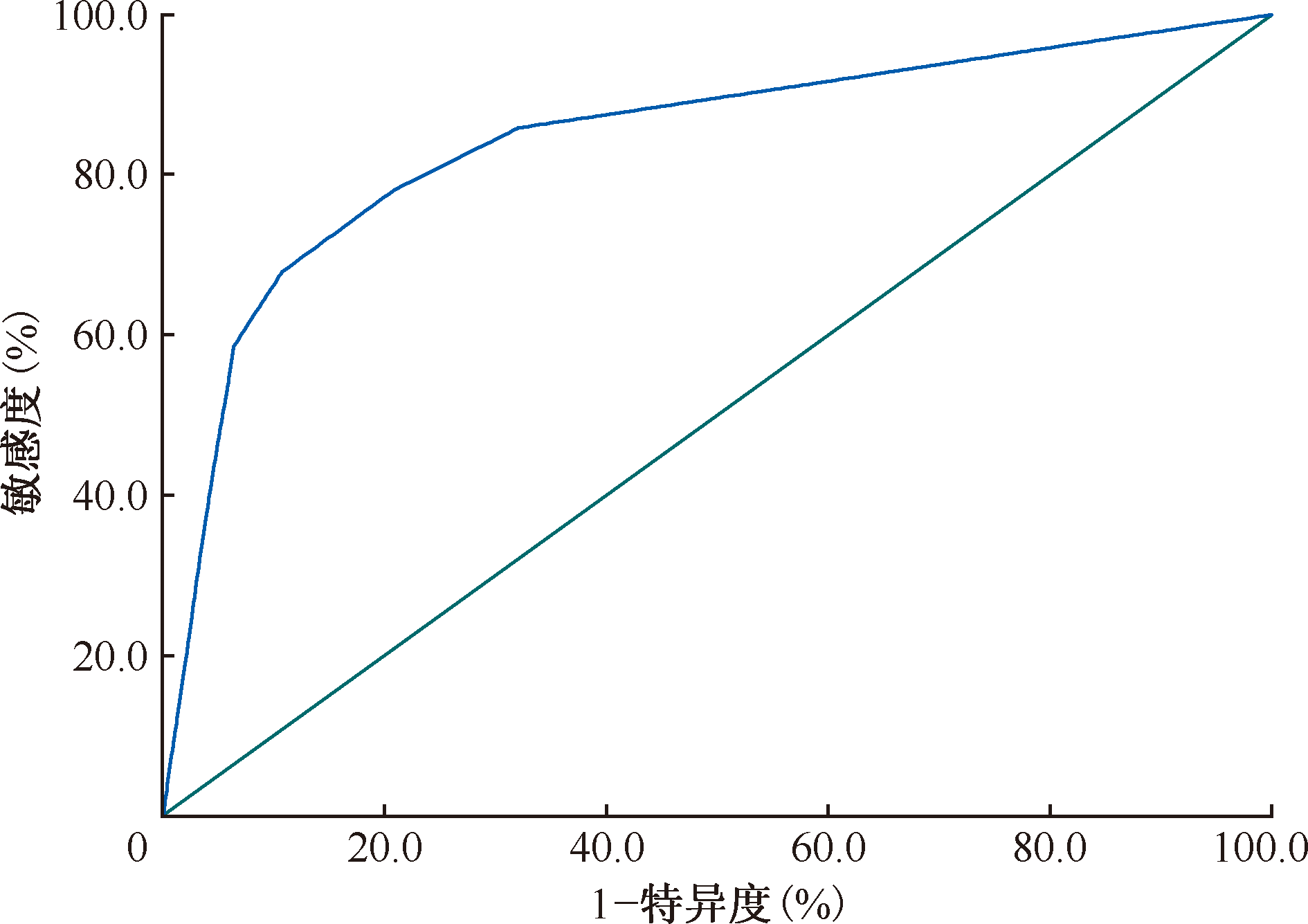
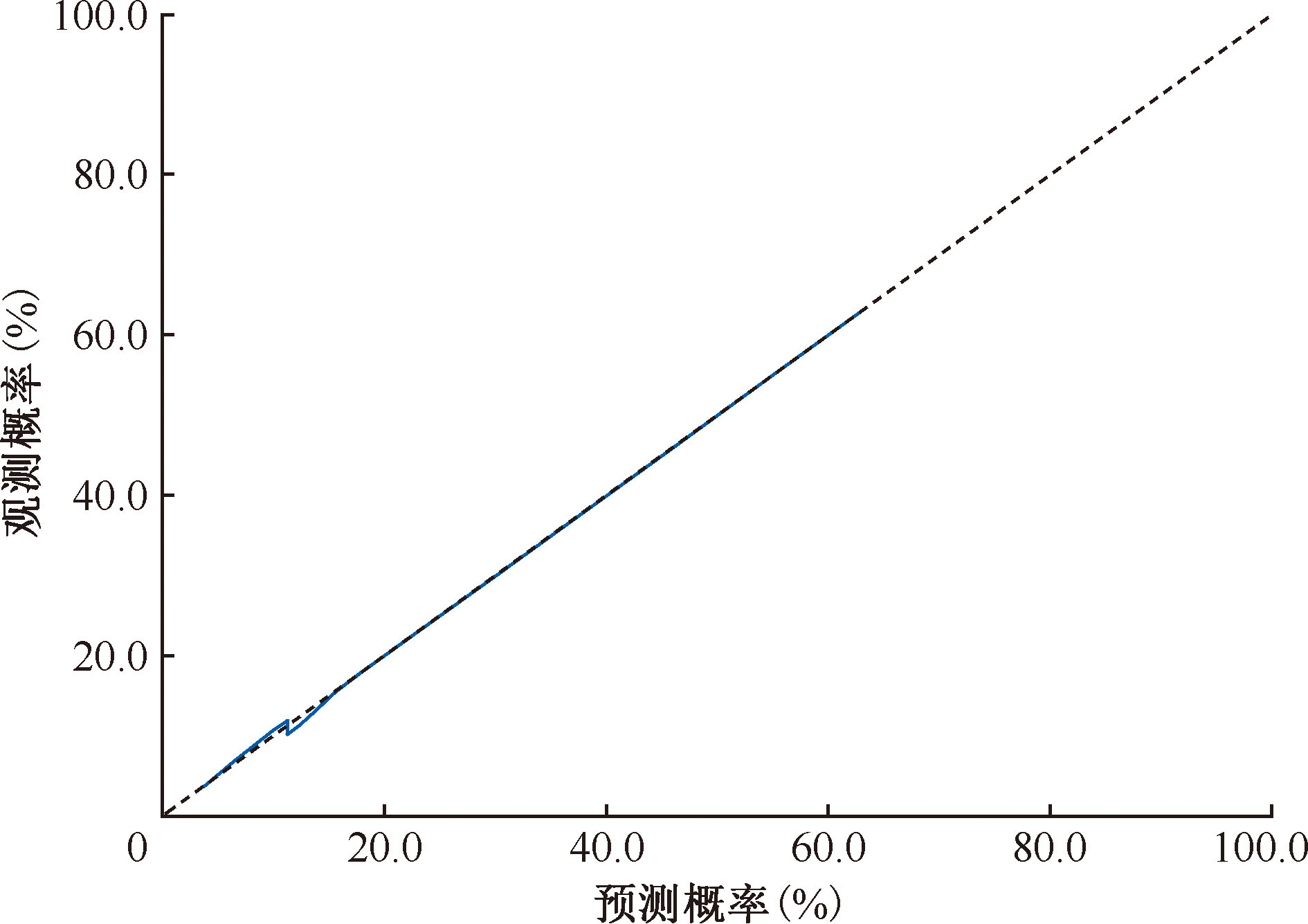
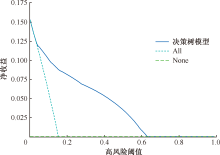
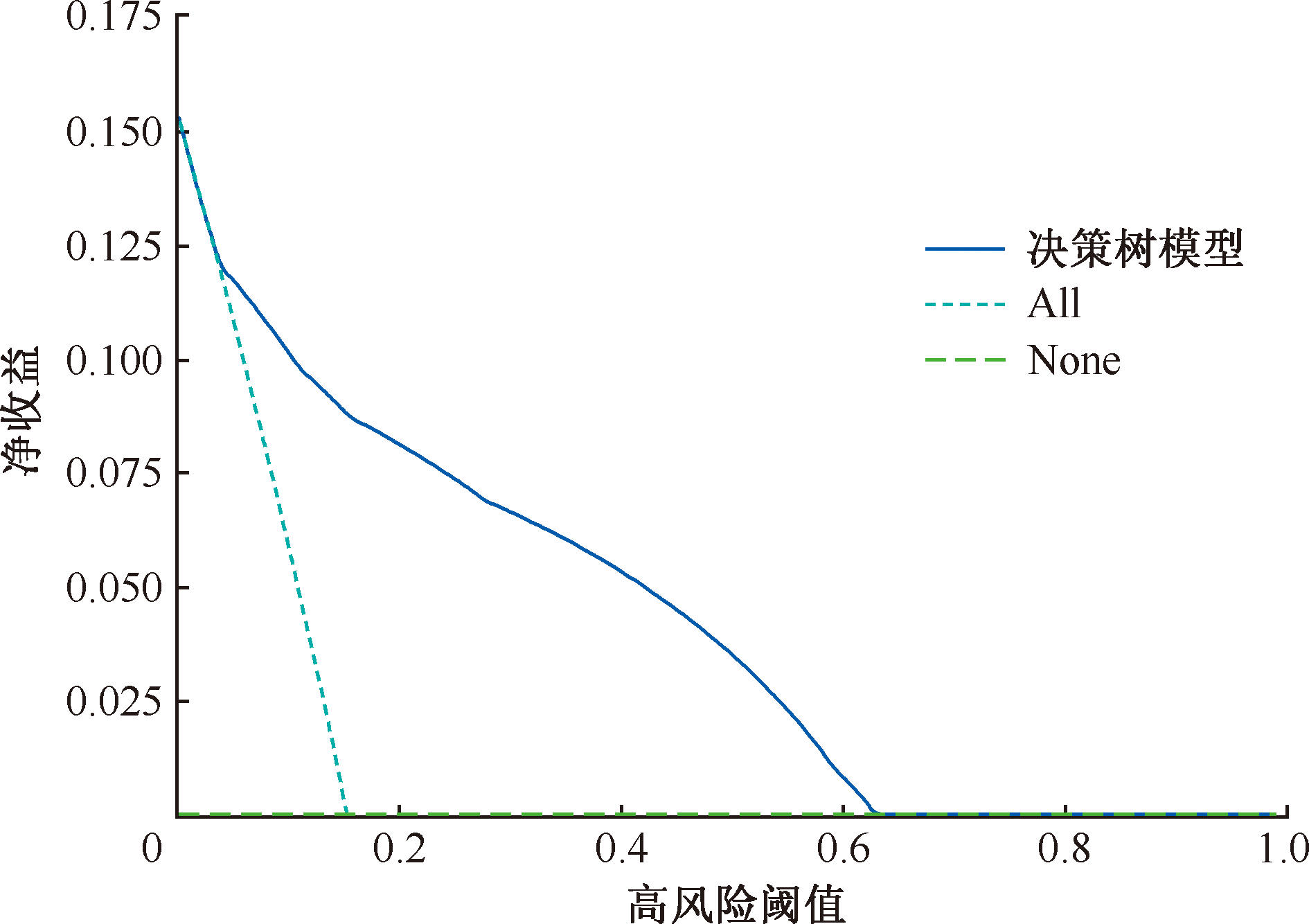
| [1] | World Health Organization. Global tuberculosis report 2024. Geneva: World Health Organization, 2024. |
| [2] | 中华医学会结核病学分会. 老年肺结核诊断与治疗专家共识(2023版). 中华结核和呼吸杂志, 2023, 46(11):1068-1084. doi:10.3969/j.issn.1007-3205.2024.11.002. |
| [3] |
Chen X, Giles J, Yao Y, et al. The path to healthy ageing in China: a Peking University-Lancet Commission. Lancet, 2022, 400(10367):1967-2006. doi:10.1016/S0140-6736(22)01546-X.
URL pmid: 36423650 |
| [4] | Hu WH, Liu YY, Yang CH, et al. Developing and validating a Chinese multimorbidity-weighted index for middle-aged and older community-dwelling individuals. Age Ageing, 2022, 51(2):afab274. doi:10.1093/ageing/afab274. |
| [5] | 中华人民共和国国家卫生和计划生育委员会. WS 196—2017结核病分类. 结核与肺部疾病杂志, 2024, 5(4):379-380. doi:10.19983/j.issn.2096-8493.2024055. |
| [6] | 中华人民共和国国家卫生和计划生育委员会. WS 288—2017肺结核诊断. 结核与肺部疾病杂志, 2024, 5(4):376-378. doi:10.19983/j.issn.2096-8493.20250069. |
| [7] | 中国防痨协会. 耐药结核病化学治疗指南(2015). 中国防痨杂志, 2015, 37 (5): 421-469. doi:10.3969/j.issn.1000-6621.2015.05.001. |
| [8] | 中国疾病预防控制中心结核病预防控制中心. 中国结核病防治工作技术指南(2021年). 北京: 人民卫生出版社, 2021:156-246. |
| [9] |
Siddiqi K, Stubbs B, Lin Y, et al. TB multimorbidity:a global health challenge demanding urgent attention. Int J Tuberc Lung Dis, 2021, 25(2):87-90. doi:10.5588/ijtld.20.0751.
URL pmid: 33656417 |
| [10] | 卢水华. 关注结核病共患病已成为公共卫生的需要. 结核与肺部疾病杂志, 2022, 3(4):255-260. doi:10.19983/j.issn.2096-8493.20220107. |
| [11] | 周芳静, 冯慧莹, 方兰君, 等. 2016—2020年广东省活动性肺结核患者发现延迟的变化趋势及影响因素分析. 中国防痨杂志, 2023, 45(1):85-95. doi:10.19982/J.issn.1000 6621.20220389. |
| [12] | 吴守媛, 兰慧, 刘云兰, 等. 重症肺结核定义的概况性评价. 中华结核和呼吸杂志, 2023, 46(8):760-773. doi:10.3760/cma.j.cn112147-20230517-00247. |
| [13] | 中华人民共和国卫生部疾病预防控制局, 中华人民共和国卫生部医政司, 中国疾病预防控制中心. 中国结核病防治规划实施工作指南(2008年版). 北京: 中国协和医科大学, 2009:48. |
| [14] | Michel JP, Leonardi M, Martin M, et al. WHO’s report for the decade of healthy ageing 2021— 30 sets the stage for globally comparable data on healthy ageing. Lancet Healthy Longev, 2021, 2(3):e121-e122. doi:10.1016/S2666-7568(21)00002-7. |
| [15] |
Feinstein AR. The pre-therapeutic classification of co-morbidity in chronic disease. J Chronic Dis, 1970, 23(7): 455-468. doi:10.1016/0021-9681(70)90054-8.
URL pmid: 26309916 |
| [16] | World Health Organization. The world health report 2008:primary health care now more than ever. Geneva: World Hearth Organization, 2008. |
| [17] | 章轶立, 黄馨懿, 齐保玉, 等. 老年人共病研究的现实意义、内容方法与前景展望. 中国循证医学杂志, 2023, 23(7):862-868. doi:10.7507/1672-2531.202302103. |
| [18] | Wetterling T. Pathogenesis of multimorbidity-what is known?. Z Gerontol Geriatr, 2021, 54(6):590-596. doi:10.1007/s00391-020-01752-z. |
| [19] |
Tran PB, Kazibwe J, Nikolaidis GF, et al. Costs of multimorbidity: a systematic review and meta-analyses. BMC Med, 2022, 20(1):234. doi:10.1186/s12916-022-02427-9.
URL pmid: 35850686 |
| [20] | Lin WQ, Luo LY, Li YH, et al. Trends in prevalence of multimorbidity for chronic diseases in China: serial cross-sectional surveys from 2009 to 2018. J Nutr Health Aging, 2024, 28(8):100260. doi:10.1016/j.jnha.2024.100260. |
| [21] | Sinha A, Suman SS, Subedi N, et al. Epidemiology of multimorbidity in Nepal: A systematic review and meta-analysis. J Multimorb Comorb, 2024, 14:26335565241284022. doi:10.1177/26335565241284022. |
| [22] | 刘帅帅, 张露文, 陆翘楚, 等. 中国中老年人多重慢性病现状调查与健康损失因素研究:基于CHARLS 2018数据. 实用医学杂志, 2021, 37(4):518-524. doi:10.3969/j.issn.1006-5725.2021.04.020. |
| [23] |
Geng Y, Jie W, He Y, et al. Prevalence and Patterns of Multimorbidity Among Adults Aged 18 Years and Older: China, 2018. China CDC weekly, 2023, 5(2): 35-39. doi:10.46234/ccdcw2023.007.
URL pmid: 36776686 |
| [24] | 喻月慧, 毛雅宣. 典型共病模式下老年慢性病患者医疗负担影响因素分析. 中国卫生政策研究, 2024, 17(11):35-43. doi:10.3969/j.issn.1674-2982.2024.11.005. |
| [25] | 闫伟, 路云, 张冉, 等. 基于CHARLS数据分析的我国老年人共病现状研究. 中华疾病控制杂志, 2019, 23(4): 426-430. doi:10.16462/j.cnki.zhjbkz.2019.04.012. |
| [26] | Nunes BP, Flores TR, Mielke GI, et al. Multimorbidity and mortality in older adults: a systematic review and meta-analysis. Arch Gerontol Geriatr, 2016, 67: 130-138. doi:10.1016/j.archger.2016.07.008. |
| [27] | Stubbs B, Siddiqi K, Elsey H, et al. Tuberculosis and non-communicable disease multimorbidity: An analysis of the World Health Survey in 48 low- and middle-income countries. Int J Environ Res Public Health, 2021, 18(5):2439. doi:10.3390/ijerph18052439. |
| [28] |
Brijoux T, Woopen C, Zank S. Multimorbidity in old age and its impact on life results. Z Gerontol Geriatr, 2021, 54(Suppl 2):108-113. doi:10.1007/s00391-021-01920-9.
URL pmid: 34160675 |
| [29] | Guo X, Liu P, Guo J, et al. An unsupervised cluster analysis of multimorbidity patterns in older adults in Shenzhen, China. Front Public Health, 2025, 13:1557721. doi:10.3389/fpubh.2025.1557721. |
| [30] | 韩婷婷, 刘桂珍, 陈秋奇, 等. 世界卫生组织《应对结核病及其共病合作行动框架》解读. 中国防痨杂志, 2023, 45(1):25-30. doi:10.19982/j.issn.1000-6621.20220464. |
| [31] | Dong YH, Chang CH, Wu FL, et al. Use of inhaled corticosteroids in patients with COPD and the risk of TB and influenza:A systematic review and meta analysis of randomized controlled trials. Chest, 2014, 145(6):1286-1297. doi:10.1378/chest.13-2137. |
| [32] | Hu S, Yu Q, Liu F, et al. A novel inflammatory indicator for tuberculosis associated obstructive pulmonary disease(TOPD): the Systemic Inflammatory Response Index (SIRI). J Inflamm Res, 2024, 17:4219-4228. doi:10.2147/JIR.S468232. |
| [33] |
Fan H, Wu F, Liu J, et al. Pulmonary tuberculosis as a risk factor for chronic obstructive pulmonary disease: a systematic review and meta-analysis. Ann Transl Med, 2021, 9(5):390. doi:10.21037/atm-20-4576.
URL pmid: 33842611 |
| [34] | 杨蕊, 李玲, 陈金瓯, 等. 2017—2021年云南省肺结核与糖尿病共病患者抗结核治疗效果及影响因素分析. 中国防痨杂志, 2024, 46(5):519-524. doi:10.19982/j.issn.1000-6621.20240006. |
| [35] | 姚晶, 顾凯侃, 李智红, 等. 2014—2019年上海市静安市老年与非老年肺结核流行特征对比分析. 中国防痨杂志, 2020, 42(12):1323-1328. doi:10.3969/j.issn.1000-6621.2020.12.014. |
| [36] | 杨超, 王晶, 杨朝辉, 等. 2016—2022年北京市通州区60岁及以上老年人群肺结核流行特征及治疗转归分析. 中国防痨杂志, 2021, 43(6):636-641. doi:10.19982/j.issn.1000-6621.20230416. |
| [37] | 叶智腾, 任斐, 王华, 等. 老年耐多药/利福平耐药肺结核患者的治疗转归及影响因素研究——全国多中心、回顾性队列研究. 中国防痨杂志, 2024, 46(9):1023-1029. doi:10.19982/j.issn.1000-6621.20240215. |
| [38] |
Rajagopalan S. Tuberculosis in Older Adults. Clin Geriatr Med, 2016, 32(3):479-491. doi:10.1016/j.cger.2016.02.006.
URL pmid: 27394018 |
| [39] |
Schaaf HS, Collins A, Bekker A, et al. Tuberculosis at extremes of age. Respirology, 2010, 15(5):747-763. doi:10.1111/j.1440-1843.2010.01784.x.
URL pmid: 20546192 |
| [40] | World Health Organization. Treatment of tuberculosis: guidelines, 4th edition. Geneva:World Health Organization, 2020. doi:10.1177/17579139101300050803. |
| [41] | Li SJ, Li YF, Song WM, et al. Population aging and trends of pulmonary tuberculosis incidence in the elderly. BMC Infect Dis, 2021, 21(1):302. doi:10.1186/s12879-021-05994-z. |
| [42] | Louie JK, Keh C, Agraz-Lara R, et al. Adverse events associated with treatment for Pan-Susceptible tuberculosis in San Francisco. Clin Infect Dis, 2023, 76(6):1121-1124. doi:10.1093/cid/ciac867. |
| [43] | Boni FG, Hamdi I, Koundi LM, et al. Cytokine storm in tuberculosis and IL-6 involvement. Infect Genet Evol, 2022, 97:105166. doi:10.1016/j.meegid.2021.105166. |
| [44] |
Kornfeld H, West K, Kane K, et al. High prevalence and heterogeneity of diabetes in patients with TB in South India: a report from the effects of diabetes on tuberculosis severity (EDOTS) study. Chest, 2016, 149(6):1501-1508. doi:10.1016/j.chest.2016.02.675.
URL pmid: 26973015 |
| [45] |
Ho J, Fox OJ, Marais BJ. Passive case finding for tuberculosis is not enough. Int J Mycobacteriol, 2016, 5(4):374-378. doi:10.1016/j.ijmyco.2016.09.023.
URL pmid: 27931676 |
| [46] | Getnet F, Demissie M, Assefa N, et al. Delay in diagnosis of pulmonary tuberculosis in low-and middle-income settings:systematic review and meta-analysis. BMC Pulm Med, 2017, 17(1):202. doi:10.1186/s12890-017-0551-y. |
| [47] | An C, Chen H, Cheng Y, et al. Socioeconomic inequality in the multimorbidity trajectories of middle-aged and older adults in China: A prospective cohort study. Maturitas, 2025, 192:108160. doi:10.1016/j.maturitas.2024.108160. |
| [48] | 李丽萍, 廖婧, 高鑫源, 等. 中国共病加权指数与老年人卫生服务利用的关联性研究. 中国全科医学, 2025, 28(1):65-70. doi:10.12114/j.issn.1007-9572.2023.0713. |
| [49] | 李济宾, 张晋昕, 洪明晃. 临床研究方法学. 北京: 科学出版社, 2025. |
| [50] |
Palmer K, Marengoni A, Forjaz MJ, et al. Multimorbidity care model: recommendations from the consensus meeting of the Joint Action on Chronic Diseases and Promoting Healthy Ageing across the Life Cycle (JA-CHRODIS). Health Policy, 2018, 122(1): 4-11. doi:10.1016/j.healthpol.2017.09.006.
URL pmid: 28967492 |
| [1] | Zhang Jian, Chen Bin, Zhang Mingwu, Qin Jiasheng, Song Yufang, Li Xuejing, Wang Wei. Analysis of the dynamics and influencing factors of latent tuberculosis infection in a rural elderly population in Changxing County [J]. Chinese Journal of Antituberculosis, 2026, 48(3): 405-412. |
| [2] | Shang Yuanyuan, Nie Wenjuan, Chu Naihui. Comparison of clinical characteristics and prognostic factors between elderly and non-elderly patients with Mycobacterium abscessus pulmonary disease [J]. Chinese Journal of Antituberculosis, 2026, 48(1): 106-112. |
| [3] | Zhu Qingdong, Zhao Chunyan, Huang Aichun, Zeng Chunmei, Gong Chunming, Xu Chaoyan, Jian Shasha, Li Weiwen, Song Chang. The disease burden and changing trends of HIV/AIDS-associated drug-susceptible tuberculosis in the elderly population aged 60 above of China from 1990 to 2021 [J]. Chinese Journal of Antituberculosis, 2026, 48(1): 34-40. |
| [4] | Tang Shunding, Xu Lin, Li Ling, Cun Dejiao, Yang Rui. Analysis of the willingness and influencing factors of receiving active pulmonary tuberculosis screening among the aged 65 and above in ethnic minority areas of Yunnan Province [J]. Chinese Journal of Antituberculosis, 2026, 48(1): 49-56. |
| [5] | Multidisciplinary Diagnosis and Treatment Branch of Chinese Antituberculosis Association , National Clinical Research Center for Infectious Disease/Shenzhen Third People’s Hospital , Beijing Chao-Yang Hospital, Capital Medical University , Guangdong Lung Cancer Institute . Expert consensus on the diagnosis and treatment of coexistent pulmonary tuberculosis and lung cancer [J]. Chinese Journal of Antituberculosis, 2025, 47(9): 1105-1125. |
| [6] | Yan Yueming, Chen Meng, Li Xuekui, Wang Zhongdong, Sun Haiyan, Dai Xiaoqi, Song Song, Xu Honghong, Zhang Menghan, Wang Zhi, Lyu Kunzheng. Prevalence and influencing factors of latent tuberculosis infection among elderly residents in nursing homes in Qingdao [J]. Chinese Journal of Antituberculosis, 2025, 47(9): 1148-1153. |
| [7] | Meng Qinglin, Wang Yunxia, Tang Yan, Liu Eryong. Analysis of psychological support of tuberculosis patients at home and abroad [J]. Chinese Journal of Antituberculosis, 2025, 47(8): 981-985. |
| [8] | Peng Hua, Cui Junwei, Shang Qiubai, Li Siqing, Peng Ruiqin. Effectiveness of a nursing intervention based on the Transtheoretical Model combined with the Health Belief Model in patients with pulmonary tuberculosis and chronic obstructive pulmonary disease [J]. Chinese Journal of Antituberculosis, 2025, 47(6): 727-731. |
| [9] | Zhang Manhui, Zhang Mengdi, Lu Zheng, Li Junqi, Zheng Wenjing, Wang Xin, Huang Fei, Liu Jianjun, Yao Hongyan, Wang Qiqi. Analysis on the trends of pulmonary tuberculosis disease burden among the elderly population in China from 2005 to 2020 [J]. Chinese Journal of Antituberculosis, 2025, 47(6): 753-759. |
| [10] | Wu Xuan, Zhang Yanqiu, Xu Jiying, Meng Dan, Sun Dingyong. Analysis of factors influencing the treatment outcomes of patients with pulmonary tuberculosis and diabetes mellitus in Henan Province (2019—2023) [J]. Chinese Journal of Antituberculosis, 2025, 47(4): 425-431. |
| [11] | Zhang Mengdi, Wang Qiqi, Wang Xin, Zheng Wenjing, Sun Wenshan, Xiao Yiran, Guo Xiaomin, Liu Jianjun, Huang Fei, Yao Hongyan. Study on pulmonary tuberculosis disease burden in the elderly aged 60 and above in China, 2005—2020 [J]. Chinese Journal of Antituberculosis, 2025, 47(3): 338-347. |
| [12] | Qin Xueling, Chen Li, Sun Xiaoying, Hu Shanpeng, Lu Zhen, He Nailing, Zhang Jifen. Active screening and influencing factor analysis of pulmonary tuberculosis among elderly people [J]. Chinese Journal of Antituberculosis, 2025, 47(3): 355-361. |
| [13] | Tian Feifei, Li Yuhong, Li Xue, Wang Jia, Li Tao, Du Xin, Zhao Yanlin, Zhang Hui, Liu Xiaoqiu. Analysis of influencing factors of treatment outcomes among pulmonary tuberculosis patients comorbid with diabetes, China, 2019—2023 [J]. Chinese Journal of Antituberculosis, 2025, 47(12): 1547-1555. |
| [14] | Maiweilanjiang Abulimiti, Abudukelimu Tawakuli, Gulimina Abulimiti, Huang Fei. Analysis of the epidemiological characteristics and influencing factors of treatment outcomes in patients with pulmonary tuberculosis complicated by diabetes in Kashgar Prefecture, 2018—2023 [J]. Chinese Journal of Antituberculosis, 2025, 47(12): 1573-1582. |
| [15] | Cai Xiaoting, Su Bihui, He Liqian, Deng Hong, Wu Xiaoying. Analysis of latent tuberculosis infection status and influencing factors among elderly aged 65 and above in Haizhu District, Guangzhou City [J]. Chinese Journal of Antituberculosis, 2025, 47(12): 1583-1589. |
| Viewed | ||||||
|
Full text |
|
|||||
|
Abstract |
|
|||||
 京公网安备11010202007215号
Total visitors: Visitors of today: Now online:
京公网安备11010202007215号
Total visitors: Visitors of today: Now online:
 This work is licensed under Creative Commons Attribution 3.0 License.
