
Chinese Journal of Antituberculosis ›› 2026, Vol. 48 ›› Issue (7): 1051-1063.doi: 10.19982/j.issn.1000-6621.20260030
• Original Articles • Previous Articles Next Articles
Yin Shiliu1, Xu Dan2, Li Zheng2, Wang Yanqian3, Li Fengsen3( )
)
Received:2026-01-16
Online:2026-07-10
Published:2026-07-02
Contact:
Li Fengsen, Email: Supported by:CLC Number:
Yin Shiliu, Xu Dan, Li Zheng, Wang Yanqian, Li Fengsen. Bibliometric analysis of research on post-tuberculosis sequelae (2006—2025): a preliminary exploration based on Web of Science[J]. Chinese Journal of Antituberculosis, 2026, 48(7): 1051-1063. doi: 10.19982/j.issn.1000-6621.20260030
Add to citation manager EndNote|Ris|BibTeX
URL: https://www.zgflzz.cn/EN/10.19982/j.issn.1000-6621.20260030
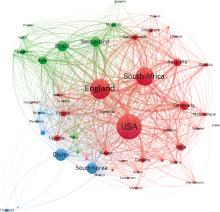

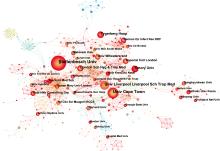
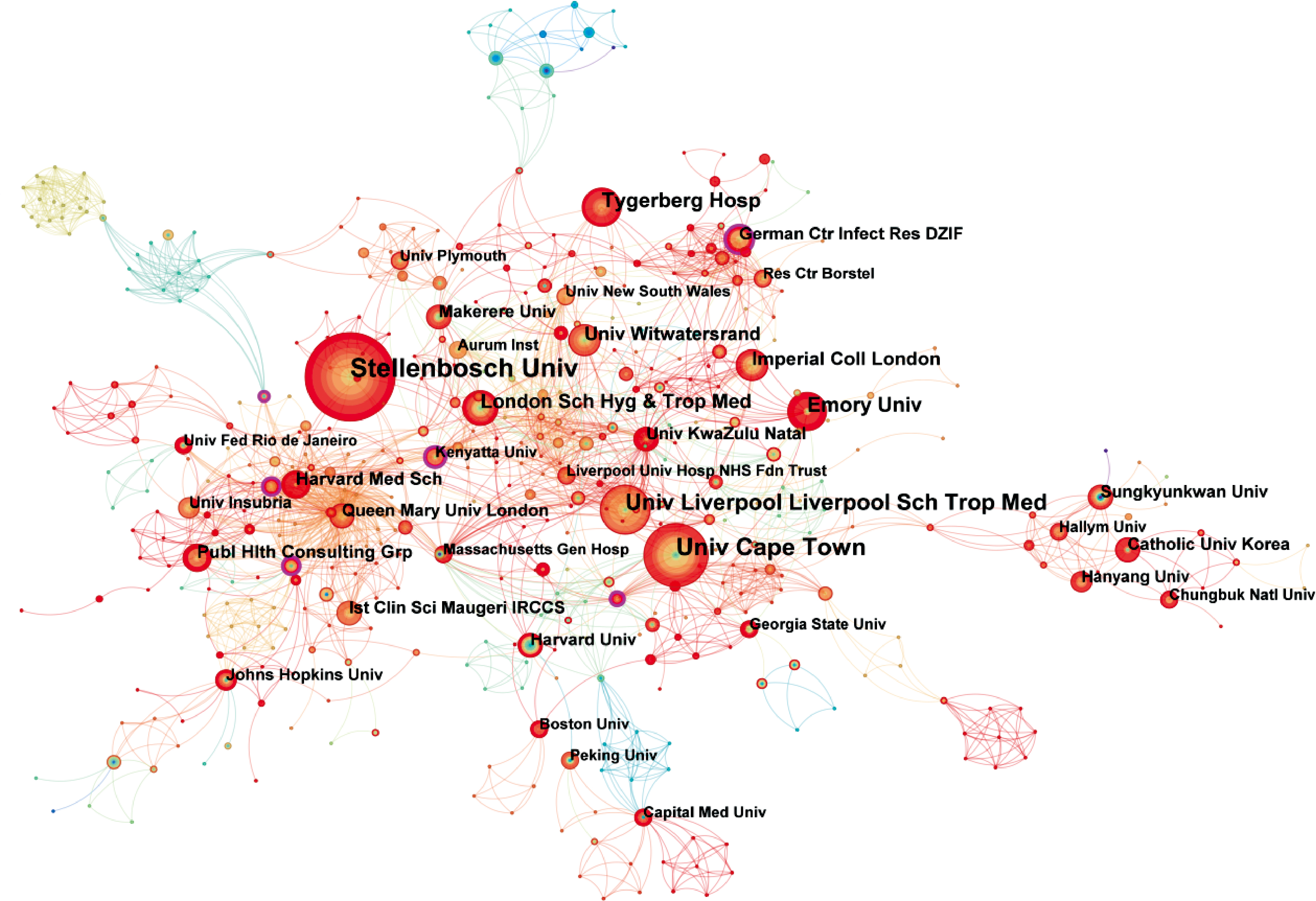

| 排名 | 机构名称 | 发文篇数 | 所属国家 |
|---|---|---|---|
| 1 | 开普敦大学 | 10 | 南非 |
| 2 | 斯泰伦博斯大学 | 9 | 南非 |
| 3 | 威特沃特斯兰德大学 | 7 | 南非 |
| 4 | 帝国理工学院 | 6 | 英国 |
| 5 | 哈佛大学医学院 | 5 | 美国 |
| 6 | 北京大学 | 5 | 中国 |
| 7 | 首尔国立大学 | 4 | 韩国 |
| 8 | 肯尼亚肯雅塔大学 | 4 | 肯尼亚 |
| 9 | 乌干达麦克雷雷大学 | 4 | 乌干达 |
| 10 | 首都医科大学 | 3 | 中国 |
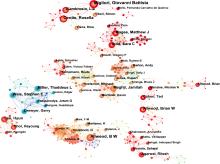
| 排序 | 作者 | 发文量 | H指数 |
|---|---|---|---|
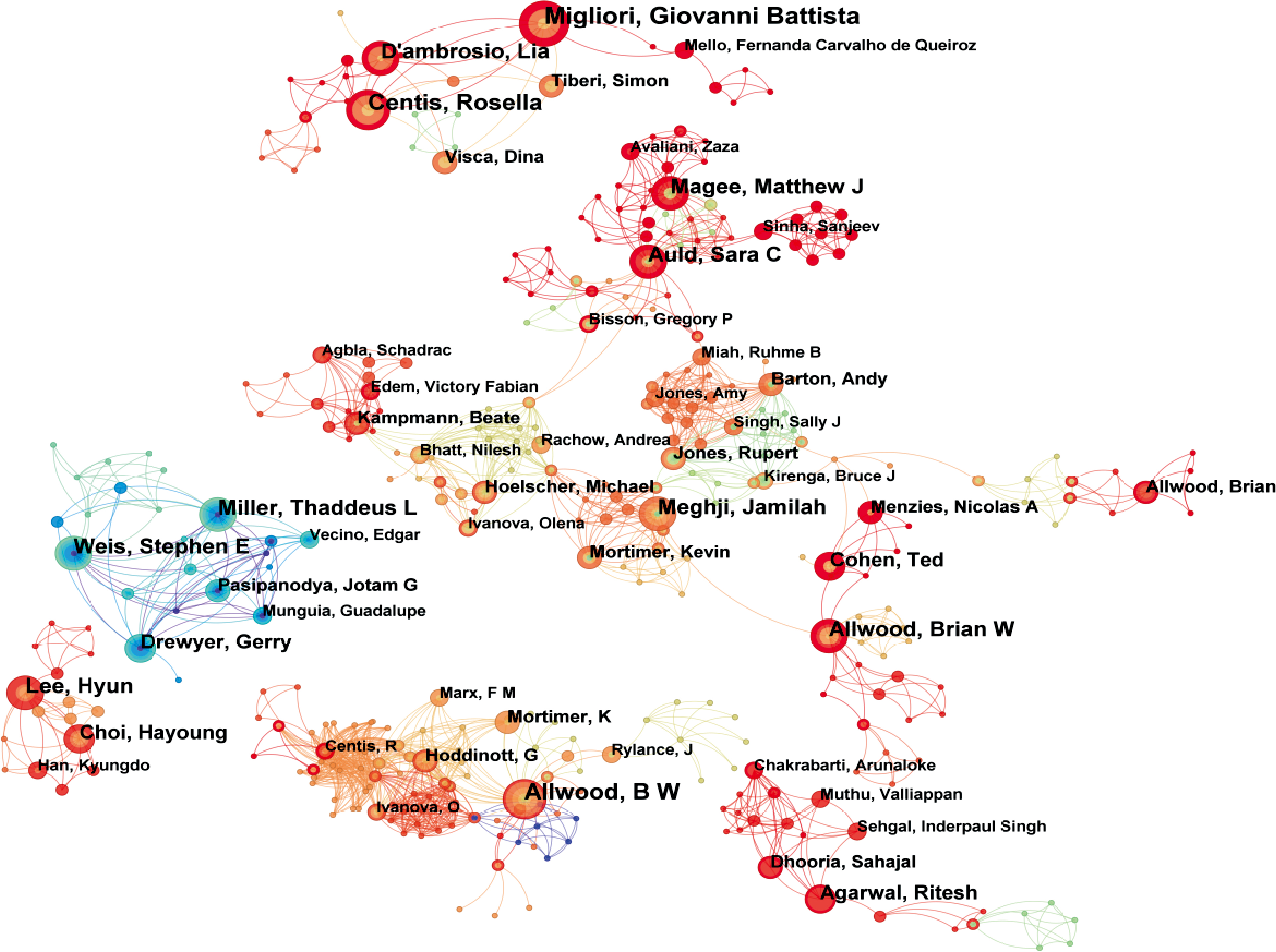
| 1 | Migliori | 8 | 5 |
| 2 | Allwood | 7 | 4 |
| 3 | Centis | 7 | 4 |
| 4 | Auld | 6 | 4 |
| 5 | Magee | 6 | 3 |
| 6 | Meghji | 6 | 3 |
| 7 | Miller | 6 | 3 |
| 8 | Drewyer | 6 | 3 |
| 9 | Weis | 6 | 3 |
| 10 | Lee | 6 | 3 |

| 排序 | 期刊 | 发文量 | 国家 | 2024年影响因子 | 2024年JCR分区 |
|---|---|---|---|---|---|
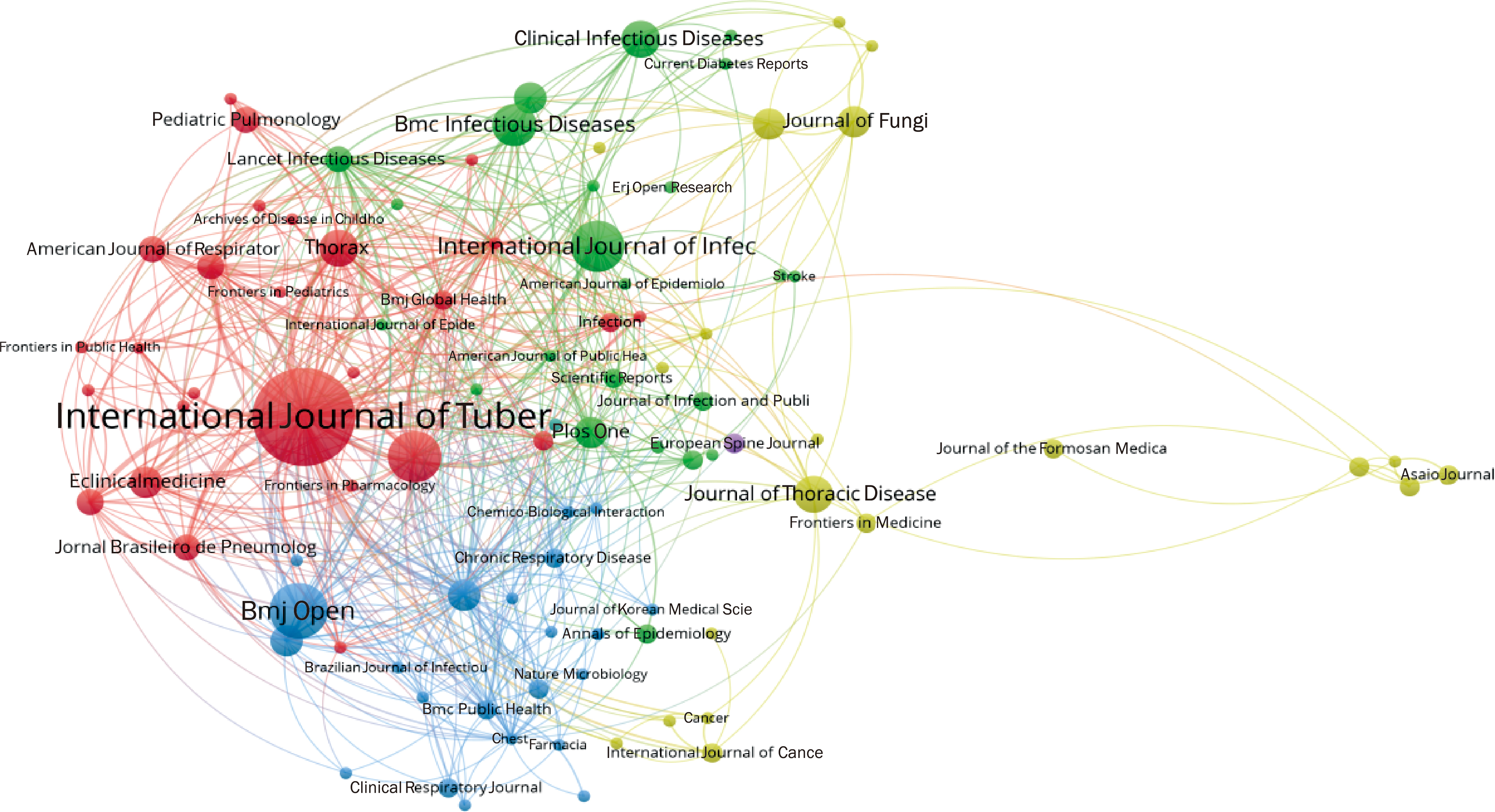
| 1 | International Journal of Tuberculosis and Lung Disease | 20 | 法国 | 3.1 | Q2 |
| 2 | BMJ Open | 9 | 英国 | 2.3 | Q1 |
| 3 | BMC Pulmonary Medicine | 8 | 英国 | 2.8 | Q2 |
| 4 | International Journal of Infectious Diseases | 8 | 加拿大 | 4.3 | Q1 |
| 5 | BMC Infectious Diseases | 7 | 英国 | 3.0 | Q2 |


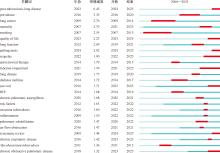

| 第一作者 | 标题 | 发表期刊 | 发表年份 | 总被引频次 |
|---|---|---|---|---|
| Ravimohan[ | Tuberculosis and lung damage: f-rom epidemiology to pathophysi-ology | European Respiratory Review | 2018 | 344 |
| Romanoski[ | Long-term all-cause mortality in people treated for tuberculosis: a systematic review and meta-analysis | Lancet Global Health | 2019 | 202 |
| Allwood[ | Post-tuberculosis lung health: perspectives from the First Internatonal Symposium | International Journal of Tuberculosis and Lung Disease | 2020 | 154 |
| Allwood[ | Post-Tuberculosis Lu-ng Disease: Clinical Review of an Under-Recognised Global Challenge | Respiration | 2021 | 151 |
| Menzies[ | Lifetime burden of disease due t-o incident tuberculosis: a global reappraisal including post-tuberculosis sequelae | Lancet Global Health | 2021 | 149 |
| Meghji[ | Patient outcomes associated with post-tuberculosis lung damage in Malawi: a prospective cohort study | Thorax | 2021 | 128 |
| Migliori[ | Clinical standards f-or the assessment, management and rehabilitation of post-TB lung disease | International Journal of Tuberculosis and Lung Disease | 2021 | 127 |
| Dodd[ | Quantifying the global number of tuberculosis survivors: a modelling study | The Lancet Infectious Diseases | 2021 | 100 |
| Van Kampen[ | International research and guidelines on post-tuberculosis chronic lung disorders: a systematic sco-ping review | BMJ Global Health | 2018 | 92 |
| Nightingale[ | Post-TB health and wellbeing | International Journal of Tuberculosis and Lung Disease | 2023 | 79 |
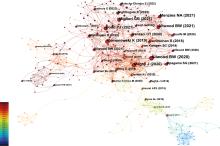

| [1] | 屈燕, 李涛, 马文斌, 等. 世界卫生组织《2025年全球结核病报告》解读[J]. 结核与肺部疾病杂志, 2025, 6(6): 613-623. doi:10.19983/j.issn.2096-8493.20250178. |
| [2] |
Allwood B W, van der Zalm M M, Amaral A F S, et al. Post-tuberculosis lung health: perspectives from the First International Symposium[J]. Int J Tuberc Lung Dis, 2020, 24(8): 820-828. doi:10.5588/ijtld.20.0067.
pmid: 32912387 |
| [3] |
Allwood B W, Nightingale R, Agbota G, et al. Perspectives from the 2nd International Post-Tuberculosis Symposium: mobilising advocacy and research for improved outcomes[J]. IJTLD Open, 2024, 1(3): 111-123. doi:10.5588/ijtldopen.23.0619.
pmid: 38966406 |
| [4] | Ravimohan S, Kornfeld H, Weissman D, et al. Tuberculosis and lung damage: from epidemiology to pathophysiology[J]. Eur Respir Rev, 2018, 27(147): 170077. doi:10.1183/16000617.0077-2017. |
| [5] |
Meghji J, Lesosky M, Joekes E, et al. Patient outcomes associated with post-tuberculosis lung damage in Malawi: a prospective cohort study[J]. Thorax, 2020, 75(3): 269-278. doi:10.1136/thoraxjnl-2019-213808.
pmid: 32102951 |
| [6] | Xing Z, Sun T, Janssens J P, et al. Airflow obstruction and small airway dysfunction following pulmonary tuberculosis: a cross-sectional survey[J]. Thorax, 2023, 78(3): 274-280. doi:10.1136/thoraxjnl-2021-218345. |
| [7] | Woldesemayat E M, Vera J H, Tanner C, et al. Lung function of tuberculosis patients after completion of treatment in Sidama, South Ethiopia[J]. Front Med (Lausanne), 2025, 12: 1451861. doi:10.3389/fmed.2025.1451861. |
| [8] | Basham C A, Karim M E, Cook V J, et al. Post-tuberculosis airway disease: A population-based cohort study of people immigrating to British Columbia, Canada, 1985—2015[J]. EClinicalMedicine, 2021, 33: 100752. doi:10.1016/j.eclinm.2021.100752. |
| [9] |
Chin A T, Rylance J, Makumbirofa S, et al. Chronic lung disease in adult recurrent tuberculosis survivors in Zimbabwe: a cohort study[J]. Int J Tuberc Lung Dis, 2019, 23(2): 203-211. doi:10.5588/ijtld.18.0313.
pmid: 30808453 |
| [10] | Gai X, Allwood B, Sun Y. Post-tuberculosis lung disease and chronic obstructive pulmonary disease[J]. Chin Med J (Engl), 2023, 136(16): 1923-1928. doi:10.1097/CM9.0000000000002771. |
| [11] | Joo D H, Kim M C, Sin S, et al. Incidence and Risk Factors of Tuberculosis-Associated Chronic Obstructive Pulmonary Disease[J]. Int J Chron Obstruct Pulmon Dis, 2025, 20: 2091-2102. doi:10.2147/COPD.S523732. |
| [12] | Choi H, Lee H, Ra S W, et al. Clinical Characteristics of Patients with Post-Tuberculosis Bronchiectasis: Findings from the KMBARC Registry[J]. J Clin Med, 2021, 10(19): 4542. doi:10.3390/jcm10194542. |
| [13] | Raj P A, Leach L A D, Davis C E. Chronic Lung Damage After Tuberculosis: A Focus on Bronchiectasis and Its Management[J]. Am J Respir Crit Care Med, 2025, 211: A2049. doi:10.1164/ajrccm.2025.211.Abstracts.A2409. |
| [14] |
Liu T, Gao L, Xie S, et al. Clinical and imaging spectrum of tuberculosis-associated fibrosing mediastinitis[J]. Clin Respir J, 2018, 12(5): 1974-1980. doi:10.1111/crj.12766.
pmid: 29356415 |
| [15] | Louw E H, van Heerden J A, Kalla I S, et al. Scoping review of post-TB pulmonary vascular disease: Proceedings from the 2nd International Post-Tuberculosis Symposium[J]. Pulm Circ, 2024, 14(3): e12424. doi:10.1002/pul2.12424. |
| [16] | Louw E, Baines N, Maarman G, et al. The prevalence of pulmonary hypertension after successful tuberculosis treatment in a community sample of adult patients[J]. Pulm Circ, 2023, 13(1): e12184. doi:10.1002/pul2.12184. |
| [17] | Hanalla M, Mohamed M A, Virnig S, et al. Post-tuberculosis Destroyed Lung Syndrome: A Case Report and Review of Management Challenges[J]. Am J Respir Crit Care Med, 2025, 211: A2376. doi:10.1164/ajrccm.2025.211.Abstracts.A2376. |
| [18] | Wu C Y, Hu H Y, Pu C Y, et al. Pulmonary tuberculosis increases the risk of lung cancer: a population-based cohort study[J]. Cancer, 2011, 117(3): 618-24. doi:10.1002/cncr.25616. |
| [19] |
Simonsen D F, Farkas D K, Søgaard M, et al. Tuberculosis and risk of cancer: a Danish nationwide cohort study[J]. Int J Tuberc Lung Dis, 2014, 18(10): 1211-1219. doi:10.5588/ijtld.14.0161.
pmid: 25216835 |
| [20] | Wu M, Yang Y N, Wang F, et al. Development of a Predictive Risk Model for Recurrence of Chronic Pulmonary Aspergillosis in Post-Tuberculosis Patients: A Retrospective Observational Study[J]. Int J Gen Med, 2025, 18: 7243-7254. doi:10.2147/IJGM.S544265. |
| [21] | Soundappan K, Singh Sehgal I, Prabhakar N, et al. Incidence and prevalence of chronic pulmonary aspergillosis in patients with post-tuberculosis lung abnormality: Results from a community survey in North India[J]. Mycoses, 2024, 67(3): e13711. doi:10.1111/myc.13711. |
| [22] | Rozaliyani A, Setianingrum F, Isbaniah F, et al. A Silent Threat in Post-Tuberculosis Patients: Chronic Pulmonary Aspergillosis Survey in Multiple Regions of Indonesia (I-CHROME Study)[J]. J Fungi (Basel), 2025, 11(5): 329. doi:10.3390/jof11050329. |
| [23] | Purwono A, Fachrucha F, Agustin H, et al. Chronic Pulmonary Aspergillosis in Patient With Post-Tuberculosis Treatment and Recurrent Hemoptysis[J]. Am J Respir Crit Care Med, 2023, 207: A5571. |
| [24] | Yang J, Kim S H, Sim J K, et al. Tuberculosis survivors and the risk of cardiovascular disease: analysis using a nationwide survey in Korea[J]. Front Cardiovasc Med, 2024, 11: 1364337. doi:10.3389/fcvm.2024.1364337. |
| [25] | Mendoza-Torres J, Durán-Hernández N, Choreño-Parra J, et al. Hippocampal syndrome secondary to tuberculosis: From neuroinflammation to neurodegeneration[J]. Tuberculosis (Edinb), 2025, 153: 102653. doi:10.1016/j.tube.2025.102653. |
| [26] | Lo H Y, Suo J, Chang H J, et al. Risk factors associated with death in a 12-month cohort analysis of tuberculosis patients: 12-month follow-up after registration[J]. Asia Pac J Public Health, 2015, 27(2): NP758-68. doi:10.1177/1010539511429591. |
| [27] | Kim S, Pelissari D M, Harada L O, et al. Long-term Mortality Trends Among Individuals With Tuberculosis: A Retrospective Cohort Study of Individuals Diagnosed With Tuberculosis in Brazil[J]. Clin Infect Dis, 2026, 82(1): e1-e8. doi:10.1093/cid/ciaf206. |
| [28] | 秦丽莉, 杨澄清, 麦洪珍, 等. 结核后肺曲霉病的临床诊疗研究进展[J]. 中国防痨杂志, 2025, 47(4): 498-504. doi:10.19982/j.issn.1000-6621.20240527. |
| [29] | 宋菲尔, 毛燕君, 夏秋月, 等. 结核后肺疾病患者患病率和影响因素的Meta分析[J]. 中国防痨杂志, 2025, 47(3): 322-330. doi:10.19982/j.issn.1000-6621.20240454. |
| [30] |
Romanowski K, Baumann B, Basham C A, et al. Long-term all-cause mortality in people treated for tuberculosis: a systematic review and meta-analysis[J]. Lancet Infect Dis, 2019, 19(10): 1129-1137. doi:10.1016/S1473-3099(19)30309-3.
pmid: 31324519 |
| [31] | Allwood BW, Byrne A, Meghji J, et al. Post-Tuberculosis Lung Disease: Clinical Review of an Under-Recognised Global Challenge[J]. Respiration, 2021, 100(8): 751-763. doi:10.1159/000512531. |
| [32] |
Menzies N A, Quaife M, Allwood B W, et al. Lifetime burden of disease due to incident tuberculosis: a global reappraisal including post-tuberculosis sequelae[J]. Lancet Glob Health, 2021, 9(12): e1679-e1687. doi:10.1016/S2214-109X(21)00367-3.
pmid: 34798027 |
| [33] |
Migliori G B, Marx F M, Ambrosino N, et al. Clinical standards for the assessment, management and rehabilitation of post-TB lung disease[J]. Int J Tuberc Lung Dis, 2021, 25(10): 797-813. doi:10.5588/ijtld.21.0425.
pmid: 34615577 |
| [34] |
Dodd P J, Yuen C M, Jayasooriya S M, et al. Quantifying the global number of tuberculosis survivors: a modelling study[J]. Lancet Infect Dis, 2021, 21(7): 984-992. doi:10.1016/S1473-3099(20)30919-1.
pmid: 33640076 |
| [35] | van Kampen S C, Wanner A, Edwards M, et al. International research and guidelines on post-tuberculosis chronic lung disorders: a systematic scoping review[J]. BMJ Glob Health, 2018, 3(4): e000745. doi:10.1136/bmjgh-2018-000745. |
| [36] |
Nightingale R, Carlin F, Meghji J, et al. Post-TB health and wellbeing[J]. Int J Tuberc Lung Dis, 2023, 27(4): 248-283. doi:10.5588/ijtld.22.0514.
pmid: 37035971 |
| [37] |
Mpagama S G, Msaji K S, Kaswaga O, et al. The burden and determinants of post-TB lung disease[J]. Int J Tuberc Lung Dis, 2021, 25(10): 846-853. doi:10.5588/ijtld.21.0278.
pmid: 34615582 |
| [38] |
Thomson H, Baines N, Huisamen T, et al. A new understanding of clinical patterns in post-TB lung disease[J]. Int J Tuberc Lung Dis, 2024, 28(3): 115-121. doi:10.5588/ijtld.23.0327.
pmid: 38454184 |
| [39] | Webber T, Macdonald C, Tameris M, et al. Immune, metabolic, anatomical, and functional features of people after successful tuberculosis treatment: an exploratory analysis[J]. Sci Rep, 2025, 15(1): 18392. doi:10.1038/s41598-025-01656-1. |
| [40] | Wang L L, Lu H W, Li L L, et al. Destroyed lung contributes to the recurrence of hemoptysis after bronchial artery embolization in patients with post-tuberculosis bronchiectasis[J]. J Infect Public Health, 2024, 17(7): 102446. doi:10.1016/j.jiph.2024.05.003. |
| [41] | Auld S C, Barczak A K, Bishai W, et al. Pathogenesis of Post-Tuberculosis Lung Disease: Defining Knowledge Gaps and Research Priorities at the Second International Post-Tuberculosis Symposium[J]. Am J Respir Crit Care Med, 2024, 210(8): 979-993. doi:10.1164/rccm.202402-0374SO. |
| [42] | Santos A P, Rodrigues L S, Rother N, et al. The role of neutrophil response in lung damage and post-tuberculosis lung disease: a translational narrative review[J]. Front Immunol, 2025, 16: 1528074. doi:10.3389/fimmu.2025.1528074. |
| [1] | Guo Xiaowen, Jiao Tianyu, Sun Li, Ni Conghui, Wang Zilin, Wang Hao. Multi-center study on CE-T1WI radiomics-based machine learning model in differentiating tuberculous spondylitis from brucella spondylitis [J]. Chinese Journal of Antituberculosis, 2026, 48(8): 1184-1191. |
| [2] | Lyu Yongyun, Li Xiaoqin, Wu Mengtai, Zhou Min, Tian Nan, Shen Ling. Study on hospitalization cost and its influencing factors of pulmonary tuberculosis under the diagnosis-related group payment model [J]. Chinese Journal of Antituberculosis, 2026, 48(8): 1205-1213. |
| [3] | Yang Yueqi, Fu Linlin, He Lanfang, Cao Yuanlin, Yu Sihan, Zhang Yingfang, Xia Tongxia. Research progress on influencing factors and management strategies of medical delay in patients with spinal tuberculosis [J]. Chinese Journal of Antituberculosis, 2026, 48(8): 1226-1230. |
| [4] | Sun Danyuchen, Liu Yuhong. Pharmacotherapy of rifampicin-resistant/multidrug-resistant tuberculosis: advances and prospects in health economic research [J]. Chinese Journal of Antituberculosis, 2026, 48(8): 1231-1230. |
| [5] | Gao Qian. Rational return to non-sputum screening for tuberculosis: inherent limitations and reconsideration of the position of tongue swabs [J]. Chinese Journal of Antituberculosis, 2026, 48(8): 1120-1123. |
| [6] | Liao Wenping, Zhang Liyi, Lyu Juan, Xin Yu, Su Qian, Zhang Wen. Association between magnitude of tuberculin skin test reactions and risk of pulmonary tuberculosis among senior high school students [J]. Chinese Journal of Antituberculosis, 2026, 48(8): 1124-1129. |
| [7] | Liu Zisen, Zhao Yaqi, Zhang Bin, Xin Henan, Du Jiang, Feng Boxuan, He Yijun, Li Zihan, Yu Yilin, Wang Dakuan, Yan Jiaoxia, Gao Lei, Jin Qi, Duan Weitao, Cao Xuefang. Analysis of re-screening for latent tuberculosis infection in 2025 and related factors affecting infection status among rural doctors in Zhongmu County, Henan Province, based on 2017 screening [J]. Chinese Journal of Antituberculosis, 2026, 48(8): 1139-1147. |
| [8] | Li Xinda, Hou Zhili, Ouyang Bing, Du Yadong, Guan Liying, Yu Hongmei, Zhang Haiqin, Xie Yongjie, Tang Peijun, Xiao Yu, Zhang Ying, Lu Yu. Evaluation of safety and efficacy of anti-tuberculosis fixed-dose combination in patients with drug-susceptible pulmonary tuberculosis [J]. Chinese Journal of Antituberculosis, 2026, 48(8): 1158-1162. |
| [9] | Qi Yunfeng, Wang Xueyu, Kang Wanli, Nie Wenjuan, Wang Yiwen. The application value of tongue swab nucleic acid testing in the diagnosis of suspected tuberculosis [J]. Chinese Journal of Antituberculosis, 2026, 48(8): 1163-1169. |
| [10] | Zeng Lina, Li Wensi, Lu Hailin, Wang Wenfei, Chen Xinchun, Deng Guofang, Xie Shuixiang. Advances in Mycobacterium tuberculosis regulation of host lipid metabolism reprogramming [J]. Chinese Journal of Antituberculosis, 2026, 48(8): 1214-1219. |
| [11] | Standardization Professional Branch of Chinese Antituberculosis Association, Tuberculosis Infect Control Branch of Chinese Antituberculosis Association, Editorial Board of Chinese Journal of Antituberculosis. Guidelines for the application of tuberculin skin test [J]. Chinese Journal of Antituberculosis, 2026, 48(8): 1083-1095. |
| [12] | Wang Xiaomin, Xu Peng, Chen Zhenyan, Long Yujiao, Wang Jin, Liu Han, Gao Wenying, Fang Mutong. Interpretation of the Guidelines for the prevention and management of mother-to-child transmission of tuberculosis [J]. Chinese Journal of Antituberculosis, 2026, 48(8): 1113-1119. |
| [13] | Guo Jinlong, Min Xuhong, Song Biao, Li Yuan, Wang Shanghu, Chen Wu. Imaging feature analysis of pseudo-pulmonary embolism on dual-phase computed tomography angiography in pulmonary tuberculosis patients with bronchial-pulmonary shunts [J]. Chinese Journal of Antituberculosis, 2026, 48(8): 1192-1198. |
| [14] | Ding Guangzhao, Liu Rongmei. Cell-free RNA liquid biopsy for stratified diagnosis and dynamic monitoring of tuberculosis: research progress and translational challenges [J]. Chinese Journal of Antituberculosis, 2026, 48(8): 1220-1225. |
| [15] | Xia Hongli, Hua Jiao, Lu Jiankang. Investigation results and analysis of associated factors of tuberculosis infection and disease among school students in Xichang City, Sichuan Province, 2023 [J]. Chinese Journal of Antituberculosis, 2026, 48(8): 1130-1138. |
| Viewed | ||||||
|
Full text |
|
|||||
|
Abstract |
|
|||||
 京公网安备11010202007215号
Total visitors: Visitors of today: Now online:
京公网安备11010202007215号
Total visitors: Visitors of today: Now online:
 This work is licensed under Creative Commons Attribution 3.0 License.
