
Chinese Journal of Antituberculosis ›› 2026, Vol. 48 ›› Issue (7): 1021-1029.doi: 10.19982/j.issn.1000-6621.20260094
• Original Articles • Previous Articles Next Articles
Gao Xian1, Shang Xiyu1, Liu Tiantian1, Yang Jie1, Li Zixi2, Sun Yange1, Wei Jinsheng1, Cheng Shiming3, Ma Yan4, Li Hongzhi1( )
)
Received:2026-02-15
Online:2026-07-10
Published:2026-07-02
Contact:
Li Hongzhi, Email: Supported by:CLC Number:
Gao Xian, Shang Xiyu, Liu Tiantian, Yang Jie, Li Zixi, Sun Yange, Wei Jinsheng, Cheng Shiming, Ma Yan, Li Hongzhi. State-Target differentiation and treatment strategy for ulcerative lymph node tuberculosis with external application of Sanjie Plaster[J]. Chinese Journal of Antituberculosis, 2026, 48(7): 1021-1029. doi: 10.19982/j.issn.1000-6621.20260094
Add to citation manager EndNote|Ris|BibTeX
URL: https://www.zgflzz.cn/EN/10.19982/j.issn.1000-6621.20260094

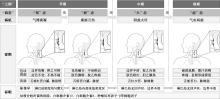
| 分期 | 核心病机(态) | 病理特征与临床表现 | 核心治则 |
|---|---|---|---|
| 早期 | 气滞痰凝(郁态) | 包块可移,皮色不变 | 行气解郁,化痰散结 |
| 痰瘀互结(瘀态) | 包块相互粘连融合,质硬固定,肤色微暗 | 化痰散结,活血祛瘀 | |
| 中期(成脓期) | 阴虚火旺(火态) | 包块边界不清,皮色暗红,按之应指(成脓);伴潮热盗汗 | 滋阴清热,托毒排脓 |
| 后期(破溃期) | 气血两虚(虚态) | 脓溃淋漓,窦道难敛;神疲纳差,面色无华 | 益气养血,托毒生肌 |


| [1] | Cukic V, Ustamujic A. Extrapulmonary Tuberculosis in Federation of Bosnia and Herzegovina[J]. Mater Sociomed, 2018, 30(2): 153-156. doi:10.5455/msm.2018.30.153-156. |
| [2] | 张英奎, 张关霞, 杨自娟, 等. 维持性血液透析患者合并颈部淋巴结结核一例并文献复习[J]. 结核与肺部疾病杂志, 2026, 7(1): 80-85. doi:10.19983/j.issn.2096-8493.20250159. |
| [3] | 仝小林. 态靶医学——中医未来发展之路[J]. 中国中西医结合杂志, 2021, 41(1): 16-18. doi:10.7661/j.cjim.20201230.411. |
| [4] | 仝小林, 何莉莎, 赵林华. 论“态靶因果”中医临床辨治方略[J]. 中医杂志, 2015, 56(17): 1441-1444. doi:10.13288/j.11-2166/r.2015.17.001. |
| [5] | 周心怡, 谢迪, 李彦丕, 等. 基于“态靶辨治”论治冠心病心绞痛气陷血瘀证[J]. 北京中医药大学学报, 2025, 48(5): 599-604. doi:10.3969/j.issn.1006-2157.2025.05.002. |
| [6] | 王怡贺, 赵志芬, 杨伯迅, 等. 基于态靶辨治理论的儿童过敏性紫癜临证思路探析[J]. 时珍国医国药, 2025, 36(14): 2715-2718. doi:10.70976/j.1008-0805.SZGYGY-2025-1419. |
| [7] | 王春玲, 王旭勇, 任春贞, 等. “态靶结合”理论下中医药调控胰岛素抵抗干预射血分数保留心衰的研究进展[J]. 中成药, 2025, 47(5): 1548-1553. doi:10.3969/j.issn.1001-1528.2025.05.020. |
| [8] | 陈子泮, 黄延芹, 崔赵丽, 等. 基于“态靶辨证”论述加味金匮肾气丸治疗糖尿病肾病[J]. 世界中医药, 2023, 18(2): 277-280. doi:10.3969/j.issn.1673-7202.2023.02.023. |
| [9] | 陈硕硕, 岳斌, 武权生, 等. 基于“态靶辨治”探讨子宫内膜息肉辨治方略[J]. 辽宁中医杂志, 2025, 52(5): 202-206. doi:10.13192/j.issn.1000-1719.2025.05.052. |
| [10] | 刘雪峰, 盛泽伟, 彭俞俞, 等. 基于“态靶辨证”理论探析柳越冬辨治溃疡性结肠炎的临证思路[J]. 辽宁中医杂志, 2025, 52(9): 35-38. doi:10.13192/j.issn.1000-1719.2025.09.008. |
| [11] | 赵有利, 唐汉钧. 唐汉钧治疗颈淋巴结结核临床经验[J]. 中华中医药杂志, 2017, 32(11): 4981-4984. |
| [12] | 孙佳玥, 黄子慧, 钱佳燕. 徐氏外科诊治瘰疬的学术思想与流派传承[J]. 中华中医药杂志, 2022, 37(9): 5209-5212. |
| [13] | 邓红霞, 郭彪, 秦甜. 从虚、痰、瘀、毒辨治淋巴结核经验[J]. 湖南中医杂志, 2018, 34(9): 36-38. doi:10.16808/j.cnki.issn1003-7705.2018.09.016. |
| [14] | 赵有利. 瘰疬从痰瘀论治理论探讨[J]. 世界中西医结合杂志, 2016, 11(7): 1017-1020. doi:10.13935/j.cnki.sjzx.160735. |
| [15] | 高秉钧, 盛维忠. 疡科心得集[M]. 北京: 中国中医药出版社, 2000: 43-44. |
| [16] | 吴谦. 医宗金鉴[M]. 北京: 中国医药科技出版社, 2022: 89-90. |
| [17] | 陈实功, 裴颢. 外科正宗(上)[M]. 北京: 中国医药科技出版社, 2023: 157-159. |
| [18] | 张介宾. 景岳全书(三)[M]. 北京: 中医古籍出版社, 2021: 1163. |
| [19] | 柴剑波. 黄帝内经[M]. 哈尔滨: 黑龙江科学技术出版社, 2012: 545. |
| [20] | 巢元方. 诸病源候论[M]. 太原: 山西科学技术出版社, 2015: 236. |
| [21] | 王焘, 高文铸. 外台秘要方[M]. 北京: 华夏出版社, 1993: 254. |
| [22] | 陈实功, 张斌仁, 孟颖霞. 外科正宗精要[M]. 贵阳: 贵州科学技术出版社, 2008: 126-127. |
| [23] | 郭丹丹, 钱佳燕, 黄子慧, 等. 中医体质学与瘰疬病因及治疗相关性初探[J]. 中国中医药现代远程教育, 2024, 22(22): 101-104. doi:10.3969/j.issn.1672-2779.2024.22.032. |
| [24] | 陈无择. 三因极一病证方论[M]. 北京: 中国中医药出版社, 2007: 285-286. |
| [25] | 陈士铎. 辨证录[M]. 北京: 中国中医药出版社, 2007: 521. |
| [26] | 秦伯未. 清代名医医案精华[M]. 上海: 上海卫生出版社, 1958: 80. |
| [27] | 李辉, 邱仕君. 邓铁涛教授对“痰瘀相关”理论的阐释和发挥[J]. 湖北民族学院学报(医学版), 2005, 22(1): 45-47. doi:10.3969/j.issn.1008-8164.2005.01.014. |
| [28] | 刘完素. 黄帝素问宣明论方[M]. 北京: 中国中医药出版社, 2007: 148. |
| [29] | 张硕, 陈宇欢, 张锦楠, 等. 基于气血理论探究明代著名医家陈实功治疗痈疽的学术思想[J]. 世界中西医结合杂志, 2024, 19(10): 1972-1975, 1981. doi:10.13935/j.cnki.sjzx.241010. |
| [30] | 朱震亨. 朱丹溪医书全集(上)[M]. 北京: 中医古籍出版社, 2024: 82. |
| [31] | 《中医大辞典》编辑委员会. 中医大辞典(试用本): 外科骨伤五官科分册[M]. 北京: 人民卫生出版社, 1987: 257. |
| [32] | 韩冰莹, 王萍, 周水涵, 等. 四川文氏皮外科流派从“半阴半阳”辨治慢性皮肤溃疡经验[J]. 成都中医药大学学报, 2024, 47(3): 45-49. doi:10.13593/j.cnki.51-1501/r.2024.03.45. |
| [33] | 曾琴, 曾凡清, 何坤, 等. 常规病理学镜检、抗酸染色镜检及TB-DNA在浅表淋巴结结核诊断中的价值[J]. 结核与肺部疾病杂志, 2024, 5(5): 461-467. doi:10.19983/j.issn.2096-8493.2024079. |
| [34] | Xu H D, You C G, Zhang R L, et al. Effects of Astragalus polysaccharides and astragalosides on the phagocytosis of Mycobacterium tuberculosis by macrophages[J]. J Int Med Res, 2007, 35(1): 84-90. doi:10.1177/147323000703500108. |
| [35] | Abhimanyu, Bose M, Varma-Basil M, et al. Establishment of Elevated Serum Levels of IL-10, IL-8 and TNF-β as Potential Peripheral Blood Biomarkers in Tubercular Lymphadenitis: A Prospective Observational Cohort Study[J]. PLoS One, 2016, 11(1): e0145576. doi:10.1371/journal.pone.0145576. |
| [36] | 张国英, 钮晓红, 徐卫平, 等. 淋巴结核患者外周血CD4+CD25high FoxP3+调节性T淋巴细胞以及血浆IFN-γ和IL-10水平及其临床意义[J]. 检验医学, 2015, 30(1): 31-35. doi:10.3969/j.issn.1673-8640.2015.01.008. |
| [37] |
Nisa Z U, Zeshan B, Ambreen A, et al. Plasma ferritin, C-reactive protein, and adenosine deaminase levels in tuberculous lymphadenitis and pleuritis and their role in monitoring treatment response[J]. BMC Infect Dis, 2024, 24(1): 1375. doi:10.1186/s12879-024-10228-z.
pmid: 39623309 |
| [38] | Peña O A, Martin P. Cellular and molecular mechanisms of skin wound healing[J]. Nat Rev Mol Cell Biol, 2024, 25(8): 599-616. doi:10.1038/s41580-024-00715-1. |
| [39] |
Wang Y, Wang L, Wen Z, et al. High IL-6 and VEGF-A levels correlate with delayed wound healing in cervical lymph node tuberculosis patients[J]. Int J Tuberc Lung Dis, 2018, 22(10): 1227-1232. doi:10.5588/ijtld.18.0027.
pmid: 30236193 |
| [40] |
Beyene R T, Derryberry S L Jr, Barbul A. The Effect of Comorbidities on Wound Healing[J]. Surg Clin North Am, 2020, 100(4): 695-705. doi:10.1016/j.suc.2020.05.002.
pmid: 32681870 |
| [41] | Singh S, Young A, McNaught C E. The physiology of wound healing[J]. Surgery, 2014, 32: 445-450. doi:10.1016/j.mpsur.2017.06.004. |
| [42] | 赵美蓉, 张梦娜, 逄艳. 珍汤加减结合口服营养制剂治疗气血亏虚型晚期胃癌的疗效及对营养状态、精神状态的影响分析[J]. 中医临床研究, 2024, 16(6): 93-95. doi:10.3969/j.issn.1674-7860.2024.06.021. |
| [43] |
Cheng M, Chen Y. Disseminated lymph node tuberculosis after splenectomy: an unusual case report in an adolescent[J]. BMC Infect Dis, 2021, 21(1): 1181. doi:10.1186/s12879-021-06859-1.
pmid: 34819021 |
| [44] | 吴尚先, 步如一. 理瀹骈文外治医说[M]. 北京: 中国中医药出版社, 1995: 8. |
| [45] | 李波, 董雨萌, 曹玉清, 等. 《黄帝内经》“瘰疬”证治理论探析[J]. 中国防痨杂志, 2025, 47(11): 1416-1420. doi:10.19982/j.issn.1000-6621.20250326. |
| [46] | 中华人民共和国国家药典委员会. 中华人民共和国药典(2020年版): 一部[M]. 北京: 中国医药科技出版社, 2020. |
| [47] | 吴普, 孙星衍, 孙冯翼. 神农本草经[M]. 北京: 科学技术文献出版社, 1996. |
| [48] | Huang X, Zhang M Z, Liu B, et al. Astragaloside IV Attenuates Polymicrobial Sepsis-Induced Cardiac Dysfunction in Rats via IKK/NF-κB Pathway[J]. Chinese Journal of Integrative Medicine, 2021, 27(11): 825-831. doi:10.1007/s11655-021-2869-9. |
| [49] |
Yang H, Yin N, Gu Q, et al. Astragaloside IV reduces lung injury in lethal sepsis via promoting treg cells expansion and inhibiting inflammatory responses[J]. Pak J Pharm Sci, 2023, 36(6): 1709-1718. doi:10.36721/PJPS.2023.36.6.REG.1709-1718.1.
pmid: 38124410 |
| [50] | Feng M, Lv J, Zhang C, et al. Astragaloside IV Protects Sepsis-induced Acute Kidney Injury by Attenuating Mitochondrial Dysfunction and Apoptosis in Renal Tubular Epithelial Cells[J]. Curr Pharm Des, 2022, 28(34): 2825-2834. doi:10.2174/1381612828666220902123755. |
| [51] | 孙仁山, 陈晓红, 程天民, 等. 白芨对大鼠创面愈合几个要素的影响[J]. 中国临床康复, 2003, 7(29): 3927-3929. doi:10.3321/j.issn:1673-8225.2003.29.014. |
| [52] | 俞林花, 聂绪强, 潘会君, 等. 白及多糖对糖尿病溃疡创面愈合的作用研究[J]. 中国中药杂志, 2011, 36(11): 1487-1491. doi:10.4268/cjcmm20111118. |
| [53] | 剡建华, 朱琳, 赵美峰, 等. 芍药甘草汤加减联合氨酚羟考酮治疗神经性头痛疗效观察[J]. 现代中西医结合杂志, 2019, 28(1): 69-72. doi:10.3969/j.issn.1008-8849.2019.01. |
| [54] | 丁宪春, 夏秋敏, 许明霞. 小建中汤治疗脾胃虚弱型胃脘痛临床观察[J]. 新中医, 2016, 48(5): 88-90. doi:10.13457/j.cnki.jncm.2016.05.034. |
| [55] | 陈赵玲, 刘岐焕, 刘婧依, 等. 白芍总苷联合甲氨蝶呤治疗难治性类风湿关节炎效果观察[J]. 中华实用诊断与治疗杂志, 2017, 31(7): 700-702. doi:10.13507/j.issn.1674-3474.2017.07.022. |
| [56] | Hesketh M, Sahin K B, West Z E, et al. Macrophage Phenotypes Regulate Scar Formation and Chronic Wound Healing[J]. Int J Mol Sci, 2017, 18(7): 1545. doi:10.3390/ijms18071545. |
| [57] | Yang H, Song L, Sun B, et al. Modulation of macrophages by a paeoniflorin-loaded hyaluronic acid-based hydrogel promotes diabetic wound healing[J]. Mater Today Bio, 2021, 12: 100139. doi:10.1016/j.mtbio.2021.100139. |
| [58] | 吴燕, 寇先勇, 王峣姿, 等. 天花粉粗多糖壳聚糖复合水凝胶促进小鼠皮肤伤口愈合[J]. 化学试剂, 2023, 45(12): 26-32. doi:10.13822/j.cnki.hxsj.2023.0602. |
| [59] | Wahba A, Farid M, Adawy H. A Comparative Study between the Combined Effect of Frankincense and Myrrh versus the Effect of Triamcinolone Acetonide on Healing of Induced Labial Mucosal Ulcer in Albino Rats[J]. ADJ-for Girls, 2017, 4(4): 339-345. doi:10.21608/adjg.2017.5281. |
| [60] | Li X J, Yang Y J, Li Y S, et al. α-Pinene, linalool, and 1-octanol contribute to the topical anti-inflammatory and analgesic activities of frankincense by inhibiting COX-2[J]. J Ethnopharmacol, 2016, 179: 22-26. doi:10.1016/j.jep.2015.12.039. |
| [61] |
Kang H, Ahn K S, Cho C, et al. Immunomodulatory effect of Astragali Radix extract on murine TH1/TH2 cell lineage development[J]. Biol Pharm Bull, 2004, 27(12): 1946-1950. doi:10.1248/bpb.27.1946.
pmid: 15577210 |
| [62] | Brush J, Mendenhall E, Guggenheim A, et al. The effect of Echinacea purpurea, Astragalus membranaceus and Glycyrrhiza glabra on CD69 expression and immune cell activation in humans[J]. Phytother Res, 2006, 20(8): 687-695. doi:10.1002/ptr.1938. |
| [63] | 黄能, 詹剑华, 罗锦花, 等. 黄芪多糖对严重烫伤大鼠血清炎症因子的影响[J]. 中华烧伤杂志, 2015, 31(4): 274-276. doi:10.3760/cma.j.issn.1009-2587.2015.04.009. |
| [64] | 范丽娜, 陈丽娟, 刘芳. 黄芪多糖对大鼠慢性难愈合创面的作用及其对PTEN、AKT和VEGF蛋白表达的影响[J]. 中国中医药科技, 2022, 29(1): 36-40. |
| [65] | Jimo R, Ma J, Edi S, et al. Bletilla striata polysaccharide microneedles with astragaloside Ⅳ loaded ZIF-8 nanoparticles for wound healing and anti-scar treatment[J]. J Nanobiotechno-logy, 2025, 23(1): 644. doi:10.1186/s12951-025-03736-w. |
| [66] | 梁倩芳, 周锦扬, 潘丹峰. 黄芪枳术汤结合肠内营养对颅脑术后患者 ALB/PA/TP 的影响[J]. 广州医药, 2015, 46(5): 66-68. doi:10.3969/j.issn.1000-8535.2015.05.023. |
| [67] | Bellezza I, Mierla A, Grottelli S, et al. Furanodien-6-one from Commiphora erythraea inhibits the NF-κB signalling and attenuates LPS-induced neuroinflammation[J]. Mol Immunol, 2013, 54(3/4): 347-54. doi:10.1016/j.molimm.2013.01.003. |
| [68] | Zhang W, Xiong P, Liu J, et al. A systematic review and meta-analysis of Danshen combined with mesalazine for the treatment of ulcerative colitis[J]. Front Pharmacol, 2024, 15: 1334474. doi:10.3389/fphar.2024.1334474. |
| [69] | Zhang W, Li J, Yang P, et al. Efficacy and Safety of Salvia miltiorrhiza for Treating Chronic Kidney Diseases: A Systematic Review and Meta-Analysis[J]. Evid Based Complement Alternat Med, 2022, 2022: 2117433. |
| [70] | 冯念涛, 邓丽萍. 丹参酮ⅡA磺酸钠注射液对心房颤动患者血中C-反应蛋白的影响[J]. 中国老年保健医学, 2010, 8(1): 36-37. doi:10.3969/j.issn.1672-4860-B.2010.01.016. |
| [71] | Li B Y, Xi Y, Liu Y P, et al. Effects of Silybum marianum, Pueraria lobate, combined with Salvia miltiorrhiza tablets on non-alcoholic fatty liver disease in adults: A triple-blind, randomized, placebo-controlled clinical trial[J]. Clin Nutr ESPEN, 2024, 63: 2-12. doi:10.1016/j.clnesp.2024.06.003. |
| [72] | 项惠芳, 黄文霞. 丹参酮Ⅱ A离子导入治疗类风湿性关节炎疗效观察[J]. 内蒙古中医药, 2019, 38(4): 92-93. doi:10.16040/j.cnki.cn15-1101.2019.04.061. |
| [1] | . [J]. Chinese Journal of Antituberculosis, 2026, 48(8): 1241-1244. |
| [2] | . [J]. Chinese Journal of Antituberculosis, 2026, 48(8): 1237-1240. |
| [3] | Sun Danyuchen, Liu Yuhong. Pharmacotherapy of rifampicin-resistant/multidrug-resistant tuberculosis: advances and prospects in health economic research [J]. Chinese Journal of Antituberculosis, 2026, 48(8): 1231-1230. |
| [4] | Yang Yueqi, Fu Linlin, He Lanfang, Cao Yuanlin, Yu Sihan, Zhang Yingfang, Xia Tongxia. Research progress on influencing factors and management strategies of medical delay in patients with spinal tuberculosis [J]. Chinese Journal of Antituberculosis, 2026, 48(8): 1226-1230. |
| [5] | Ding Guangzhao, Liu Rongmei. Cell-free RNA liquid biopsy for stratified diagnosis and dynamic monitoring of tuberculosis: research progress and translational challenges [J]. Chinese Journal of Antituberculosis, 2026, 48(8): 1220-1225. |
| [6] | Lyu Yongyun, Li Xiaoqin, Wu Mengtai, Zhou Min, Tian Nan, Shen Ling. Study on hospitalization cost and its influencing factors of pulmonary tuberculosis under the diagnosis-related group payment model [J]. Chinese Journal of Antituberculosis, 2026, 48(8): 1205-1213. |
| [7] | Fan Jun, Dong Weijie, Tang Kai, Li Yuan, Yan Guangxuan, Wang Heng, Zhu Qiankun, Li Yongchao, Lan Tinglong. Analysis of the therapeutic effect of 26 cases of thoracic tuberculosis and paravertebral abscess with tube drainage assistance [J]. Chinese Journal of Antituberculosis, 2026, 48(8): 1199-1204. |
| [8] | Guo Jinlong, Min Xuhong, Song Biao, Li Yuan, Wang Shanghu, Chen Wu. Imaging feature analysis of pseudo-pulmonary embolism on dual-phase computed tomography angiography in pulmonary tuberculosis patients with bronchial-pulmonary shunts [J]. Chinese Journal of Antituberculosis, 2026, 48(8): 1192-1198. |
| [9] | Wei Daijue, Deng Mingkun, Chen Yan, Yang Zengwei, Tong Chongxiang. Serum expression levels and clinical value of IFN-γ, IL-2 and IL-6 in elderly pulmonary tuberculosis patients aged 60 years and older [J]. Chinese Journal of Antituberculosis, 2026, 48(8): 1170-1175. |
| [10] | Qi Yunfeng, Wang Xueyu, Kang Wanli, Nie Wenjuan, Wang Yiwen. The application value of tongue swab nucleic acid testing in the diagnosis of suspected tuberculosis [J]. Chinese Journal of Antituberculosis, 2026, 48(8): 1163-1169. |
| [11] | Li Xinda, Hou Zhili, Ouyang Bing, Du Yadong, Guan Liying, Yu Hongmei, Zhang Haiqin, Xie Yongjie, Tang Peijun, Xiao Yu, Zhang Ying, Lu Yu. Evaluation of safety and efficacy of anti-tuberculosis fixed-dose combination in patients with drug-susceptible pulmonary tuberculosis [J]. Chinese Journal of Antituberculosis, 2026, 48(8): 1158-1162. |
| [12] | Liu Tiantian, Qiang Dujiayi, Yang Afang, Shen Qiongyang, Zhu Xinghua, Yao Xiuyu, Li Hongzhi. Latent profile analysis of self-management and nursing strategies for newly treated pulmonary tuberculosis patients during continuous treatment stage [J]. Chinese Journal of Antituberculosis, 2026, 48(8): 1148-1157. |
| [13] | Liu Zisen, Zhao Yaqi, Zhang Bin, Xin Henan, Du Jiang, Feng Boxuan, He Yijun, Li Zihan, Yu Yilin, Wang Dakuan, Yan Jiaoxia, Gao Lei, Jin Qi, Duan Weitao, Cao Xuefang. Analysis of re-screening for latent tuberculosis infection in 2025 and related factors affecting infection status among rural doctors in Zhongmu County, Henan Province, based on 2017 screening [J]. Chinese Journal of Antituberculosis, 2026, 48(8): 1139-1147. |
| [14] | Xia Hongli, Hua Jiao, Lu Jiankang. Investigation results and analysis of associated factors of tuberculosis infection and disease among school students in Xichang City, Sichuan Province, 2023 [J]. Chinese Journal of Antituberculosis, 2026, 48(8): 1130-1138. |
| [15] | Liao Wenping, Zhang Liyi, Lyu Juan, Xin Yu, Su Qian, Zhang Wen. Association between magnitude of tuberculin skin test reactions and risk of pulmonary tuberculosis among senior high school students [J]. Chinese Journal of Antituberculosis, 2026, 48(8): 1124-1129. |
| Viewed | ||||||
|
Full text |
|
|||||
|
Abstract |
|
|||||
 京公网安备11010202007215号
Total visitors: Visitors of today: Now online:
京公网安备11010202007215号
Total visitors: Visitors of today: Now online:
 This work is licensed under Creative Commons Attribution 3.0 License.
