
Chinese Journal of Antituberculosis ›› 2026, Vol. 48 ›› Issue (6): 769-778.doi: 10.19982/j.issn.1000-6621.20250503
• Original Articles • Previous Articles Next Articles
Fan Jiahua1, Yan Liang2, Chen Hua3, Lu Chunli1, Wang Min3, Huang Yaling1, Li Yan3( )
)
Received:2025-12-17
Online:2026-06-10
Published:2026-05-25
Contact:
Li Yan
E-mail:13826198848@163.com
Supported by:CLC Number:
Fan Jiahua, Yan Liang, Chen Hua, Lu Chunli, Wang Min, Huang Yaling, Li Yan. Association between nutritional risk, inflammatory indicators, and glycemic control in patients with tuberculosis complicated by diabetes mellitus[J]. Chinese Journal of Antituberculosis, 2026, 48(6): 769-778. doi: 10.19982/j.issn.1000-6621.20250503
Add to citation manager EndNote|Ris|BibTeX
URL: https://www.zgflzz.cn/EN/10.19982/j.issn.1000-6621.20250503

| 指标 | 合计 (264例) | 无营养风险组 (131例) | 有营养风险组 (133例) | 统计 检验值 | P值 |
|---|---|---|---|---|---|
| 年龄(岁, | 59.30±12.80 | 57.30±10.80 | 61.30±14.20 | t=-2.593 | 0.010 |
| TP(g/L, | 68.94±7.76 | 70.72±6.37 | 67.18±8.59 | t=3.801 | <0.001 |
| ALB(g/L, | 33.69±7.57 | 36.48±7.08 | 30.93±7.02 | t=6.393 | <0.001 |
| PNI(g/L, | 40.09±9.02 | 43.57±8.12 | 36.66±8.57 | t=6.728 | <0.001 |
| BMI[kg/m2,M(Q1,Q3)] | 21.47(19.29,23.72) | 22.14(20.55,24.22) | 20.20(18.73,22.95) | Z=-4.759 | <0.001 |
| 随机血糖[mmol/L,M(Q1,Q3)] | 11.57(7.57,16.26) | 11.77(8.52,16.93) | 11.07(7.06,15.39) | Z=-2.154 | 0.031 |
| HbA1c[%,M(Q1,Q3)] | 8.15(6.80,10.12) | 8.60(7.35,10.20) | 7.50(6.60,10.00) | Z=-2.711 | 0.007 |
| CD4+ T细胞[个/μl,M(Q1,Q3)] | 468(314,689) | 564(394,756) | 392(260,560) | Z=-5.108 | <0.001 |
| CD8+ T细胞[个/μl,M(Q1,Q3)] | 259.9(183.8,396.6) | 312.1(219.8,469.9) | 212.4(143.7,340.1) | Z=-4.866 | <0.001 |
| CD3+ T细胞[个/μl,M(Q1,Q3)] | 794(534,1167) | 912(702,1290) | 640(448,896) | Z=-5.311 | <0.001 |
| CD4/CD8 T细胞比值[M(Q1,Q3)] | 1.78(1.32,2.34) | 1.74(1.40,2.37) | 1.78(1.26,2.33) | Z=-0.434 | 0.664 |
| 白细胞计数[×109/L,M(Q1,Q3)] | 7.37(5.87,9.52) | 7.18(5.84,9.03) | 7.73(5.98,9.95) | Z=-1.399 | 0.162 |
| 淋巴细胞计数[×109/L,M(Q1,Q3)] | 1.23(0.80,1.64) | 1.34(1.10,1.72) | 1.01(0.64,1.53) | Z=-4.114 | <0.001 |
| 中性粒细胞计数[×109/L,M(Q1,Q3)] | 5.36(3.94,7.33) | 5.00(3.71,6.48) | 5.70(4.22,7.64) | Z=-2.452 | 0.014 |
| 血小板计数[×109/L,M(Q1,Q3)] | 260.5(200.8,335.3) | 262.0(205.5,321.5) | 257.0(197.0,352.0) | Z=-0.150 | 0.881 |
| CRP[mg/L,M(Q1,Q3)] | 11.31(2.17,38.79) | 5.23(1.36,22.12) | 22.54(6.36,58.32) | Z=-4.852 | <0.001 |
| NLR[M(Q1,Q3)] | 4.35(2.85,7.18) | 3.64(2.61,5.48) | 5.20(3.54,10.14) | Z=-4.510 | <0.001 |
| PLR[M(Q1,Q3)] | 217.9(146.7,349.7) | 195.7(131.3,261.6) | 257.7(168.0,390.7) | Z=-3.574 | <0.001 |
| 感染肺野数[个,M(Q1,Q3)] | 4(2,6) | 2(2,6) | 6(2,6) | Z=-2.310 | 0.021 |
| 结核病病程[月,M(Q1,Q3)] | 6(2,21) | 6(2,18) | 7(3,24) | Z=-1.117 | 0.264 |
| 糖尿病病程[年,M(Q1,Q3)] | 3.00(1.00,10.00) | 3.00(1.00,10.00) | 3.00(1.00,8.00) | Z=-0.778 | 0.440 |
| 性别[例(构成比,%)] | χ2=0.607 | 0.436 | |||
| 女性 | 43(16.29) | 19(14.50) | 24(18.05) | ||
| 男性 | 221(83.71) | 112(85.50) | 109(81.95) | ||
| 免疫功能低下[例(构成比,%)] | χ2=20.860 | <0.001 | |||
| 否 | 118(44.70) | 77(58.78) | 41(30.83) | ||
| 是 | 146(55.30) | 54(41.22) | 92(69.17) | ||
| 患者类型[例(构成比,%)]a | χ2=0.684 | 0.408 | |||
| 初治 | 173(69.76) | 86(72.27) | 87(67.44) | ||
| 复治 | 75(30.24) | 33(27.73) | 42(32.56) | ||
| 痰涂片情况[例(构成比,%)] | χ2=11.874 | <0.001 | |||
| 阳性 | 133(50.38) | 52(39.69) | 81(60.90) | ||
| 阴性 | 131(49.62) | 79(60.31) | 52(39.10) | ||
| 耐药情况[例(构成比,%)] | χ2=0.047 | 0.829 | |||
| 耐药 | 85(32.20) | 43(32.82) | 42(31.58) | ||
| 敏感 | 179(67.80) | 88(67.18) | 91(68.42) | ||
| HbA1c≥7.0%[例(构成比,%)] | χ2=14.572 | <0.001 | |||
| 否 | 79(29.92) | 25(19.08) | 54(40.60) | ||
| 是 | 185(70.08) | 106(80.92) | 79(59.40) |
| 指标 | 合计 (264例) | 血糖控制良好组 (79例) | 血糖控制不佳组 (185例) | 统计 检验值 | P值 |
|---|---|---|---|---|---|
| 年龄(岁, | 59.34±12.75 | 61.28±14.24 | 58.51±12.00 | t=1.515 | 0.132 |
| TP(g/L, | 68.94±7.76 | 68.63±8.16 | 69.06±7.61 | t=-0.411 | 0.681 |
| ALB(g/L, | 33.69±7.57 | 33.97±7.59 | 33.57±7.58 | t=0.394 | 0.694 |
| PNI(g/L, | 40.09±9.02 | 40.10±8.78 | 40.08±9.15 | t=0.017 | 0.986 |
| BMI[kg/m2,M(Q1,Q3)] | 21.50(19.30,23.70) | 20.80(19.00,23.60) | 21.50(19.60,23.70) | Z=-1.425 | 0.149 |
| 随机血糖[mmol/L,M(Q1,Q3)] | 11.57(7.57,16.26) | 7.96(6.14,10.75) | 13.01(9.30,17.34) | Z=-6.786 | <0.001 |
| HbA1c[%,M(Q1,Q3)] | 8.15(6.80,10.12) | 6.40(6.00,6.70) | 9.30(8.00,11.20) | Z=-12.864 | <0.001 |
| CD4+ T细胞[个/μl,M(Q1,Q3)] | 468(314,689) | 420(294,592) | 500(316,748) | Z=-2.214 | 0.027 |
| CD8+ T细胞[个/μl,M(Q1,Q3)] | 260(184,396) | 251(180,358) | 264(192,444) | Z=-1.108 | 0.265 |
| CD3+ T细胞[个/μl,M(Q1,Q3)] | 794(534,1167) | 692(524,910) | 844(536,1224) | Z=-1.993 | 0.046 |
| CD4/CD8 T细胞比值[M(Q1,Q3)] | 1.78(1.32,2.34) | 1.73(1.29,2.23) | 1.80(1.34,2.39) | Z=-1.151 | 0.250 |
| 白细胞计数[109/L,M(Q1,Q3)] | 7.37(5.87,9.52) | 6.94(5.53,8.71) | 7.73(6.05,9.60) | Z=-2.117 | 0.034 |
| 淋巴细胞计数[109/L,M(Q1,Q3)] | 1.23(0.80,1.64) | 1.12(0.76,1.58) | 1.27(0.85,1.68) | Z=-1.281 | 0.200 |
| 中性粒细胞[109/L,M(Q1,Q3)] | 5.36(3.94,7.33) | 5.11(3.63,6.65) | 5.50(4.09,7.52) | Z=-2.017 | 0.044 |
| 血小板[109/L,M(Q1,Q3)] | 261(201,335) | 228(181,305) | 273(213,349) | Z=-2.549 | 0.011 |
| CRP[mg/L,M(Q1,Q3)] | 11.31(2.17,38.79) | 16.91(1.83,31.55) | 9.93(2.21,42.10) | Z=-0.185 | 0.853 |
| NLR[M(Q1,Q3)] | 4.35(2.85,7.17) | 4.25(2.72,6.88) | 4.50(2.88,7.28) | Z=-0.578 | 0.567 |
| PLR[M(Q1,Q3)] | 217.9(146.7,349.7) | 214.0(144.3,320.6) | 219.7(146.9,373.8) | Z=-0.447 | 0.654 |
| 感染肺野数[个,M(Q1,Q3)] | 4(2,6) | 6(2,6) | 3(2,6) | Z=-1.438 | 0.151 |
| 结核病病程[月,M(Q1,Q3)] | 6(2,21) | 7(3,12) | 6(2,24) | Z=-0.701 | 0.485 |
| 糖尿病病程[年,M(Q1,Q3)] | 3.00(1.00,10.00) | 2.00(0.75,4.00) | 3.00(1.00,10.00) | Z=-2.684 | <0.001 |
| 性别[例(构成比,%)] | χ2=4.982 | 0.026 | |||
| 女性 | 43(16.29) | 19(24.05) | 24(12.97) | ||
| 男性 | 221(83.71) | 60(75.95) | 161(87.03) | ||
| 免疫功能低下[例(构成比,%)] | χ2=3.906 | 0.048 | |||
| 否 | 118(44.70) | 28(35.44) | 90(48.65) | ||
| 是 | 146(55.30) | 51(64.56) | 95(51.35) | ||
| 患者类型[例(构成比,%)]a | χ2=0.262 | 0.609 | |||
| 初治 | 173(69.76) | 52(67.53) | 121(70.76) | ||
| 复治 | 75(30.24) | 25(32.47) | 50(29.24) | ||
| 痰涂片情况[例(构成比,%)] | χ2=0.566 | 0.452 | |||
| 阳性 | 133(50.38) | 37(46.84) | 96(51.89) | ||
| 阴性 | 131(49.62) | 42(53.16) | 89(48.11) | ||
| 耐药情况[例(构成比,%)] | χ2=0.544 | 0.461 | |||
| 耐药 | 85(32.20) | 28(35.44) | 57(30.81) | ||
| 敏感 | 179(67.80) | 51(64.56) | 128(69.19) | ||
| 营养风险[例(构成比,%)] | χ2=14.572 | <0.001 | |||
| 无 | 131(49.62) | 25(31.65) | 106(57.30) | ||
| 有 | 133(50.38) | 54(68.35) | 79(42.70) |
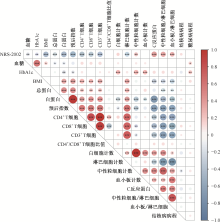
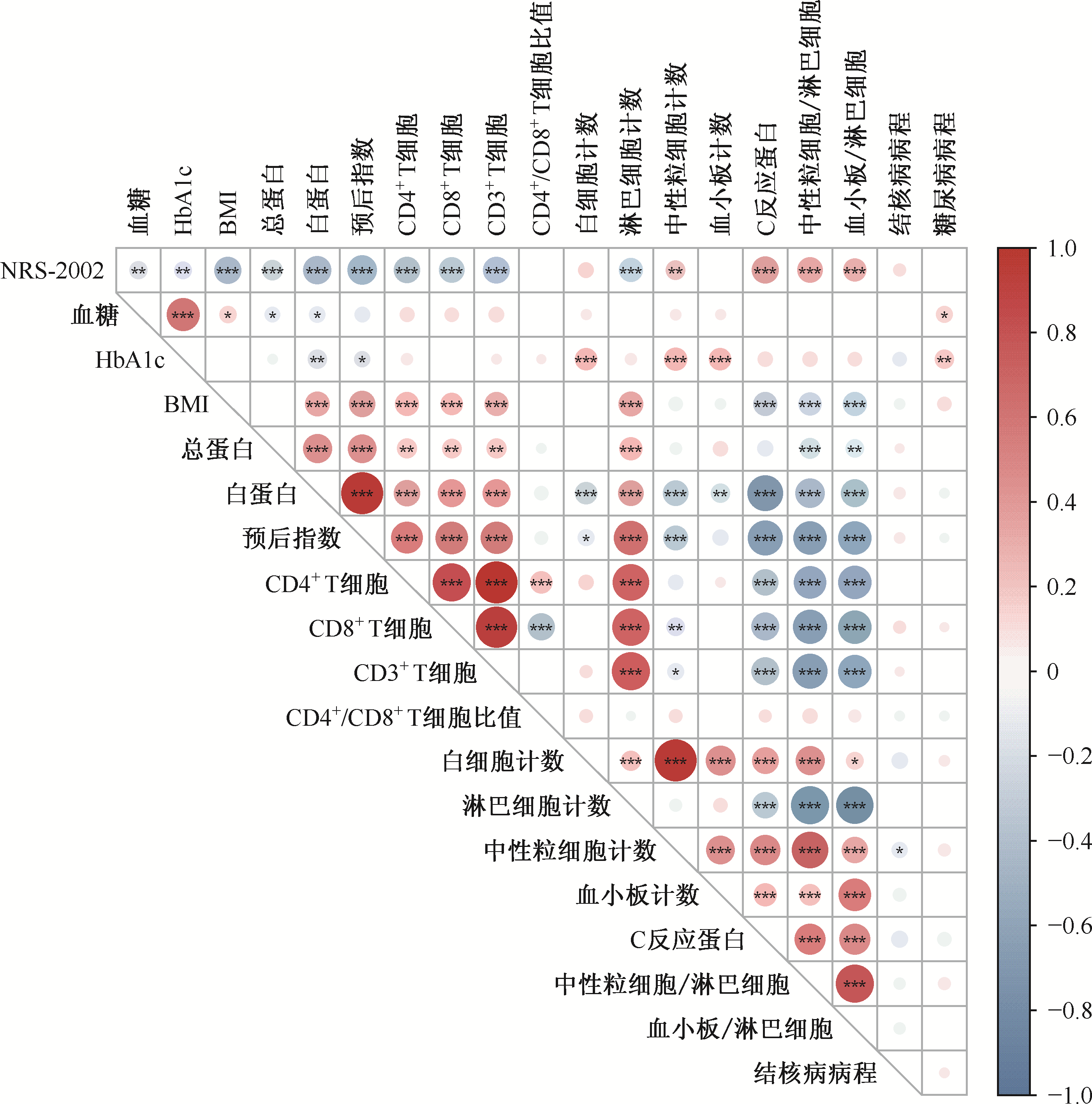
| 变量 | 赋值 |
|---|---|
| 男性 | 否=0,是=1 |
| 免疫功能低下 | 否=0,是=1 |
| 营养风险 | 否=0,是=1 |
| 糖尿病病程 | 原值输入 |
| 白细胞计数 | 原值输入 |
| 血小板计数 | 原值输入 |
| 指标 | β值 | s | Wald χ2值 | P值 | OR值 | 95%CI值 |
|---|---|---|---|---|---|---|
| 模型1 | ||||||
| 营养风险 | -0.928 | 0.302 | 9.456 | 0.002 | 0.395 | 0.219~0.714 |
| 男性 | 0.834 | 0.368 | 5.121 | 0.024 | 2.302 | 1.118~4.740 |
| 免疫功能低下 | -0.354 | 0.304 | 1.357 | 0.244 | 0.702 | 0.387~1.273 |
| 糖尿病病程 | 0.086 | 0.031 | 4.000 | 0.006 | 1.090 | 1.025~1.159 |
| 模型2 | ||||||
| 营养风险 | -1.031 | 0.311 | 10.976 | <0.001 | 0.357 | 0.194~0.656 |
| 男性 | 0.780 | 0.379 | 4.248 | 0.039 | 2.182 | 1.039~4.585 |
| 免疫功能低下 | -0.251 | 0.311 | 0.653 | 0.419 | 0.778 | 0.423~1.431 |
| 糖尿病病程 | 0.083 | 0.032 | 6.518 | 0.011 | 1.086 | 1.019~1.157 |
| 白细胞计数 | 0.069 | 0.057 | 1.471 | 0.225 | 1.072 | 0.958~1.198 |
| 血小板计数 | 0.002 | 0.002 | 1.946 | 0.163 | 1.002 | 0.999~1.005 |
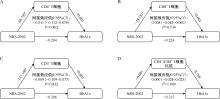
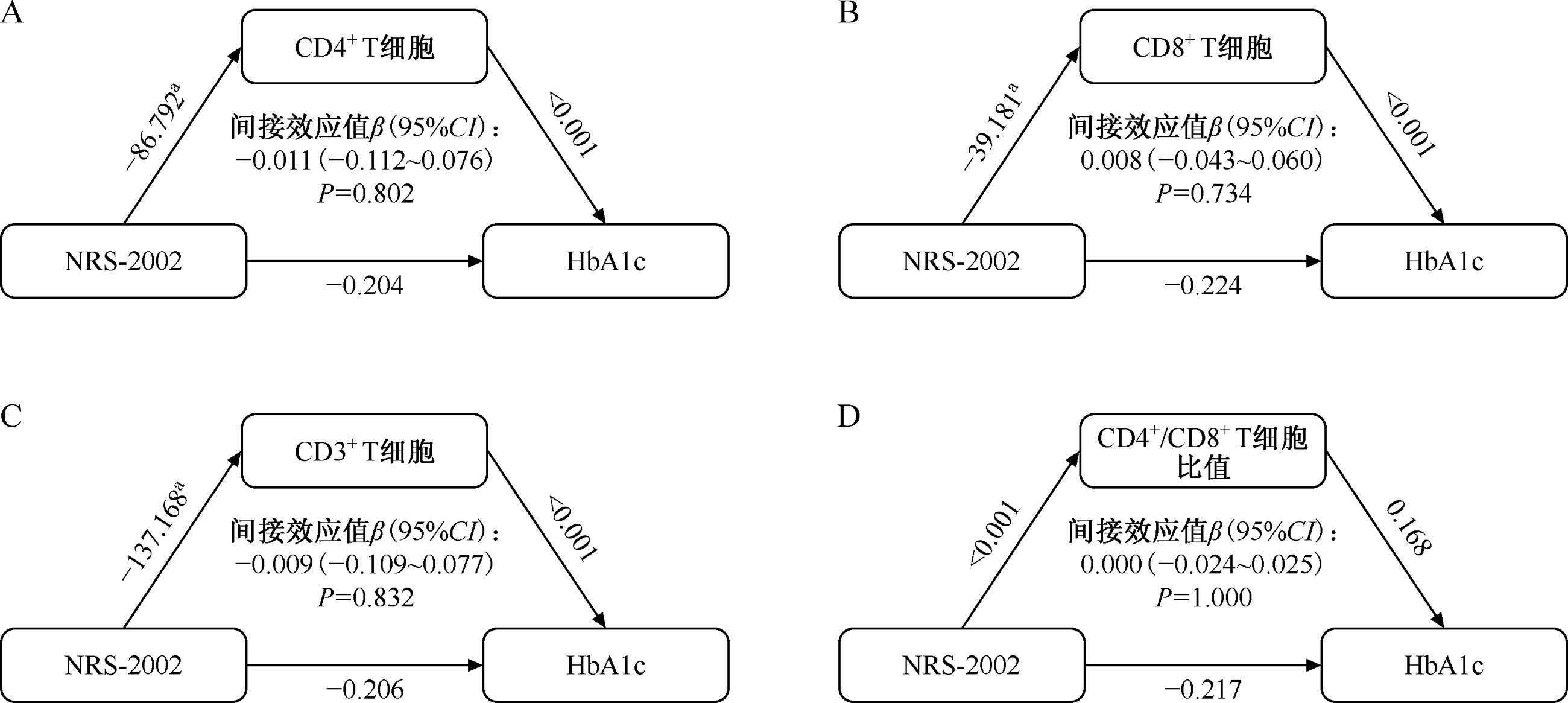
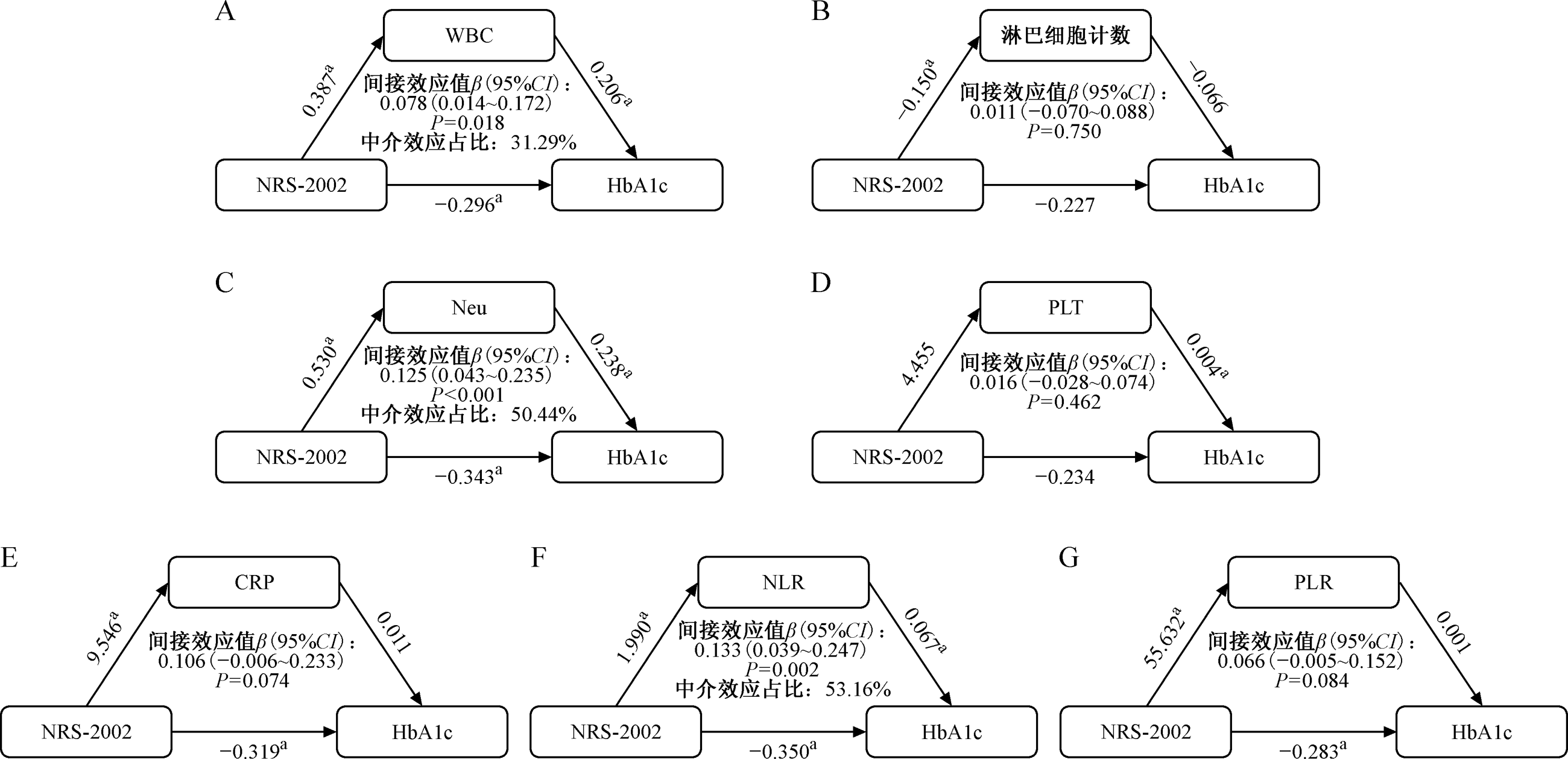
| [1] | World Health Organization.Global tuberculosis report 2024. Geneva: World Health Organization, 2024. |
| [2] | Xu Y, Lu J, Li M, et al. Diabetes in China part 1: epidemiology and risk factors. Lancet Public Health, 2024, 9(12): e1089-e1097. doi:10.1016/s2468-2667(24)00250-0. |
| [3] | 中华医学会结核病学分会重症专业委员会. 结核病营养治疗专家共识. 中华结核和呼吸杂志, 2020, 43(1): 17-26. doi:10.3760/cma.j.issn.1001-0939.2020.01.006. |
| [4] | Ashenafi S, Bekele A, Aseffa G, et al. Anemia Is a Strong Predictor of Wasting, Disease Severity, and Progression, in Clinical Tuberculosis (TB). Nutrients, 2022, 14(16): 3318. doi:10.3390/nu14163318. |
| [5] | Chandrasekaran P, Saravanan N, Bethunaickan R, et al. Malnutrition: Modulator of Immune Responses in Tuberculosis. Front Immunol, 2017, 8: 1316. doi:10.3389/fimmu.2017.01316. |
| [6] | Uyar S, Gorar S, Kok M, et al. Could Insulin and Hemoglobin A1c Levels be Predictors of Hunger-Related Malnutrition/Undernutrition Without Disease?. Clin Lab, 2018, 64(10): 1635-1640. doi:10.7754/Clin.Lab.2018.180403. |
| [7] | Vischer UM, Perrenoud L, Genet C, et al. The high prevalence of malnutrition in elderly diabetic patients: implications for anti-diabetic drug treatments. Diabet Med, 2010, 27(8): 918-924. doi:10.1111/j.1464-5491.2010.03047.x. |
| [8] | 中华人民共和国国家卫生和计划生育委员会. WS 288—2017肺结核诊断. 结核与肺部疾病杂志, 2024, 5(4): 376-378. doi:10.19983/j.issn.2096-8493.2024022. |
| [9] | American Diabetes Association. Diagnosis and classification of diabetes mellitus. Diabetes Care, 2010, 33 Suppl 1(Suppl 1): S62-S69. doi:10.2337/dc10-S062. |
| [10] | 刘贵, 马皎洁, 李亮. 预后营养指数在结核病中的应用. 中华结核和呼吸杂志, 2024, 47(10): 991-995. doi:10.3760/cma.j.cn112147-20240613-00334. |
| [11] | Lu C, Xu Y, Li X, et al. Nutritional status affects immune function and exacerbates the severity of pulmonary tuberculosis. Front Immunol, 2024, 15: 1407813. doi:10.3389/fimmu.2024.1407813. |
| [12] | 沈男男, 王伶, 劳国琴, 等. 糖尿病合并肺结核患者营养风险筛查、评估及干预的临床研究. 中华危重症医学杂志(电子版), 2017, 10(6): 374-380. doi:10.3877/cma.j.issn.1674-6880.2017.06.003. |
| [13] | Palmer BF, Clegg DJ. Starvation Ketosis and the Kidney. Am J Nephrol, 2021, 52(6): 467-478. doi:10.1159/000517305. |
| [14] | Rosen E, Bakshi N, Watters A, et al. Hepatic Complications of Anorexia Nervosa. Dig Dis Sci, 2017, 62(11): 2977-2981. doi:10.1007/s10620-017-4766-9. |
| [15] | Glenn TC, Martin NA, Mcarthur DL, et al. Endogenous Nutritive Support after Traumatic Brain Injury: Peripheral Lactate Production for Glucose Supply via Gluconeogenesis. J Neurotrauma, 2015, 32(11): 811-819. doi:10.1089/neu.2014.3482. |
| [16] | Vidyadharan VA, Betancourt A, Smith C, et al. Maternal Low-Protein Diet Leads to Mitochondrial Dysfunction and Impaired Energy Metabolism in the Skeletal Muscle of Male Rats. Int J Mol Sci, 2024, 25(23):12860. doi:10.3390/ijms252312860. |
| [17] | Du Y, Zheng R, Yin H, et al. Mycobacterium tuberculosis Rv2653 Protein Promotes Inflammation Response by Enhancing Glycolysis. Jpn J Infect Dis, 2023, 76(6): 343-350. doi:10.7883/yoken.JJID.2022.647. |
| [18] | Böni-Schnetzler M, Meier DT. Islet inflammation in type 2 diabetes. Semin Immunopathol, 2019, 41(4): 501-513. doi:10.1007/s00281-019-00745-4. |
| [19] | Eckold C, Kumar V, Weiner J, et al. Impact of Intermediate Hyperglycemia and Diabetes on Immune Dysfunction in Tuberculosis. Clin Infect Dis, 2021, 72(1): 69-78. doi:10.1093/cid/ciaa751. |
| [20] | Jonkers DM. Microbial perturbations and modulation in conditions associated with malnutrition and malabsorption. Best Pract Res Clin Gastroenterol, 2016, 30(2): 161-172. doi:10.1016/j.bpg.2016.02.006. |
| [21] | Patterson GT, Osorio EY, Peniche A, et al. Pathologic Inflammation in Malnutrition Is Driven by Proinflammatory Intestinal Microbiota, Large Intestine Barrier Dysfunction, and Translocation of Bacterial Lipopolysaccharide. Front Immunol, 2022, 13: 846155. doi:10.3389/fimmu.2022.846155. |
| [22] | Khodabandehloo H, Gorgani-Firuzjaee S, Panahi G, et al. Molecular and cellular mechanisms linking inflammation to insulin resistance and β-cell dysfunction. Transl Res, 2016, 167(1): 228-256. doi:10.1016/j.trsl.2015.08.011. |
| [23] | Alipourfard I, Datukishvili N, Mikeladze D. TNF-α Downregu-lation Modifies Insulin Receptor Substrate 1 (IRS-1) in Metabolic Signaling of Diabetic Insulin-Resistant Hepatocytes. Mediators Inflamm, 2019, 2019:3560819. doi:10.1155/2019/3560819. |
| [24] | Rehman K, Akash MSH, Liaqat A, et al. Role of Interleukin-6 in Development of Insulin Resistance and Type 2 Diabetes Mellitus. Crit Rev Eukaryot Gene Expr, 2017, 27(3): 229-236. doi:10.1615/CritRevEukaryotGeneExpr.2017019712. |
| [25] | Sepidarkish M, Akbari-Fakhrabadi M, Daneshzad E, et al. Effect of omega-3 fatty acid plus vitamin E Co-Supplementation on oxidative stress parameters: A systematic review and meta-analysis. Clin Nutr, 2020, 39(4): 1019-1025. doi:10.1016/j.clnu.2019.05.004. |
| [1] | Reyhangul·Aken , Muratjan·Amat , Gao Xusheng, Ding Caihong, Zeng Yi, Chen Yu, Bai Yan, Fan Lin. Analysis of influencing factors of malnutrition and treatment outcomes among elderly patients with pulmonary tuberculosis aged 60 years and above [J]. Chinese Journal of Antituberculosis, 2026, 48(6): 751-759. |
| [2] | Jiangxi Chest Hospital/Jiangxi Provincial Key Laboratory of Tuberculosis, Chinese Antituberculosis Association, Guangzhou National Laboratory. Expert consensus on the diagnosis and treatment of breast tuberculosis [J]. Chinese Journal of Antituberculosis, 2026, 48(6): 737-750. |
| [3] | Xu Yong, Zhou Teng, Liu Junjia. Construction and validation of a risk prediction model for restenosis after interventional treatment of tuberculous airway stenosis [J]. Chinese Journal of Antituberculosis, 2026, 48(6): 760-768. |
| [4] | Wang Xinyan, Pan Hongfang, Mei Xue, Zhang Yi, Liu Jie. Analysis of the characteristics of peripheral blood clinical detection indicators in patients with pulmonary tuberculosis complicated with osteoarticular tuberculosis [J]. Chinese Journal of Antituberculosis, 2026, 48(6): 779-786. |
| [5] | Li Jing, Chen Shuangshuang, Chen Chunhua, Yang Guoxiang, Yang Chengnao, Zheng Luyun, Tan Chengjian, Li Chuanyou, Li Jie, Zhou Peifu, Dai Xiaowei. Screening of anti-tuberculosis activity and analysis of chemical constituents of the Ethnomedicine Botrychium ternatum [J]. Chinese Journal of Antituberculosis, 2026, 48(6): 787-794. |
| [6] | Xia Lu, Mu Tingting, Cai Qiujie, Ma Yan, Gong Mengmeng, Ye Dan, Zhang Wei. Analysis of Traditional Chinese Medicine syndrome characteristics in 619 severe pulmonary tuberculosis patients based on syndrome element differentiation [J]. Chinese Journal of Antituberculosis, 2026, 48(6): 795-802. |
| [7] | Guo Chenhao, Liu Xinyu, Zhan Sirui, Wang Lili, Ma Mengting, Li Xiumei, Qi Linping, Li Weiping. Interferon-gamma release assays for diagnosing extrapulmonary tuberculosis in adults: a systematic review and Meta-analysis [J]. Chinese Journal of Antituberculosis, 2026, 48(6): 803-812. |
| [8] | Zhang Yue, Huang Jinpeng, Gao Dan, Ling Lin. Status and influencing factors of medication adherence among elderly tuberculosis patients based on digital technologies [J]. Chinese Journal of Antituberculosis, 2026, 48(6): 813-820. |
| [9] | Zhang Yaying, Wang Senlu, Guliziba Kuerbanjiang, Abulikemu Aili, Liang Chen, Yuan Shuanglong, Li Caihong, Cao Mingqin. Analysis of influencing factors and pathways on psychological burden associated with pulmonary tuberculosis treatment in Southern Xinjiang Region of the Xinjiang Uygur Autonomous Region [J]. Chinese Journal of Antituberculosis, 2026, 48(6): 821-829. |
| [10] | Du Xilong, Maiwulajiang·Yimamu , Na Yan, Paziliya·Yasheng , Guo Gang, Maiweilanjiang·Abulimiti , Zhang Liping, Zheng Yanling. Construction of an optimal prediction model for treatment outcomes in retreatment pulmonary tuberculosis [J]. Chinese Journal of Antituberculosis, 2026, 48(6): 830-839. |
| [11] | Liu Lin, Yin Xiaocheng, Zhang Xiaofo, Liang Linlong, Yang Ju. Global burden of tuberculosis in children aged 0-14 years, 1990—2023, and trend projections for 2024—2050 [J]. Chinese Journal of Antituberculosis, 2026, 48(6): 840-848. |
| [12] | Huang Aichun, Lan Yanqun, Xu Chaoyan, Zhang Jie, Li Weiwen, Zhu Qingdong, Xie Zhouhua. Analysis of related factors influencing interferon-gamma release assay results in patients having coexistent tuberculosis and acquired immune deficiency syndrome [J]. Chinese Journal of Antituberculosis, 2026, 48(6): 849-855. |
| [13] | Jiang Xuefeng, Zhou Linjun, Sun Yan, Jiang Mingxia, Ma Ling, Mei Li, Liu Dongxin. Analysis of drug resistance gene mutation characteristics in Mycobacterium tuberculosis strains from five northwestern provinces of China [J]. Chinese Journal of Antituberculosis, 2026, 48(6): 856-864. |
| [14] | Yuan Shaoying, Cui Zhongfeng, Du Jiang, Cao Xuefang, Feng Boxuan, He Yijun, Li Zihan, Zhao Yaqi, Yu Yilin, Gao Lei, Xin He’nan, Li Hongzhi. The application value of the QuantiFERON-TB Gold Plus for active pulmonary tuberculosis diagnosis and treatment response monitoring [J]. Chinese Journal of Antituberculosis, 2026, 48(6): 865-873. |
| [15] | Qiao Xiaobo, Li Jing, Wang Baoqian, Zhou Weidong, Wang Fei, Zhang Qibo, Li Tongxia. Study on the diagnostic value of GeneXpert MTB/RIF and BACTEC MGIT 960 in bronchoalveolar lavage fluid combined with peripheral blood IGRA testing for etiologically negative pulmonary tuberculosis diagnosis [J]. Chinese Journal of Antituberculosis, 2026, 48(6): 874-881. |
| Viewed | ||||||
|
Full text |
|
|||||
|
Abstract |
|
|||||
 京公网安备11010202007215号
Total visitors: Visitors of today: Now online:
京公网安备11010202007215号
Total visitors: Visitors of today: Now online:
 This work is licensed under Creative Commons Attribution 3.0 License.
